Meteora’s monasteries on the sandstone pillars of Kalambaka
Published on 09/05/2026 at 22:47 | Editorial responsibility: Rafael Müller, Editor-in-Chief AD HOC NEWS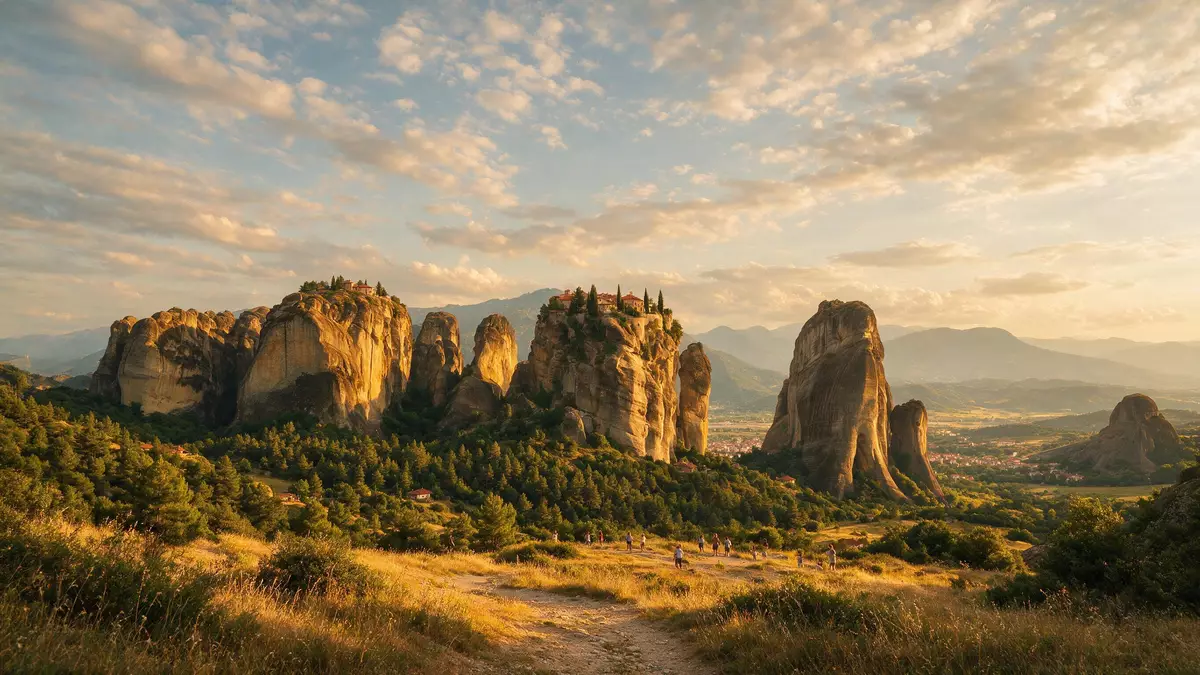
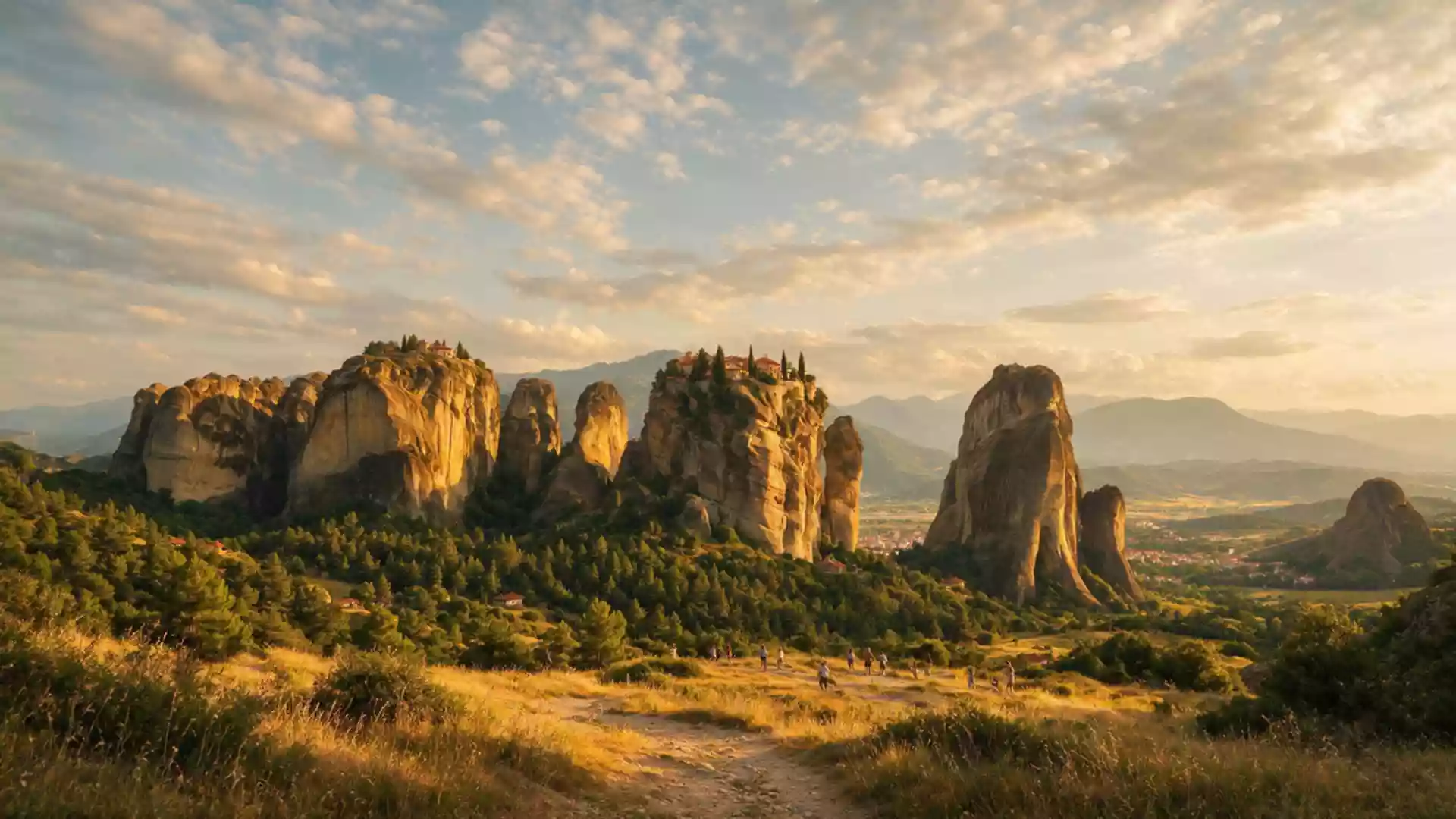
Meteora above Kalambaka in Greece is a landscape where Orthodox monasteries rise directly from towering sandstone pinnacles. The complex of monasteries and rock pillars forms a mixed cultural and natural site recognised on the UNESCO World Heritage List from 1988, with the surviving monasteries grouped between Kalambaka and the village of Kastraki in Thessaly.
Sandstone pillars and a “rock forest” above the Thessalian plain
Meteora occupies the north-western edge of the Thessalian plain, with the rock pillars standing between the town of Kalambaka and nearby Kastraki while the Pindus Mountains and the valley of the Pineios river frame the wider landscape.between Kalambaka and Kastraki The pillars belong to the Pentalophos Formation, a thick sequence of Upper Oligocene to Lower Miocene molassic sediments in the Mesohellenic trough, where sandstone beds and massive conglomerates are stacked to great thicknesses.
These rocks form steep, narrow pinnacles with vertical or near-vertical flanks and flat or gently domed tops, many of them several hundred metres above the surrounding plain.rock pillar formations composed of molassic sediments Erosion has carved channels and clefts between the pillars so that, viewed from Kalambaka, Meteora appears as a rock forest rising from agricultural land and scattered low hills. The contrast between the cultivated plain and the bare sandstone and conglomerate cliffs is one of the defining impressions of the area.
From early hermits to a fourteenth-century monastic community
Monastic life at Meteora is securely traced back to the medieval period, with hermits present on the rocks by the eleventh century and organised monastic foundations emerging during the early fourteenth century.monasteries in Meteora are first attested in the early 14th century A decisive figure was Athanasios of Meteora, a monk originally associated with Mount Athos, who settled on a broad rock known as Platys Lithos and founded the monastery dedicated to the Transfiguration, later called the Great Meteoron.
The Great Meteoron monastery, founded by Athanasios in the late fourteenth century, became the principal community at Meteora and established cenobitic monastic life on the rocks.Great Meteoron or Monastery of the Transfiguration During the fifteenth and sixteenth centuries the wider Meteora complex expanded to a peak of around two dozen monasteries on separate pillars, forming an important centre of Orthodox monasticism in central Greece. Foundations such as Varlaam, Rousanou, St Nicholas Anapafsas, Holy Trinity and St Stephen added further churches, cells and refectories, each occupying its own rock top and linked by paths, stairways and small bridges.
Six surviving monasteries and their sacred landscape
Out of the many monasteries established on the Meteora pillars during the medieval and early post-medieval period, six survive in an active or preserved state and form the core of the World Heritage inscription.Meteora is a collection of monasteries in the centre of mainland Greece These include the Great Meteoron, Varlaam, Holy Trinity, St Stephen, Rousanou and St Nicholas Anapafsas, each with its church, monastic buildings and enclosing walls set directly on the rock surface. Together they are recognised as a mixed site for both cultural and geological values, and as part of the Meteora Pyli UNESCO Global Geopark, which underlines the significance of the sandstone pillars themselves.Meteora Pyli UNESCO Global Geopark
Inside the monasteries, visitors encounter churches with post-Byzantine fresco cycles, monastic refectories, courtyards and small chapels, many arranged around the crest of the pillar and reached by staircases cut into the rock or built against it.Metamorphosis monastery, now called the Great Meteoron The combination of Orthodox liturgical spaces with the exposed rock edges produces a landscape where sacred architecture and geological forms are inseparable. Viewed from below near Kalambaka, the monastic buildings appear to grow out of the sandstone and conglomerate, with small chapels perched near cliff edges and walls following the contours of the rock.
Visiting Meteora: what travellers from Western Europe should know
- Meteora lies in Thessaly in central Greece, with the rock pillars rising just above Kalambaka and the nearby village of Kastraki; trains and roads connect Kalambaka with other parts of mainland Greece.
- The terrain at Meteora involves steep paths, long staircases and sections of exposed rock, particularly on approaches to the monasteries, so visits require sustained walking on gradients.
- Many viewpoints and paths around Meteora are on bare sandstone or conglomerate surfaces and rocky tracks, and some monastery approaches include narrow stairways and sections without shade.
- The official language is Greek and the currency is the euro.
Searching for Meteora on social platforms
These links open searches for Meteora on each platform.
Frequently asked questions about Meteora
Where is Meteora?
Meteora is in Thessaly in central Greece, with its sandstone pillars rising immediately above the town of Kalambaka and extending towards the village of Kastraki.
What should visitors expect on a visit?
Visitors encounter steep paths, staircases and exposed rock surfaces as they move between viewpoints and monastery entrances, together with Orthodox churches and monastic buildings on the pillar tops.
What makes Meteora distinctive among Greek monastic sites?
Meteora is distinctive because its monasteries stand directly on tall sandstone and conglomerate pillars, forming a combined sacred and geological landscape that is recognised as a mixed UNESCO World Heritage Site.