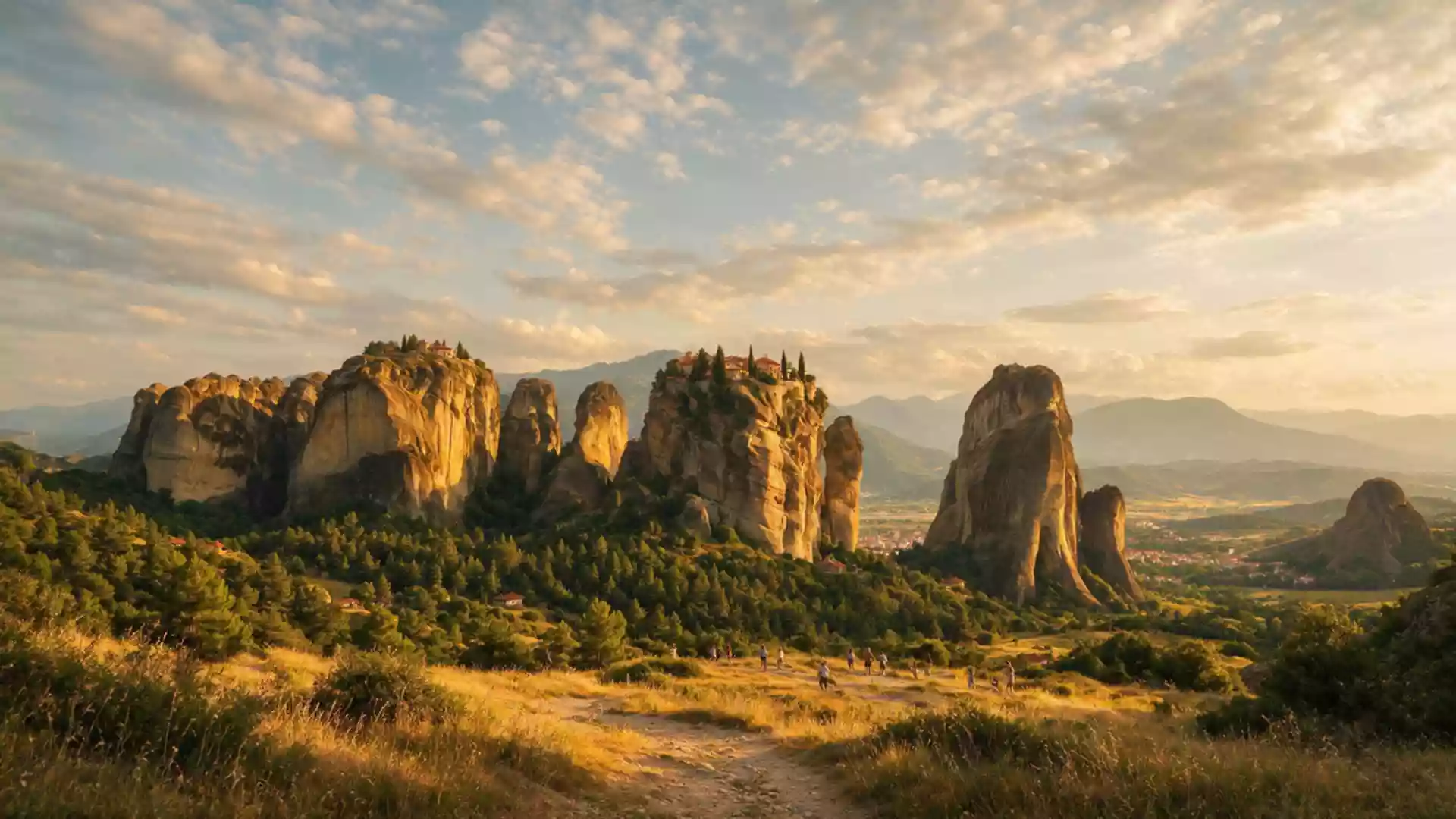
Meteora’s cliff-top monasteries above Kalambaka
Published on 08/11/2026 at 15:05 | Editorial responsibility: Rafael Müller, Editor-in-Chief AD HOC NEWS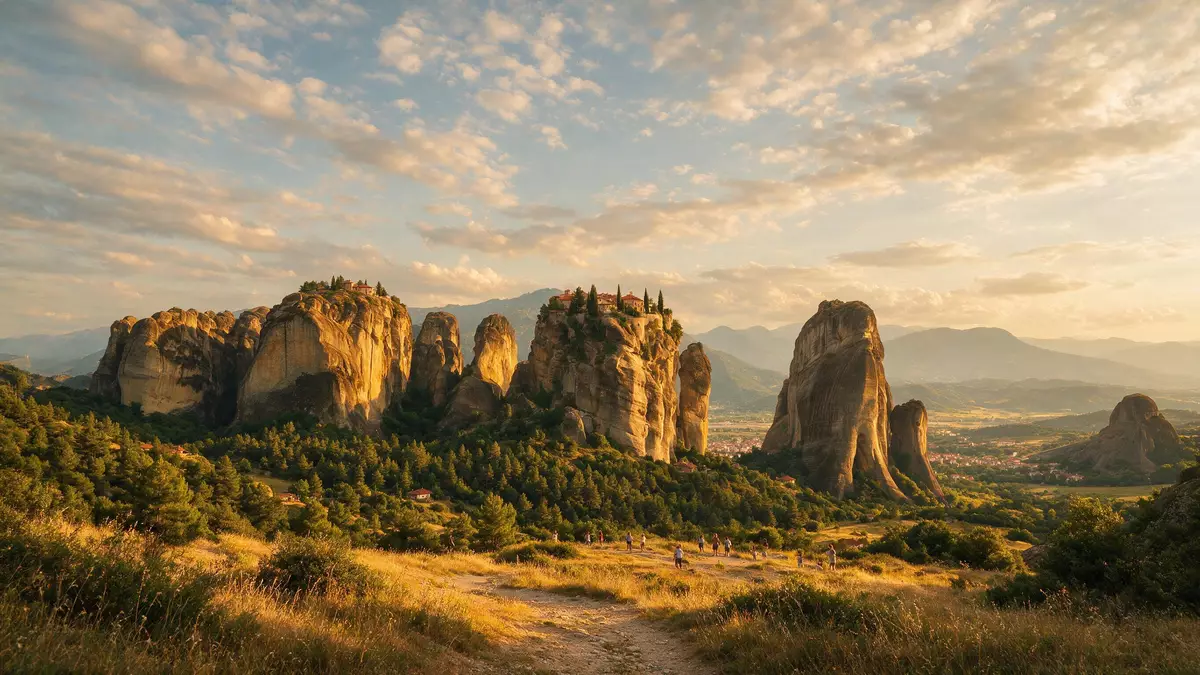
Meteora rises above Kalambaka as a cluster of monasteries on steep sandstone pillars in northern Greece. The site is linked with Byzantine monastic life and the work of Saint Athanasios the Meteorite, who founded the Great Meteoron in the fourteenth century.
Stone pillars and monastic terraces
The rocks are the first thing you notice: tall, weathered columns with monasteries perched on their tops and ledges. Their pale surfaces contrast with the darker roofs, stone walls and narrow paths that thread between the buildings.
Great Meteoron, Varlaam, Roussanou and several other monasteries form the best-known group. Each one keeps its own chapel, cloister spaces and viewpoints over the Pindus landscape.
Byzantine foundations and living monasteries
Meteora developed as a monastic centre in the late Byzantine period, when hermits and monks settled among the rocks. Saint Athanasios the Meteorite established the Great Meteoron in the fourteenth century, and later communities added churches, refectories and cells.
The monasteries preserve wall paintings, carved wood and liturgical spaces shaped by Orthodox practice. Their surviving fabric shows centuries of religious use, while the setting keeps the rocks and the buildings in constant view together.
Kalambaka, the valley and the approach
Kalambaka lies at the foot of the formation, with the smaller town of Kastraki nearby. From the valley, the monasteries appear above the road and the roofs of the town, then recede into the stone maze higher up.
The landscape is part of the experience: bare rock, olive trees, small roads and switchbacks link the valley to the monasteries. The name Meteora comes from the Greek for “suspended in the air”, a fitting description for the way the buildings sit above the plain.
Visiting Meteora: what travellers from Western Europe should know
- Meteora is reached from Kalambaka by road, with views also available from Kastraki and the surrounding valley.
- Admission arrangements and opening hours are set by the site's operator and change with the season; the official website is the only binding source.
- Late spring and early autumn offer comfortable weather for walking between viewpoints and monasteries.
- The site involves steps, slopes, uneven rock and stretches on foot, so sturdy shoes matter.
- Local signs and basic visitor services may appear in Greek and English, and cash and cards are both worth carrying; restrictions may apply on site.
- Entry requirements depend on your nationality. UK travellers should check the FCDO travel advice at gov.uk/foreign-travel-advice; Irish travellers the Department of Foreign Affairs at ireland.ie; EU and EEA citizens their own national foreign ministry.
Searching for Meteora on social platforms
These links open searches for Meteora on each platform.
Frequently asked questions about Meteora
Where is Meteora?
Meteora is in Thessaly, above Kalambaka in northern Greece. The monasteries stand on high rock pillars beside the town and the nearby village of Kastraki.
What should visitors expect?
Expect steep access, stairways, rocky paths and monastery buildings that remain in religious use. The setting combines valley views, stone surfaces and Orthodox churches with painted interiors.
What makes Meteora distinctive?
The site combines medieval monastic architecture with dramatic natural rock formations. The monasteries appear to rest on the pillars themselves, creating a powerful visual contrast between stone, height and worship.