
Mesa Verde National Park and its cliffside villages
Published on 08/19/2026 at 15:58 | Editorial responsibility: Rafael Müller, Editor-in-Chief AD HOC NEWS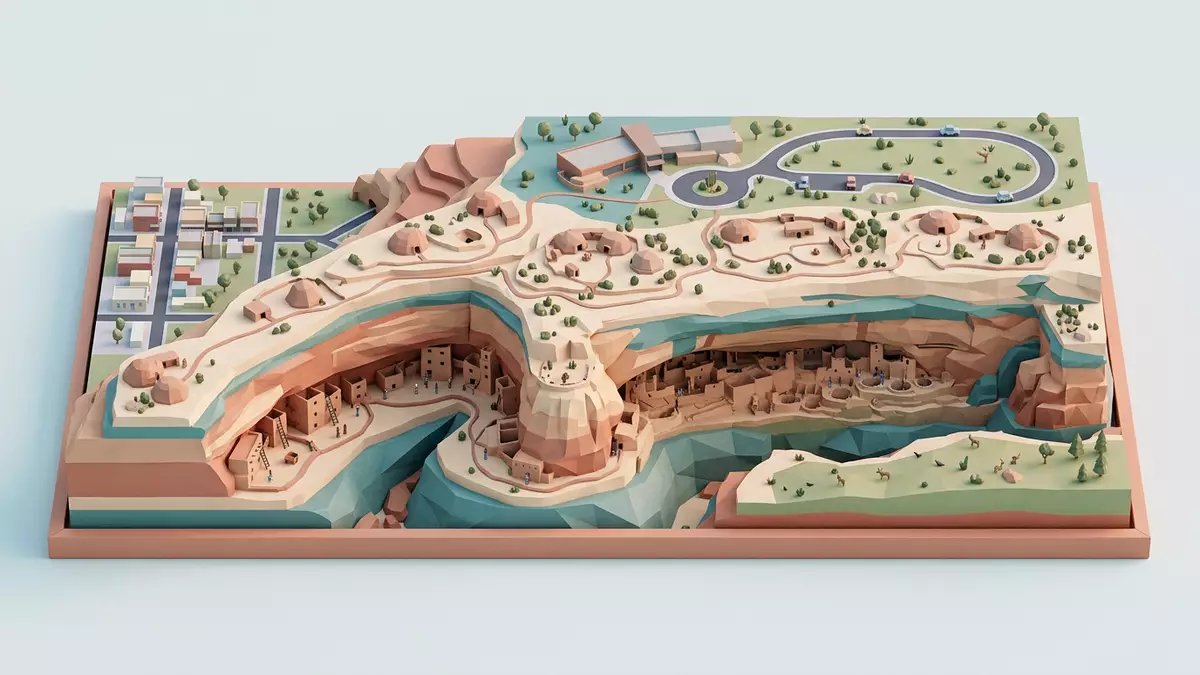
Mesa Verde National Park rises on a broad sandstone plateau above the town of Cortez in south-west Colorado, bringing together a highland landscape and compact villages built into the canyon walls. Established as a national park of the United States in 1906, it preserves the stone dwellings of Ancestral Pueblo people dating from between the sixth and thirteenth centuries, as well as the mesa-top fields and woodlands that framed their daily lives.
Cliff dwellings in a high sandstone plateau
The name Mesa Verde, Spanish for “green table”, refers to the plateau that carries the park’s canyons and gorges at more than 2,000 m (about 6,600 ft) above sea level, a high tableland cut into by deep, narrow valleys.The high tableland area lies in the Four Corners region of the United States, where Colorado meets New Mexico, Arizona and Utah.
Within this landscape, the feature many visitors recognise most readily is the network of cliff dwellings built by Ancestral Pueblo people in rock alcoves along the canyon walls between about 1150 and 1300.The cliff houses are constructed of shaped sandstone blocks and earth mortar, forming rooms, kivas and storage spaces that step and cluster along the sheltering overhangs.
The cliff villages are only one phase of a longer story on the mesa. Ancestral Pueblo communities first settled the area around 550 CE, building pithouses dug into the mesa-top soils before moving to above-ground pueblos and finally to the protected alcoves.Ancestral Pueblo settlement in the region continued until around 1300, when most people left Mesa Verde and moved south into what is now New Mexico and Arizona.
Ancestral Pueblo history in stone and earth
Mesa Verde National Park focuses on the remains of the Ancestral Pueblo communities who lived here for more than seven centuries, farming the mesa tops and building villages in both open and sheltered sites.For over 700 years they cultivated crops such as maize, beans and squash and combined agriculture with hunting and gathering.
The earliest architectural traces associated with these communities on Mesa Verde belong to the Basketmaker periods, beginning around the sixth century, when people lived in pithouses grouped on the mesa tops and sometimes in sheltered alcoves.By about 550 CE surface dwellings began to appear, developing into multi-room pueblos with vertical walls and flat roofs.
From the late twelfth century the architectural focus shifted into the canyon alcoves, where communities built compact multi-storey villages of sandstone and timber that made use of the natural shelves in the rock.These dwellings date mainly from between 1150 and 1250 and combine habitation rooms with kivas, storage areas and open courts.
Archaeological evidence indicates that by around 1300 the communities had left Mesa Verde, joining related Pueblo groups further south, yet the stone villages remain as visible markers of Ancestral Pueblo history in the wider Four Corners region.Mesa Verde National Park is now recognised for this concentrated record of pre-Columbian village life in the American Southwest.
A World Heritage landscape of archaeology and mesa forest
Mesa Verde National Park was inscribed on the UNESCO World Heritage List in 1978 as a cultural site under criterion (iii), recognising its concentration of ancestral Pueblo dwellings as an exceptional testimony to a cultural tradition.The UNESCO listing emphasises the breadth of archaeological sites preserved within the park boundary.
The protected area extends over more than 21,000 hectares, encompassing both the canyon alcoves and the surrounding mesa top forests and clearings.The area of the park includes thousands of archaeological sites, ranging from isolated pithouse foundations and field houses to large cliff villages arranged in intricate terraces.
Beyond the built structures, the plateau landscape frames the archaeological remains with expanses of piñon–juniper woodland, open clearings that once held fields and distant views towards the San Juan Mountains and the wider Colorado Plateau. The combination of a high mesa, deeply incised canyons and stone villages built into the rock gives Mesa Verde an unusually layered character for a single national park.
Because the park lies near the town of Cortez in south-west Colorado, it can be combined with travel across the wider Four Corners region, where other archaeological sites and landscapes connected with Ancestral Pueblo history can be found, including communities in New Mexico and Arizona that trace their ancestry to the people of Mesa Verde.
Visiting Mesa Verde National Park: what travellers from Western Europe should know
- Mesa Verde National Park lies in Montezuma County in south-west Colorado, with Cortez serving as a nearby town on approaches by road and regional transport.
- The park road climbs from lower valleys up onto the mesa top, and many viewpoints and sites involve walking on uneven ground close to canyon edges.
- Several archaeological areas include steps and ladders within narrow passages, and visiting some cliff dwellings involves negotiating confined routes carved into or attached to the rock.
- The official language is English and the currency is the United States dollar.
- Entry requirements depend on your nationality; UK travellers can check the FCDO travel advice at gov.uk/foreign-travel-advice, Irish travellers the Department of Foreign Affairs at ireland.ie.
Searching for Mesa Verde National Park on social platforms
These links open searches for Mesa Verde National Park on each platform.
Frequently asked questions about Mesa Verde National Park
Where is Mesa Verde National Park?
Mesa Verde National Park is in Montezuma County in south-west Colorado, in the United States, on a sandstone plateau above the town of Cortez.
What should visitors expect on a visit?
Visitors encounter a combination of mesa-top forests, deep canyons, and archaeological sites that include both mesa villages and stone dwellings built into rock alcoves.
What makes Mesa Verde National Park distinctive?
The park brings together a high plateau landscape and dense concentrations of Ancestral Pueblo villages, including cliff dwellings recognised as a UNESCO World Heritage Site.


