
Mercado de Chichicastenango and the weaving of Maya highland life
Published on 08/19/2026 at 20:04 | Editorial responsibility: Rafael Müller, Editor-in-Chief AD HOC NEWS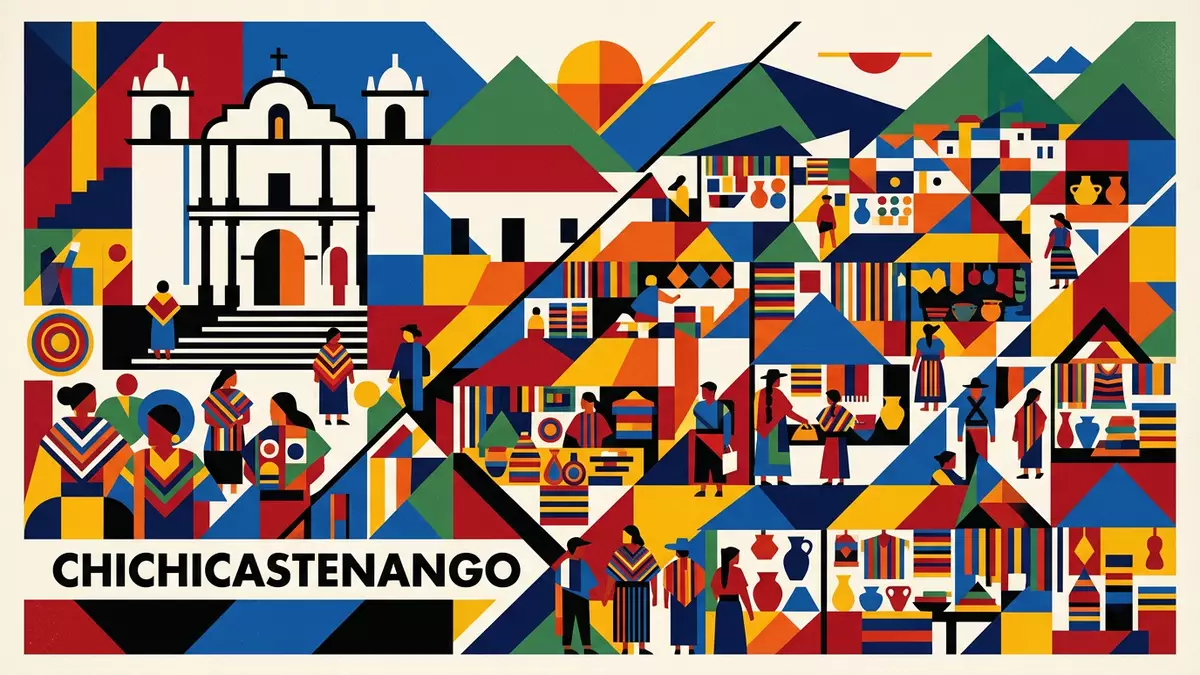
Mercado de Chichicastenango in the Guatemalan highland town of Chichicastenango is a sprawling outdoor market where trade, textiles and ritual life share the same streets. Rooted in the traditions of the Maya communities of the Western Highlands, it has been a meeting place for villagers from the Quiché region for centuries and remains one of Guatemala’s most closely associated sites with indigenous commerce and craft.
Market streets between church steps and tin roofs
Mercado de Chichicastenango spreads across Chichicastenango’s central square and the neighbouring streets, filling the town’s grid with stalls, tarpaulins and tin-roofed structures. The main plaza, known locally as Plaza y Mercado, lies between parallel avenues and streets, with permanent roofing now covering much of the traditional stall area.the plaza and market The result is a dense maze in which temporary tables, wooden frames and hanging displays line every available edge, leaving narrow passages for buyers and traders to pass.
On market days the town’s otherwise quiet streets become a continuous patchwork of textiles, produce and household goods, and the market area extends beyond the main square into lanes to the north and towards the covered Centro Comercial Santo Tomás. Inside this commercial building, an upper deck looks down onto fruit and vegetable stalls, offering a high-level view of trading scenes that echo much older open-air exchanges.Centro Comercial Santo Tomás
Textiles, masks and the craft economy of the Western Highlands
Mercado de Chichicastenango is best known for handicrafts from the Maya communities of the Western Highlands, particularly textiles and wood carvings. Brightly coloured fabrics, tablecloths and wool blankets are stacked high on stalls and hung from lines, creating long corridors of pattern in which geometric motifs and animal figures repeat from one vendor to another.colourful native textiles Among the most distinctive garments are huipils, the traditional woven tops worn by indigenous women and girls, whose intricate designs can take months to complete.
Stalls also carry carved wooden masks used in ceremonial dances, a visible link between the market’s commercial role and the ritual practices of the surrounding villages.wooden ceremonial masks Leather goods such as belts, shoes and harnesses, alongside pottery, incense, candles and handmade jewellery in silver and jade, add further layers to the craft economy on show. Everyday items sit beside them: fruits and vegetables, grains, spices, soap and toys form their own sections, especially towards the northern end of the square, where many local families come to shop for household needs.variety of goods on sale
Centuries of highland trade and ritual
Long before Spanish rule, Chichicastenango functioned as a trading centre for communities across the Quiché region, and the market’s continuity over centuries gives it a particular place in Guatemala’s cultural landscape.a main trading centre since before the conquistadors Villagers from surrounding areas still travel in to sell agricultural produce and handmade goods, some on foot with loads carried over the highland terrain. The town lies in Guatemala’s Western Highlands, in the department of El Quiché, and this location is reflected in the regional patterns and materials visible at the stalls.Western Highlands setting
Religious life intersects with mercantile activity at several points around Mercado de Chichicastenango, particularly near the Santo Tomás church that faces the main square. Church steps and forecourts form part of the wider market setting, and on market days vendors, worshippers and visiting travellers share the same spaces, giving the town centre a layered character in which trade, devotion and social interaction are all visible in a short walk.
Visiting Mercado de Chichicastenango: what travellers from Western Europe should know
- Mercado de Chichicastenango takes place in Chichicastenango, a town in Guatemala’s El Quiché department in the Western Highlands, with the main market centred on the Plaza y Mercado and neighbouring streets.
- The market area consists of uneven cobblestone streets, temporary stalls and steps around the central square and church, and visitors move through narrow passages where the ground can be crowded with goods.
- The official language is Spanish and the currency is the Guatemalan quetzal.
- Chichicastenango can be reached by road from other highland towns and from Guatemala City, with buses and private vehicles using mountain routes that approach the town from several directions.
- Entry requirements depend on your nationality; UK travellers can check the FCDO travel advice at gov.uk/foreign-travel-advice, Irish travellers the Department of Foreign Affairs at ireland.ie.
Searching for Mercado de Chichicastenango on social platforms
These links open searches for Mercado de Chichicastenango on each platform.
Frequently asked questions about Mercado de Chichicastenango
Where is Mercado de Chichicastenango located?
Mercado de Chichicastenango is located in the town of Chichicastenango in Guatemala’s Western Highlands, within the department of El Quiché, centred on the town’s main square.
What can visitors expect on a market day?
Visitors encounter crowded streets filled with stalls selling textiles, carved masks, leather goods, jewellery and everyday produce, with trading activity concentrated around the Plaza y Mercado and nearby lanes.
What makes Mercado de Chichicastenango distinctive among markets?
The market combines centuries-old Maya trading traditions with a strong craft focus, particularly on huipil textiles and ceremonial masks, all set in a dense highland townscape where religious and commercial life meet.


