
Mekong Riverside in Luang Prabang, where town meets river
Published on 08/20/2026 at 20:39 | Editorial responsibility: Rafael Müller, Editor-in-Chief AD HOC NEWS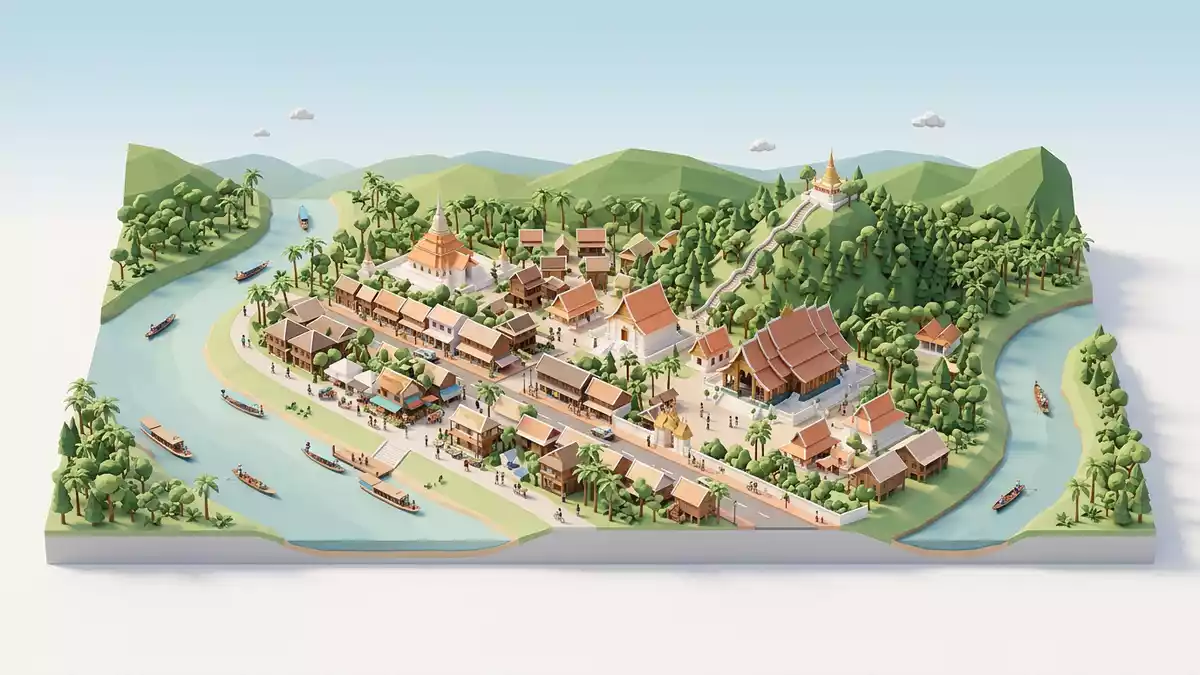
Mekong Riverside in Luang Prabang is the lived riverfront of the UNESCO-listed old town, where the streets run out towards the Mekong and the town’s daily rhythm meets the broad river. Set on a peninsula at the confluence of the Mekong and Nam Khan Rivers in northern Laos, the riverside forms a long edge between water, low-rise buildings and steep green hills beyond.
The riverfront edge of a World Heritage town
Luang Prabang lies in northern Laos in a mountainous region, with its historic centre occupying a peninsula formed by the Mekong and the Nam Khan Rivers.peninsula formed by the Mekong The riverside along the Mekong marks one side of this peninsula, following the curve of the river past monasteries, houses, steps and small landing places. The town’s UNESCO World Heritage inscription as a cultural site dates from 1995 and highlights the relationship between natural landscape and built structures in Luang Prabang.World Heritage site in 1995
Along Mekong Riverside, the river bank drops from the street level towards the water, with paths, steps and sloping tracks linking the town to simple piers and boat landings.piers and landing places Commercial buildings occupy many of the plots along this edge, interspersed with private houses and small gardens.commercial buildings grouped along the bank From the street above, views open out across the Mekong towards tree-covered slopes and distant ridges, making the riverside one of the places where the town’s compact urban fabric and its wider landscape are seen together.
Architecture and everyday life along Mekong Riverside
The buildings lining Mekong Riverside reflect the fusion of architectural traditions that defines Luang Prabang’s historic core. Religious structures such as monasteries and stupas stand within short walks of wooden houses built in Lao styles and masonry villas from the French colonial period.fusion of traditional and colonial architecture Wat Xieng Thong, one of the town’s best-known monasteries, lies close to the riverside towards the tip of the peninsula, with richly decorated facades and layered roofs set back from the water’s edge.monasteries such as Wat Xieng Thong
Between these religious compounds, small streets and lanes descend towards the Mekong, lined with simple wooden houses, shopfronts, guesthouses and cafes. Many properties take advantage of the riverfront position, with balconies, verandas or terraces facing towards the water. At the eastern end of the peninsula, near the confluence with the Nam Khan, accommodation such as the Mekong Riverview Hotel occupies sites with direct views over the meeting of the rivers.Mekong Riverview Hotel Everyday river traffic passes below: long boats, small ferries and cargo craft using the landings along the bank to connect the town with settlements upstream and downstream.
Landscape, river and the wider region
Mekong Riverside is framed by the broader landscape of northern Laos, where jungle-covered hills rise above the river valley. Luang Prabang is described as lying at the heart of a mountainous region, with the peninsula and its rivers forming a natural setting for the town’s low-rise skyline.mountainous region The Mekong itself is a major regional river flowing through several countries before reaching Laos, and at Luang Prabang it runs broad and comparatively calm, with sandbanks, wooded islands and changing water levels across the year.
The relationship between Mekong Riverside and the Nam Khan River is part of Luang Prabang’s recognised heritage. The town’s historic and cultural heart lies within a peninsula inside the confluence of these rivers, with the Mekong forming the western and northern edge and the Nam Khan marking the opposite side.historic and cultural heart on a peninsula From the riverfront paths that drop down from Mekong Riverside, views along the Mekong reveal wooded banks, ferries linking villages, and occasional steps cut into the slope where local people access boats or the water.
Visiting Mekong Riverside: what travellers from Western Europe should know
- Mekong Riverside runs along the Mekong River beside the old town peninsula of Luang Prabang in northern Laos, with Luang Prabang International Airport serving the town by air.
- The terrain along the riverfront includes sloping paths and stairways descending from street level to the riverbank, with uneven ground and earthen tracks near some of the landings.
- The surrounding hills and the meeting of the Mekong and Nam Khan Rivers give Luang Prabang a varied landscape, with the riverside forming a relatively low-lying edge backed by higher ground.
- The official language is Lao and the currency is the Lao kip.
- Entry requirements depend on your nationality; UK travellers can check the FCDO travel advice at gov.uk/foreign-travel-advice, Irish travellers the Department of Foreign Affairs at ireland.ie.
Searching for Mekong Riverside on social platforms
These links open searches for Mekong Riverside on each platform.Frequently asked questions about Mekong Riverside
Where is Mekong Riverside in Luang Prabang?
Mekong Riverside refers to the riverfront along the Mekong River beside Luang Prabang’s old town peninsula in northern Laos, near the confluence with the Nam Khan.
What can visitors expect along Mekong Riverside?
Visitors encounter streets and lanes running out towards the Mekong, with houses, monasteries, shops and boat landings forming a varied edge between town and river.
What makes Mekong Riverside distinctive within Luang Prabang?
Mekong Riverside is distinctive for the way it presents Luang Prabang’s fusion of traditional Lao and French-era architecture beside a major regional river in a recognised World Heritage setting.


