Meiji Jingu and its forest sanctuary in urban Tokio
Published on 09/02/2026 at 10:33 | Editorial responsibility: Rafael Müller, Editor-in-Chief AD HOC NEWS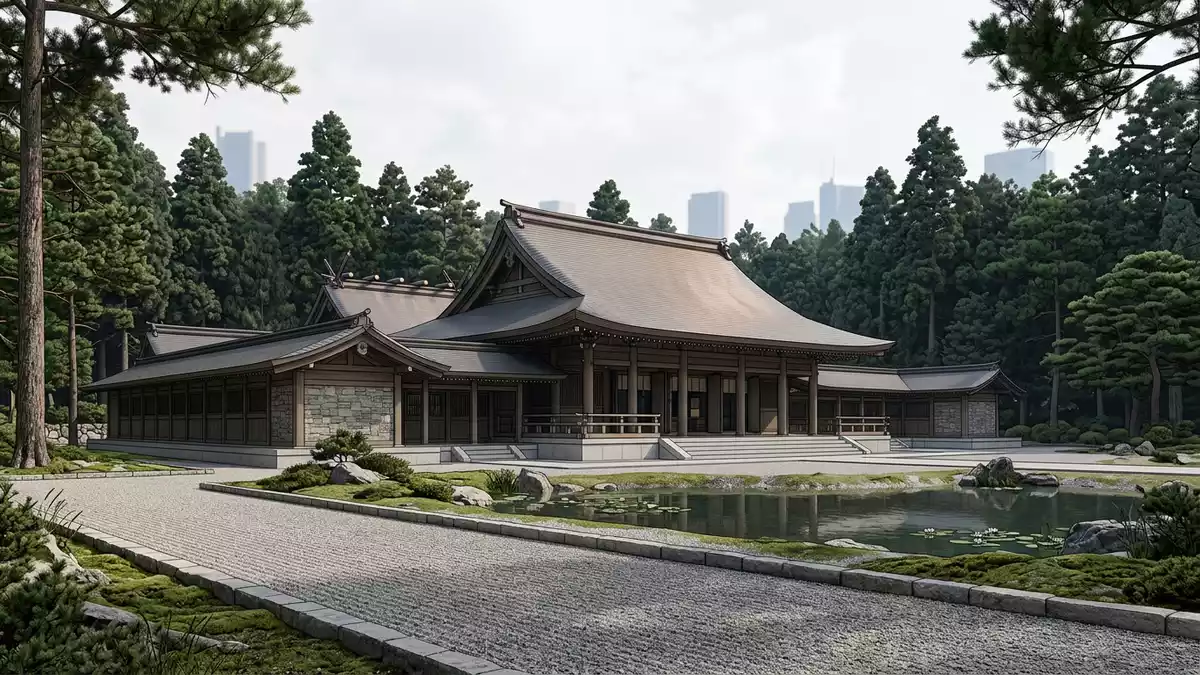
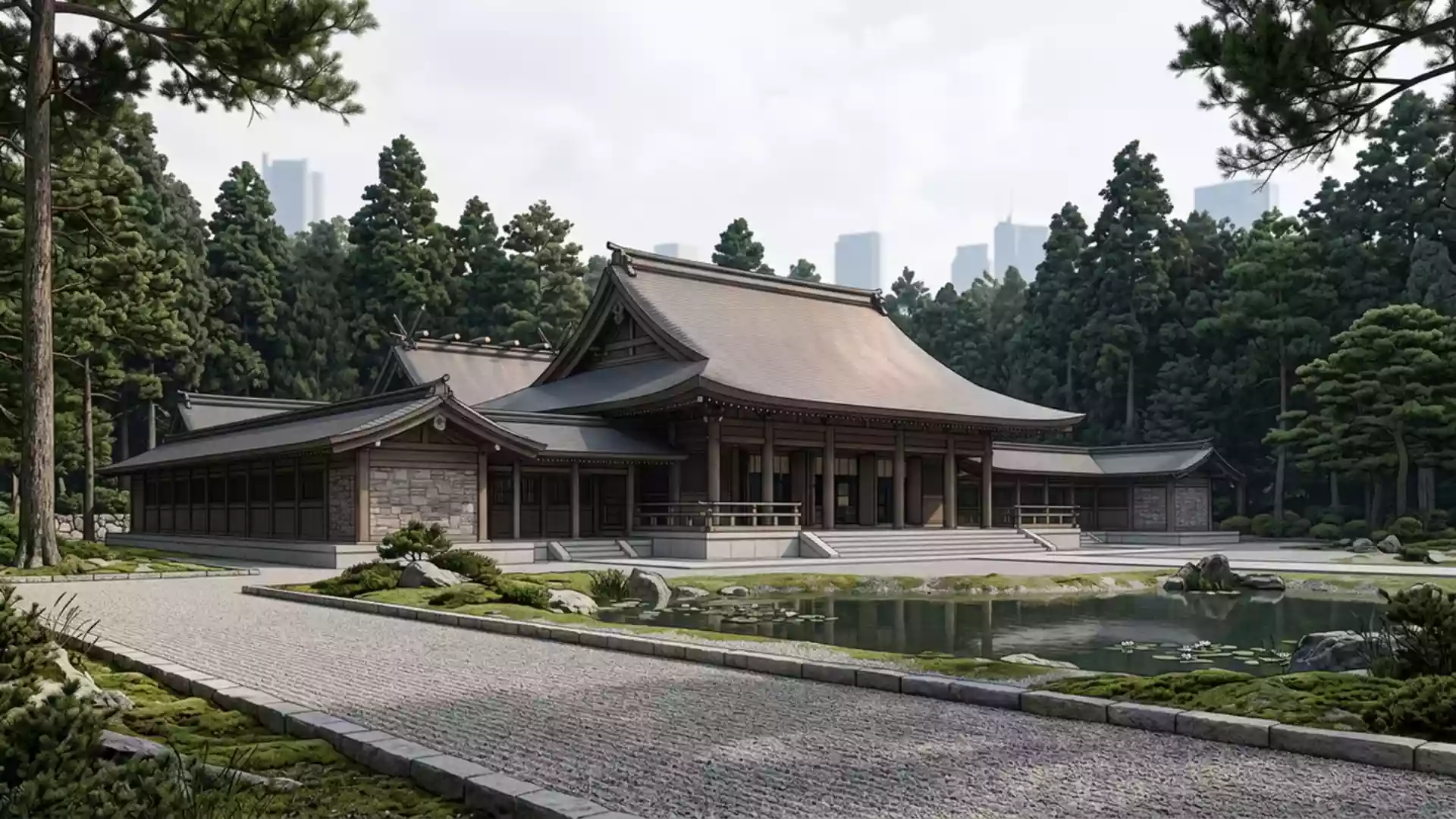
Meiji Jingu is a Shinto shrine in Shibuya, Tokio, framed by a carefully planted forest that separates its precincts from the streets and railway lines around it. Dedicated to Emperor Meiji and Empress Shoken and formally completed in 1920, it combines cypress buildings, wide gravel approaches and thick woodland to create a distinct pocket of shrine architecture and greenery in the middle of Japan’s capital.
A twentieth-century shrine for Emperor Meiji
Meiji Jingu stands in the Yoyogi area of Shibuya, on land that is now one of the major green spaces in central Tokio. The shrine is dedicated to the deified spirits of Emperor Meiji, who reigned from 1867 to 1912, and his consort Empress Shoken, and was established as a focus for honouring their role in the period known as the Meiji era.Meiji Shrine is dedicated to the imperial couple and forms part of the wider pattern of Shinto shrines linked to members of the Japanese imperial family.
The shrine’s original complex was completed in 1920, and the date is still used as a reference point for its centenary status.Meiji Jingu was established in 1920 after both Emperor Meiji and Empress Shoken had died in the early twentieth century. Architect Chuta Ito, active in the late Meiji and Taisho periods, is named in official descriptions as the designer of the shrine buildings, and his work at Meiji Jingu sits within a career that also included public and religious architecture elsewhere in Japan.The shrine was designed by Chuta Ito
Wood, cypress and shrine architecture
The visible heart of Meiji Jingu is a group of shrine buildings constructed largely from Japanese cypress, with unpainted timber surfaces and copper roofing that give the complex a restrained, muted palette.The main shrine is built with Japanese cypress The main precinct includes the honden, or main sanctuary, and associated halls arranged around open courtyards, with wide overhanging eaves and heavy timber columns that emphasise weight and solidity.
Approach to the central shrine runs under a succession of torii, including a large wooden gate whose height and span make it a landmark in its own right.The torii is made of Japanese cypress Beyond the main sanctuary, the precinct includes auxiliary structures, open plazas and a separate inner garden that contains a pond and seasonal plantings, with paths that offer quieter corners away from the central courtyards.The shrine precinct includes a garden
A man-made forest in the middle of Tokio
Meiji Jingu is set within a forested precinct that covers around 700,000 square metres, a planted landscape that reads as woodland even though it was laid out during the shrine’s creation in the early twentieth century.Meiji Jingu has a forest of about 70 ha The grounds were designed as a shrine forest, with a mix of evergreen and deciduous species that form dense planting along the wide gravel paths leading towards the central buildings.
The forest is divided into an inner precinct, or Naien, which holds the main shrine buildings, and an outer precinct, or Gaien, that includes sports and cultural facilities linked historically to the shrine complex.The shrine compound is comprised of Naien and Gaien Long approaches lined with trees give visitors extended views beneath the canopy, with glimpses of cypress roofs and torii emerging only near the core of the site.
Visiting Meiji Jingu: what travellers from Western Europe should know
- Meiji Jingu stands in Shibuya in central Tokio, on the land between the districts of Shinjuku and Shibuya that includes Yoyogi Park and the forested shrine precinct.
- The main entrances align with surrounding railway stations, with Harajuku Station on the JR Yamanote Line and Meiji-jingumae Station on the Tokyo Metro giving access to the shrine approaches on foot.
- Paths from the entrances to the central shrine buildings are laid in gravel and can be lengthy, and the approach involves walking under torii and through woodland rather than stepping directly into a courtyard.
- The official language is Japanese and the currency is the Japanese yen. Entry requirements depend on your nationality; UK travellers can check the FCDO travel advice at gov.uk/foreign-travel-advice, Irish travellers the Department of Foreign Affairs at ireland.ie.
Searching for Meiji Jingu on social platforms
These links open searches for Meiji Jingu on each platform.
Frequently asked questions about Meiji Jingu
Where in Tokio is Meiji Jingu located?
Meiji Jingu stands in Shibuya, adjoining the Yoyogi and Harajuku districts, on a large forested site between Shinjuku and Shibuya in central Tokio.
What should visitors expect when entering the shrine?
Visitors walk under tall wooden torii and along gravel paths through dense planting before reaching the cypress shrine buildings and open courtyards at the heart of the precinct.
What makes Meiji Jingu distinctive among Tokio’s shrines?
Meiji Jingu combines a twentieth-century shrine dedicated to Emperor Meiji and Empress Shoken with a deliberately planted forest that forms a substantial green enclave inside a major city.