
Meiji Jingu: a forest shrine in central Tokio
Published on 09/17/2026 at 21:31 | Editorial responsibility: Rafael Müller, Editor-in-Chief AD HOC NEWS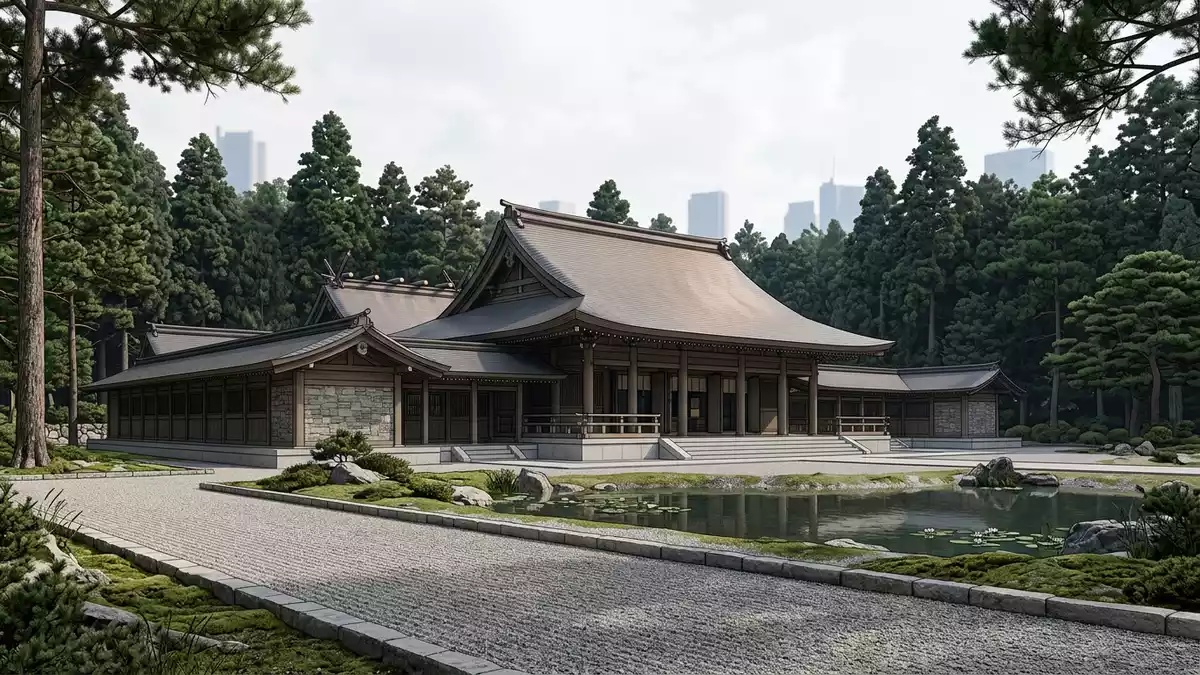
Meiji Jingu in Tokio is a Shinto shrine dedicated to the deified spirits of Emperor Meiji and Empress Shoken, set inside a deep forest in the centre of the city. Established in 1920, it combines monumental shrine architecture with woodland approaches that make the transition from urban streets to sacred precincts unusually gradual and immersive.
A twentieth-century shrine for a nineteenth-century emperor
Meiji Jingu stands in the Shibuya ward of Tokyo and is dedicated to Emperor Meiji, who reigned from the late nineteenth century and is closely associated with the Meiji Restoration, and Empress Shoken.Meiji Jingu is one of the Shinto shrines in Japan Unlike older shrines with medieval origins, Meiji Jingu is a relatively modern foundation, formally established in 1920 to commemorate their role in shaping modern Japan.The shrine was built in 1920 to commemorate the virtues of Emperor Meiji and Empress Shoken
The shrine’s main complex occupies part of a forested estate of about 70 hectares, enclosed by the city but visually separated from it by trees and broad gravel approaches.Meiji Jingu has a vast forest of around 70 ha Shrine buildings, known as the honden and associated structures, follow traditional timber construction with expansive courtyards and rooflines framed by lanterns and decorative metalwork. The current main buildings date from the late 1950s, after earlier structures were destroyed in the Second World War and then rebuilt in line with their original appearance.Most of the main structures were rebuilt and restored in 1958
Forest approaches and shrine precincts
Reaching Meiji Jingu involves entering broad forested avenues that lead from the edges of Yoyogi Park and Harajuku into the shrine grounds.Meiji Shrine and the adjacent Yoyogi Park make up a large forested area Large wooden torii gates mark the main entrances, and once inside the grounds, the urban skyline quickly gives way to tall trees, raked gravel paths and the sound of footsteps on the ground. These approaches converge on the main courtyard, where worshippers and visitors pass through further gates towards the central shrine buildings.
The location places Meiji Jingu beside some of Tokyo’s busiest districts, including Harajuku and Omotesando, but the shrine’s forest creates a distinct environment. The main precinct includes wide open squares, timber colonnades and covered walkways that frame views of the inner shrine and auxiliary structures. Sake barrels and other votive offerings line parts of the route, providing a visual link between contemporary donors and the shrine’s spiritual function.
The Inner Garden and wider complex
Beyond the main shrine compound, Meiji Jingu includes an Inner Garden known as Meiji Jingu Gyoen, a landscape garden that predates the shrine and has been incorporated into the complex.The Meiji Shrine Inner Garden, or Meiji Jingu Gyoen, is a public garden adjacent to Meiji Shrine The garden covers around 83,000 square metres and contains an iris garden, a pond, a tea house and resting structures set among woodland and lawns.Meiji Jingu Gyoen has an area of 83,000 square metres and includes a tea house and other features
The wider Meiji Jingu complex also encompasses the Meiji Memorial Picture Gallery and outer gardens, forming a group of facilities that combine religious, commemorative and leisure functions.Meiji Jingu consists of shrine buildings, inner and outer gardens and a Meiji Memorial Picture Gallery The shrine’s architecture has been associated with the work of architect Chuta Ito, a prominent figure in modern Japanese architectural history, whose designs helped define the appearance of early twentieth-century institutional buildings in Japan.The shrine was designed by architect Chuta Ito
Visiting Meiji Jingu: what travellers from Western Europe should know
- Meiji Jingu lies in Shibuya, adjacent to Harajuku and Yoyogi, with main approaches near JR Harajuku Station and Tokyo Metro Meiji-jingumae Station on central urban rail lines.
- The shrine grounds are extensive, with long gravel paths and gentle gradients through woodland; visiting involves walking over unpaved surfaces and negotiating broad external stairways and gateways.
- The surrounding area includes Yoyogi Park and major shopping streets such as Omotesando, so combining a visit to the shrine with nearby urban districts is straightforward.
- The official language is Japanese and the currency is the yen.
- Entry requirements depend on your nationality; UK travellers can check the FCDO travel advice at gov.uk/foreign-travel-advice, Irish travellers the Department of Foreign Affairs at ireland.ie.
Searching for Meiji Jingu on social platforms
These links open searches for Meiji Jingu on each platform.Frequently asked questions about Meiji Jingu
Where is Meiji Jingu located within Tokio?
Meiji Jingu stands in Shibuya ward, near Harajuku and Yoyogi, with shrine approaches beginning close to JR Harajuku Station and Tokyo Metro Meiji-jingumae Station.
What should a visitor expect on a first visit?
Visitors can expect long walks through forested avenues, passing large torii gates and votive displays, before reaching wide courtyards and the timber buildings of the central shrine precinct.
What makes Meiji Jingu distinctive among shrines in Japan?
Meiji Jingu is distinctive because it combines a twentieth-century Shinto shrine dedicated to Emperor Meiji and Empress Shoken with an extensive forest and Inner Garden in the midst of central Tokyo.


