
Medina of Tunis as a living labyrinth of heritage
Published on 08/22/2026 at 11:18 | Editorial responsibility: Rafael Müller, Editor-in-Chief AD HOC NEWS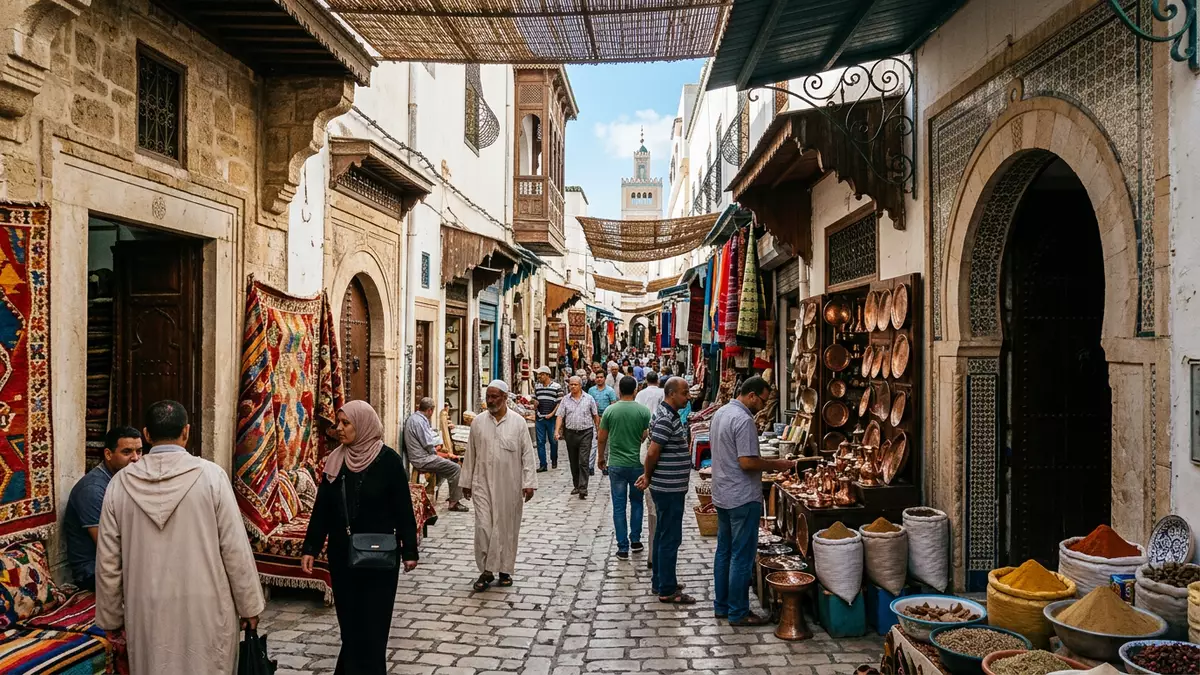
The Medina of Tunis gathers more than a thousand years of urban life into a dense maze of streets, courtyards and markets at the heart of the Tunisian capital. Founded as an Arabo-Muslim city in the late seventh century, it became the core of Tunis and a recognised UNESCO World Heritage Site in 1979, preserving an urban fabric that still reflects its medieval origins.
An Arabo-Muslim city shaped over centuries
The Medina of Tunis developed on a plain in north-eastern Tunisia, a short distance from the Mediterranean coast, and grew into the historic centre of the city of Tunis. From the eighth century the medina formed the political and religious heart of the city, with narrow streets radiating from its main congregational mosque and the palaces of ruling dynasties. Over time, suburbs grew to the north and south, extending the compact core while maintaining its characteristic street network.The inscribed property covers a surface area of close to 300 ha and includes both the early medina and these later districts.
Under the Almohad and Hafsid dynasties, which ruled between the twelfth and sixteenth centuries, Tunis rose to prominence as a major city of the Islamic world. Palaces, madrasas and mosques from this period still stand among earlier and later structures, giving the medina a layered architectural character that reflects successive rulers and artistic influences.Descriptions of Tunis emphasise the concentration of historic monuments within the walled city.
Mosques, palaces and souqs in a compact maze
The medina’s most prominent landmark is the Al-Zaytuna Mosque, also known as the Zitouna Mosque, whose origins lie in the eighth century and which anchors the surrounding markets and alleyways.The mosque stands at the centre of the old city, and its prayer hall, courtyard and minaret are framed by arcades and small squares where streets converge. Other mosques, such as the Kasbah Mosque and Youssef Dey Mosque, punctuate the street pattern with courtyards and entrances that open off the main thoroughfares.
Beyond the religious buildings, the Medina of Tunis contains a dense collection of palaces, madrasas and urban houses that illustrate different periods of Tunisian architecture. Noble residences such as Dar Hussein, Dar Ben Abdallah and Dar Lasram are organised around interior courtyards, with rooms arranged on several levels and façades that often display carved stone, painted wood and stucco decoration.Inventories of the medina mention hundreds of monuments, including mausoleums and fountains, scattered through its quarters.
Street life and craftsmanship in the historic core
A visit to the Medina of Tunis brings encounters with specialised markets, or souqs, that still follow traditional patterns of trade and craft. Souq el-Attarine, for example, is known for perfumers and spice merchants, while other souqs focus on textiles, leatherwork or metalware, each occupying a distinct stretch of covered street. Many of these markets cluster near the central mosque, where porticoes open towards small squares and side passages.
Within the same compact area stand religious complexes, educational institutions and family mausoleums, giving the medina a dense mix of functions in a finely grained urban fabric.Accounts of the medina describe some 700 monuments in total, ranging from large mosques to small fountains and medrasas. The combination of narrow lanes, vaulted passages and sudden open courtyards means that changes in scale are frequent as streets turn, while street-level shops and workshops line many of the main routes.
Visiting Medina of Tunis: what travellers from Western Europe should know
- The Medina of Tunis lies within the city of Tunis in northern Tunisia, west of the modern downtown, and is reached by streets that lead from the central city squares into its historic gates.
- The old city is built on gently sloping ground, and many routes involve walking along narrow alleys and climbing occasional flights of steps between different street levels.
- Several named gates, such as Bab el Bhar and Bab Jedid, mark traditional entry points to the medina and help in orientating between the historic streets and the newer districts outside the former walls.
- The official language is Arabic and the currency is the Tunisian dinar.
- Entry requirements depend on your nationality; UK travellers can check the FCDO travel advice at gov.uk/foreign-travel-advice, Irish travellers the Department of Foreign Affairs at ireland.ie.
Searching for Medina of Tunis on social platforms
These links open searches for Medina of Tunis on each platform.
Frequently asked questions about Medina of Tunis
Where is the Medina of Tunis located?
The Medina of Tunis forms the historic core of Tunis in northern Tunisia, set slightly inland from the Mediterranean coast.
What can visitors expect inside the Medina of Tunis?
Visitors encounter a compact network of narrow streets lined with mosques, markets, courtyard houses and palaces that reflect centuries of Arabo-Islamic urban life.
What makes the Medina of Tunis distinctive among historic cities?
The Medina of Tunis is distinctive for its concentration of monuments, including the Al-Zaytuna Mosque and numerous palaces and madrasas, within a largely preserved medieval street layout.


