Medina of Tripoli between harbour walls and layered streets
Published on 09/11/2026 at 08:07 | Editorial responsibility: Rafael Müller, Editor-in-Chief AD HOC NEWS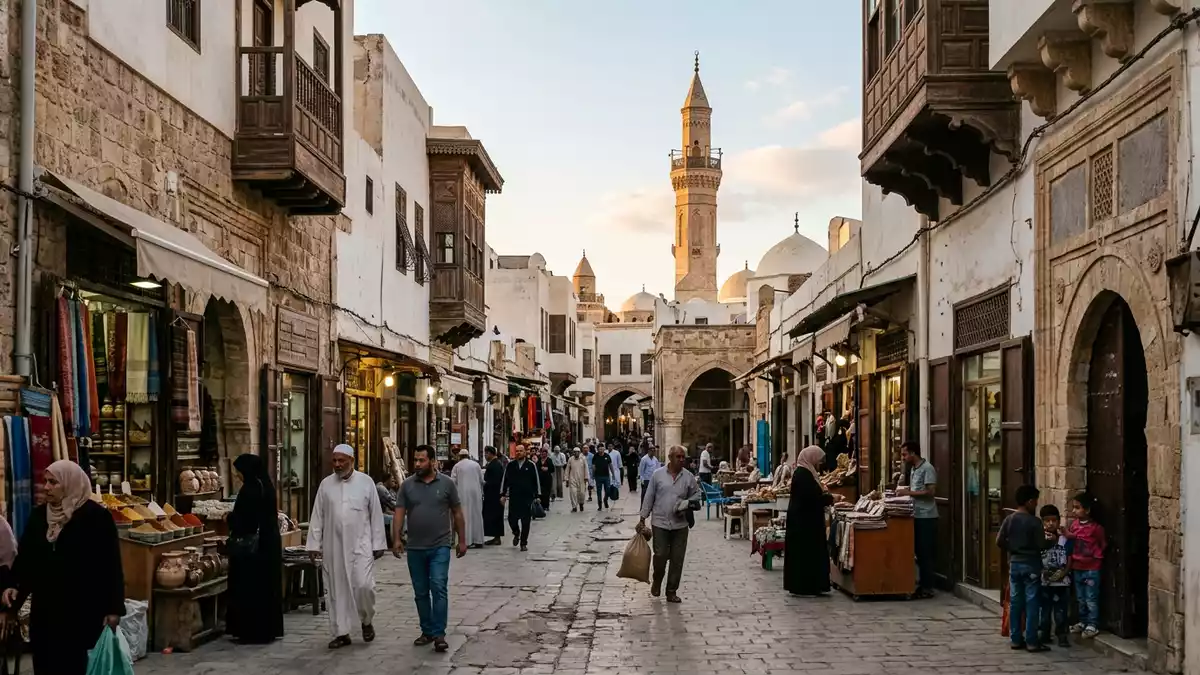
Medina of Tripoli is the historic walled core of Tripolis, Libya, pressed between the Mediterranean harbour and the newer quarters that spread inland from the coast. Within these walls, streets, mosques and markets reflect a city that began as ancient Oea in the classical world and later took on its present form under Ottoman rule in the sixteenth century.
Harbour-facing walls and a pentagonal old city
The old city of Tripoli forms a compact urban enclave along the harbour, enclosed by fortifications that mark it out clearly from the surrounding districts of the modern capital. The ancient walled city lies beside the Mediterranean Sea and is dominated towards the waterfront by a fortified complex often described as a castle, a reminder that this coastal core developed with defence in mind.The ancient walled city These fortifications owe much of their present outline to the Ottoman refortification of Tripoli in the sixteenth century, when city walls were rebuilt and the overall layout settled into a roughly pentagonal shape that still frames the medina.Ottoman refortification in the sixteenth century
Historically, entry to Medina of Tripoli passed through several named gates cut into these walls, linking the harbour and inland approaches with the streets inside. Among them were Bab Hawwara towards the south-east, Bab Zenata to the west and Bab al-Bahr near the sea, continuing a pattern of defended gateways that can be traced back to earlier Roman and medieval lines of protection.Historic gates such as Bab Hawwara, Bab Zenata and Bab al-Bahr The walled quarter is reported as covering around 48 hectares, a confined area where dense building and narrow passages bring the city’s layers close together within a limited footprint along the water.the old city confined between city walls over an area of 48 hectares
From ancient Oea to Ottoman and Italian-era layers
Tripoli’s medina stands on ground first settled as the Phoenician city of Oea, a coastal settlement that later entered the orbit of Rome and left visible traces in the old quarter.Tripoli began as ancient Oea One of the most striking classical survivals is the marble triumphal arch of Marcus Aurelius, dating from 163 CE, which stands at the edge of the old city and demonstrates how Roman ceremonial architecture was embedded into the later urban fabric.the marble Marcus Aurelius triumphal arch (163 ce) The street plan itself still reflects Roman principles, with a main axis, or cardo, running from the arch towards the Liberty Gate and a crossing decumanus providing the second organising line through the quarter.cardo and decumanus exemplify the two principal divisions in a Roman town plan
Over these classical foundations, Ottoman and Karamanli periods left a dense layer of Islamic architecture and urban life. The Gurgi Mosque, completed in 1883, and the Karamanli Mosque, dating to the eighteenth century, stand among the medina’s best-known religious buildings, representing the city’s Islamic architectural legacy with their minarets and courtyards.Gurgi Mosque (1883) and Karamanli Mosque (18th century) The mosque of al-Naqah, sometimes called the “Camel” Mosque, is recorded as one of the oldest surviving mosques in Tripoli, with a date given for 1610, adding another anchor to the medina’s seventeenth-century religious landscape.The oldest surviving mosque in Tripoli is the mosque of al-Naqah (1610) Later, Italian-era consular and commercial buildings introduced European façades and courtyards into the same streets, so that Roman arches, Ottoman mansions and colonial offices now sit within walking distance of one another.
Narrow streets, souks and courtyard houses
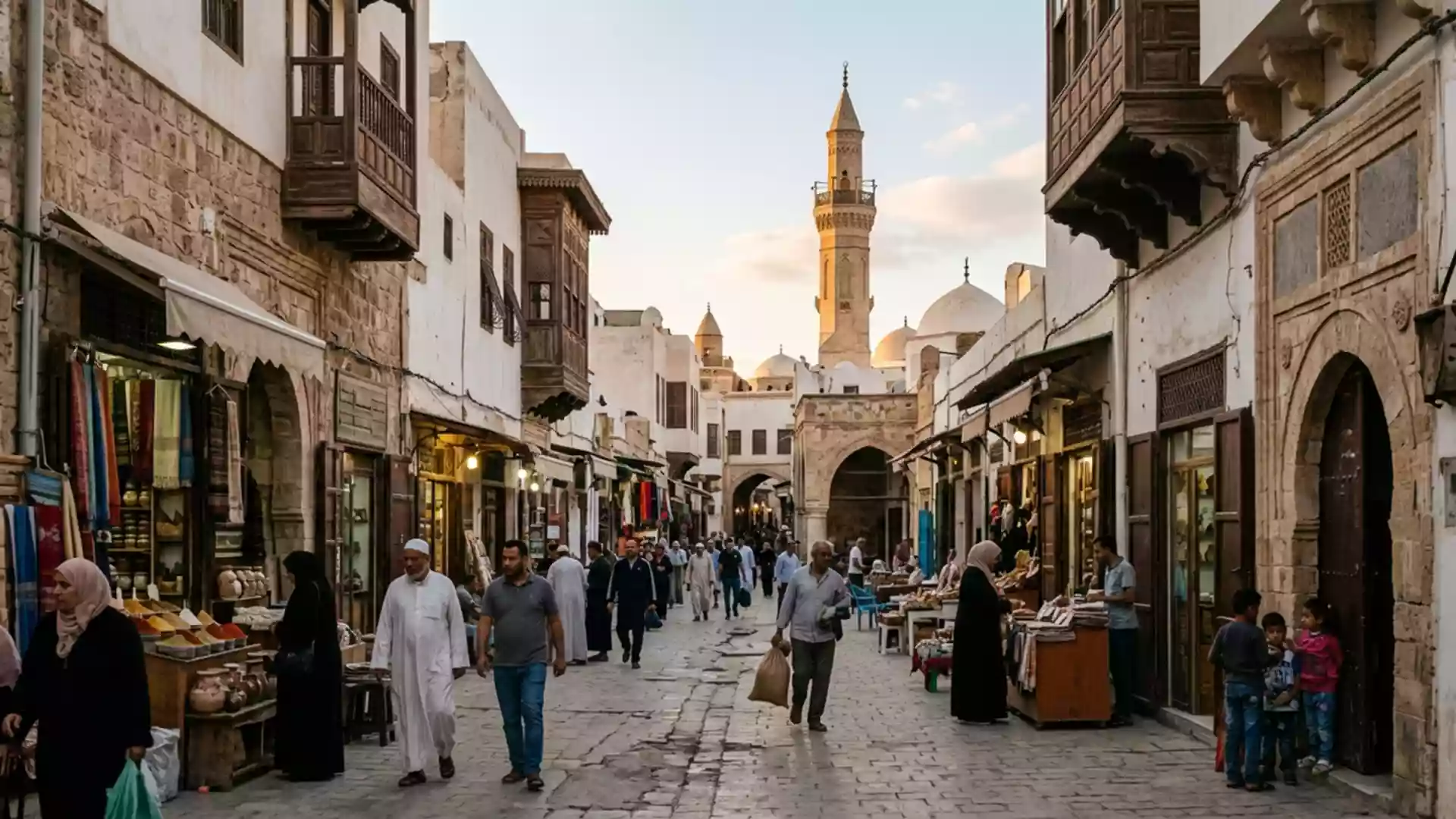
Inside Medina of Tripoli, the scale shifts from harbour walls and castle ramparts to a tight network of lanes, arches and small squares. The old quarter is described as a maze of narrow, winding streets, some of them passing under arches that bridge between buildings, while others open briefly into modest squares before closing again into alleyways.maze of narrow streets with arches and overpasses Along these lanes are courtyard houses from the Ottoman period, funduqs with workshops on the ground floor and rooms above for merchants, and religious schools, or madrasas, that contribute to the dense social fabric of the district.courtyard houses from the Ottoman period and funduqs
Commercial life is concentrated into specialised souks where particular goods cluster along certain stretches of street. Market areas for textiles, carpets, spices and household goods sit beside a gold market that carries both contemporary jewellery and traditional tribal silver and gold work.a place for buying carpets and textiles ... and a gold and jewelry market Religious and domestic buildings also open onto central courtyards, sometimes with decorative tile work, giving an internal counterpoint to the busy lanes outside. From some streets, views lead towards the Red Castle, or al-Saraya al-Hamra, which stands near the harbour and houses a museum, reinforcing the sense that this coastal medina is both a lived quarter and a repository of Tripoli’s long history.the castle, al-Saraya al-Hamra, which today houses the Jamahiriya Museum
Visiting Medina of Tripoli: what travellers from Western Europe should know
- Medina of Tripoli lies along the harbour in central Tripolis on Libya’s Mediterranean coast, enclosed by fortification walls and reached from the modern city by urban roads and local streets.The Old City of Tripoli or Medina is the ancient center of the city, which overlooks the Mediterranean Sea and is surrounded by a wall.
- The terrain within the medina consists of narrow lanes with uneven surfaces, occasional steps and passages that pass under arches, so moving through the quarter involves walking on confined routes rather than broad pavements.It is the ancient center of the city, which overlooks the Mediterranean sea and surrounded by a wall.
- The official language is Arabic and the currency is the Libyan dinar.
- Medina of Tripoli stands close to coastal squares and the Red Castle complex, so a visit to the old city can be combined with time beside the harbour and nearby waterfront landmarks.The ancient walled city, or medina, lies along the harbour and is dominated by a 16th-century Spanish castle.
- Entry requirements depend on your nationality; UK travellers can check the FCDO travel advice at gov.uk/foreign-travel-advice, Irish travellers the Department of Foreign Affairs at ireland.ie.
Searching for Medina of Tripoli on social platforms
These links open searches for Medina of Tripoli on each platform.
Frequently asked questions about Medina of Tripoli
Where is Medina of Tripoli located within the city?
Medina of Tripoli lies along the harbour in central Tripolis on Libya’s Mediterranean coast, enclosed by fortification walls that separate it from newer districts.
What can visitors expect when walking through the medina?
Visitors encounter narrow streets, arches, souks and courtyard houses, along with landmarks such as mosques and the Roman arch of Marcus Aurelius at the edge of the old city.
What makes Medina of Tripoli distinctive among historic quarters?
Its distinction lies in the combination of a pentagonal walled outline, a Roman street grid with cardo and decumanus, and Ottoman, Karamanli and Italian-era buildings sharing the same compact coastal ground.