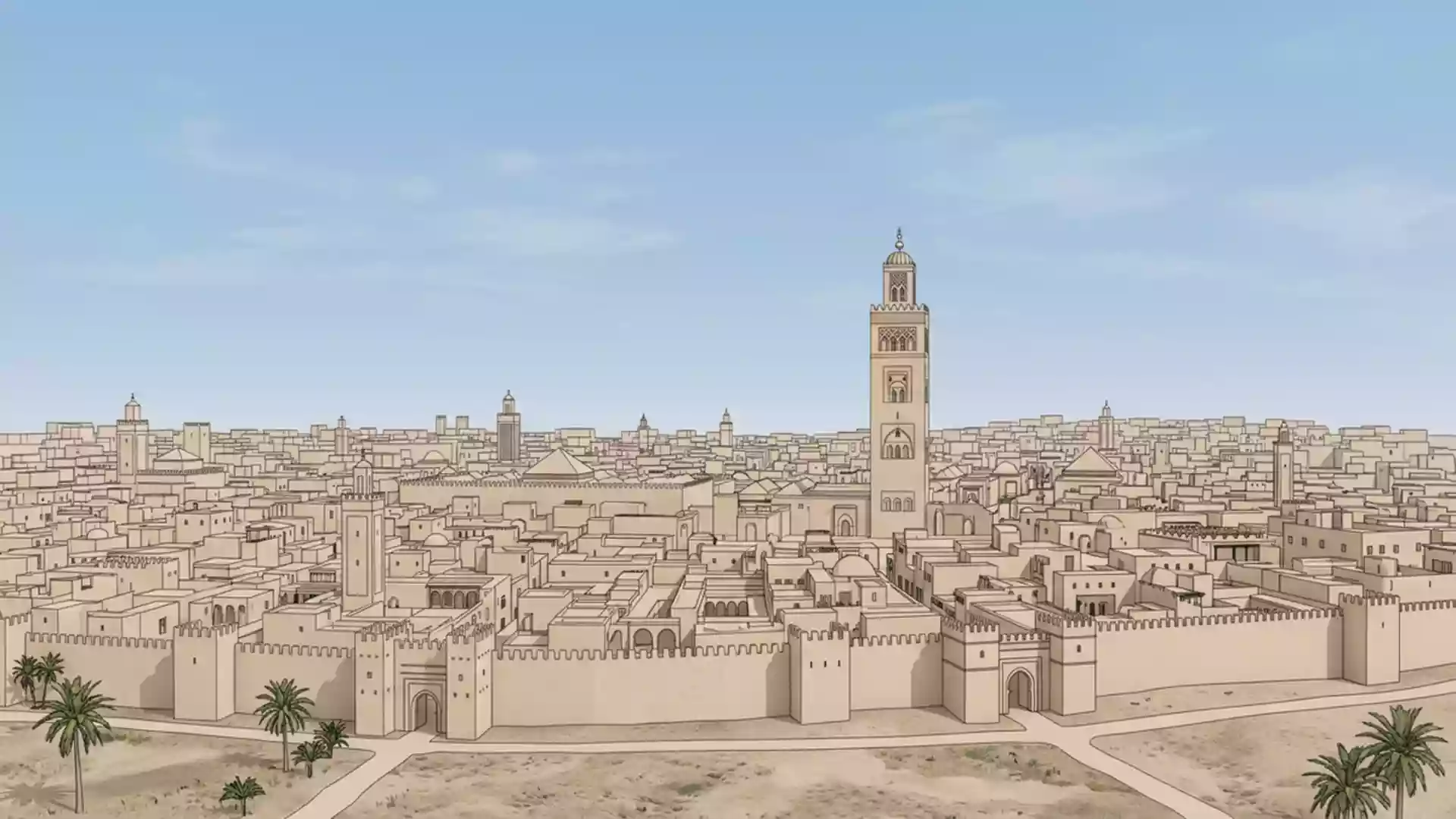
Medina of Marrakesh, the walled red heart of the city
Published on 09/02/2026 at 09:51 | Editorial responsibility: Rafael Müller, Editor-in-Chief AD HOC NEWS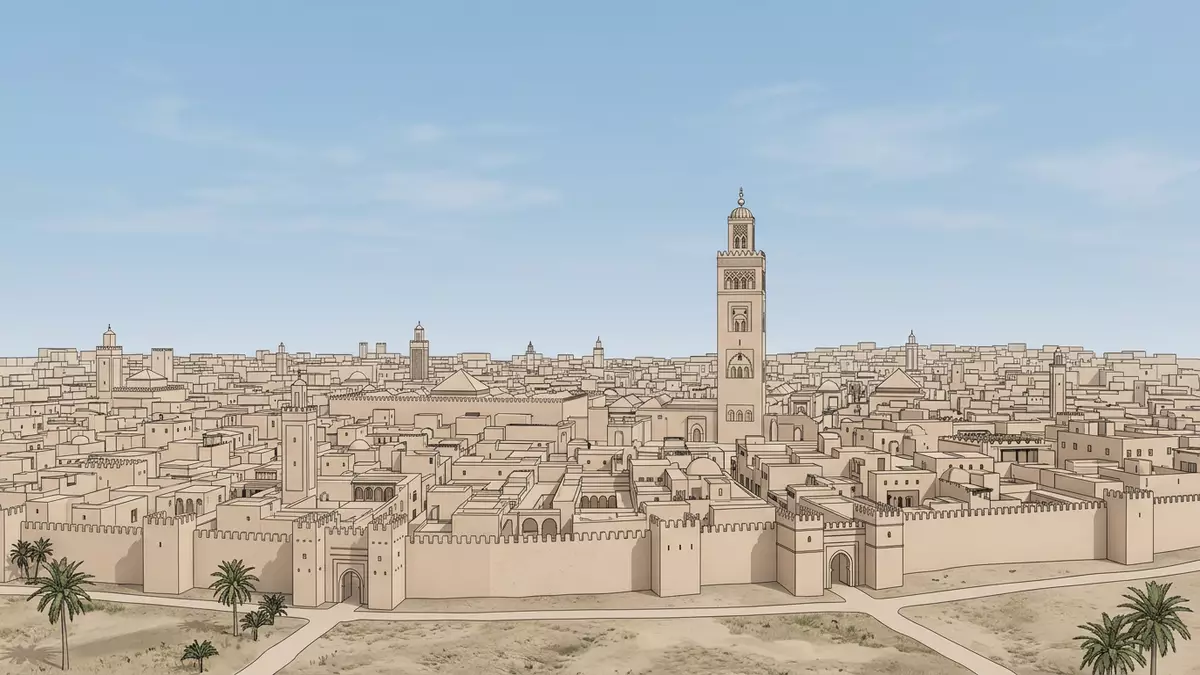
Medina of Marrakesh is the historic walled core of Marrakesch, a dense old city of reddish walls, mosques and markets that has shaped Morocco’s history since the eleventh century. Founded under the Almoravids and recognised as a UNESCO World Heritage Site since 1985, it remains a living quarter where everyday life and centuries of architecture meet in the same tangle of streets.
Red walls, city gates and a living maze
The first encounter with Medina of Marrakesh is usually through its ramparts, the long defensive walls that enclose the historic city in a broad loop. These fortifications began to take shape in the early twelfth century under the Almoravid dynasty, which had founded Marrakesh around 1070 as a new capital in the Haouz plain of central Morocco.The medina is enclosed by ramparts built of local red earth mixed with lime, a material that gives the city its characteristic colour and the nickname “Red City”.
The walls of the medina are punctuated by monumental gates, each one opening towards a different direction of the surrounding plain.Historic gates such as Bab Doukkala and Bab el-Khemis mark the transition from newer districts into the dense street network of the old city, and still carry the names of regions and trades connected to Marrakesch’s past. Within the walls, the layout follows no strict grid; instead, the medina forms a compact maze of lanes that bend and narrow between earth-coloured houses, small squares and covered passages, with open rooftops and satellite dishes appearing above the line of walls.
Squares, mosques and palaces across the centuries
At the physical and symbolic centre of Medina of Marrakesh lies Jemaa el-Fnaa, the large open square that anchors many routes through the old city.The square and its surrounding souks sit within walking distance of several of the medina’s historic monuments, making it a natural reference point for exploring the area. From the square, streets lead north into the main souks and south towards the Kasbah quarter, while the distinctive minaret of the Koutoubia Mosque stands just to the west, rising above trees and low roofs.
Marrakesh was founded under the Almoravids in the eleventh century and continued to serve as a political and cultural centre under the Almohads in the twelfth and thirteenth centuries.Monuments such as the Koutoubiya Mosque, the Kasbah and Ben Youssef Madrasa represent different phases of this long history, with courtyards, prayer halls and carved decoration that recall the city’s role in the wider western Islamic world. Later palaces, including El Badi and Bahia, add enclosed gardens, reception rooms and pavilions to the medina’s architectural palette, while the Saadian Tombs and other religious complexes layer burial chambers and commemorative spaces into the urban fabric.
Souks, fondouks and everyday life in the medina
Medina of Marrakesh is not only a collection of monuments; it is also a place where trades, workshops and markets still concentrate in a relatively small area.UNESCO describes the medina as a living historic town with houses, souks and fondouks grouped within roughly 700 hectares. Souks branch from covered main lanes into smaller alleys, with individual sections associated with goods such as textiles, leather, metalwork or spices, and workshops opening directly onto the passages.
Between the markets and houses, fondouks or caravanserais form deeper courtyards where goods and animals were once accommodated behind heavy doors.These inner yards, together with mosques, madrasas and neighbourhood squares, create a rhythm of enclosed and open spaces that give the medina its particular scale. Residential quarters with their own small mosques and communal facilities sit just behind commercial streets, so that the transition from busy trading lanes to quiet domestic alleys can happen within a few turns.
Visiting Medina of Marrakesh: what travellers from Western Europe should know
- Medina of Marrakesh lies within the city of Marrakesch in central Morocco, west of the Atlas Mountains, and surrounds the open square of Jemaa el-Fnaa at its heart.
- Within the medina, most streets are narrow and stepped in places, with uneven paving; vehicles are limited in many areas, so movement is largely on foot among pedestrians and handcarts.
- The official language is Arabic and the currency is the Moroccan dirham.
- Entry requirements depend on your nationality; UK travellers can check the FCDO travel advice at gov.uk/foreign-travel-advice, Irish travellers the Department of Foreign Affairs at ireland.ie.
Searching for Medina of Marrakesh on social platforms
These links open searches for Medina of Marrakesh on each platform.
Frequently asked questions about Medina of Marrakesh
Where is Medina of Marrakesh located?
Medina of Marrakesh occupies the historic core of Marrakesch in central Morocco, enclosed by reddish defensive walls that form a loop around the old city.
What should a visitor expect inside the medina?
Inside the medina, visitors encounter narrow lanes, souks, mosques, fondouks and residential quarters arranged around Jemaa el-Fnaa and other squares, with most movement on foot.
What makes Medina of Marrakesh distinctive?
The combination of Almoravid and Almohad-era monuments, later palaces, living markets and red ramparts within a single continuous walled city gives Medina of Marrakesh its distinctive character.