
Medina of Marrakesh and its Almoravid foundations
Published on 09/08/2026 at 13:29 | Editorial responsibility: Rafael Müller, Editor-in-Chief AD HOC NEWS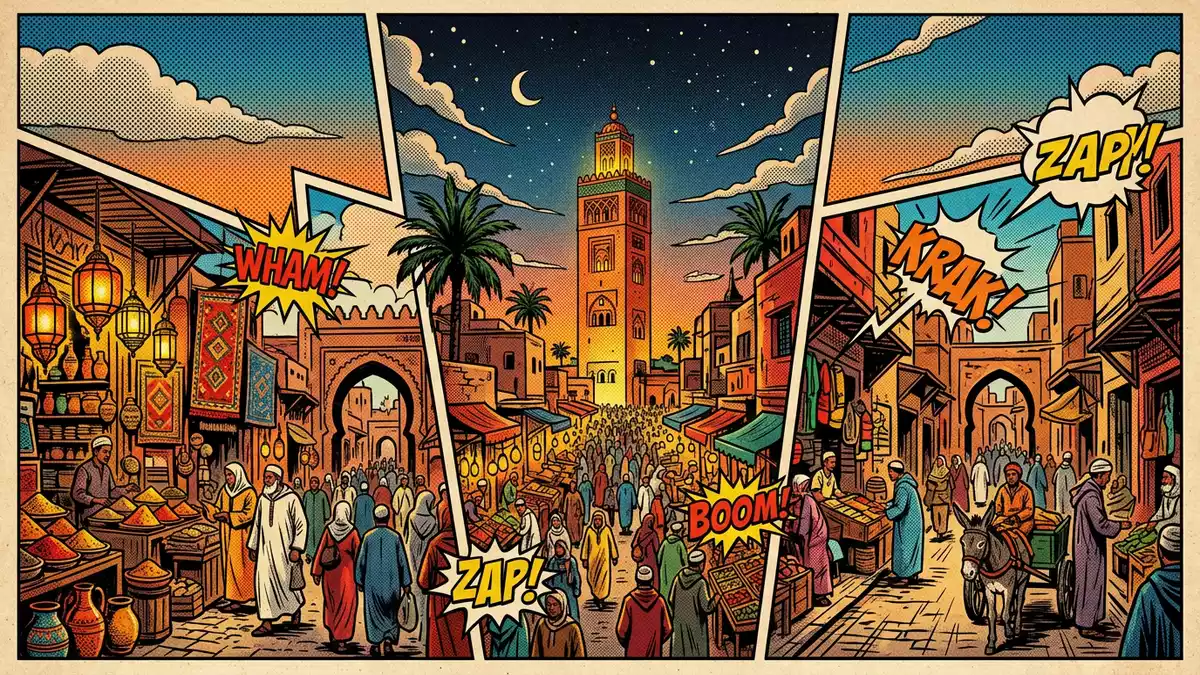
Medina of Marrakesh is the historic core of Marrakesh, a walled city quarter founded in 1070–72 by the Almoravids and recognised by UNESCO as a World Heritage Site. Its streets, ramparts and monuments bring together the city’s early Almoravid plan and later Almohad landmarks.
Almoravid streets and the first city plan
The medina’s identity begins with the Almoravid dynasty, which established Marrakesh in the eleventh century. UNESCO describes the city as founded in 1070–72, and the date still anchors the quarter’s long urban history.1070–72 foundation
Much of the place reads as a dense historic fabric rather than a single monument. The walls, gates and inner lanes preserve the outline of a medieval capital, with later buildings layered into the same urban frame.
Koutoubia, ramparts and later dynasties
The Koutoubia Mosque is the medina’s most visible landmark, and its minaret belongs to the Almohad period. The same period shaped key parts of Marrakesh after the city passed from Almoravid to Almohad control.Almohad period
UNESCO’s account also links the medina to the dynasty’s original urban structure and to its inscribed heritage value. That combination of early layout and later monumental additions gives the quarter its layered character.World Heritage Site
Palaces, mosques and market streets
Beyond the walls and mosques, the medina contains palaces, religious buildings and market streets packed into a compact urban grid. Bahia Palace and the Saadian monuments belong to later chapters of Marrakesh, while the older street pattern keeps the historic quarter legible as a living city centre.historic quarter
The city’s long role as a political and cultural centre is part of that atmosphere. Marrakesh appears in the UNESCO record as a major centre of the western Muslim world, and the medina still carries that civic weight in its scale and density.
Visiting Medina of Marrakesh: what travellers from Western Europe should know
- The medina lies in Marrakesh, Morocco, and is reached through the city’s main streets and gates.
- Its lanes are narrow and irregular, with walls, market fronts and small squares packed close together.
- Ramparts, monumental gates and mosque towers provide the clearest landmarks inside the quarter.
- The official language is Arabic and the currency is the Moroccan dirham.
- Entry requirements depend on your nationality; UK travellers can check the FCDO travel advice at gov.uk/foreign-travel-advice, Irish travellers the Department of Foreign Affairs at ireland.ie.
Searching for Medina of Marrakesh on social platforms
These links open searches for Medina of Marrakesh on each platform.
Frequently asked questions about Medina of Marrakesh
Where is Medina of Marrakesh?
It is the historic centre of Marrakesh in Morocco, enclosed by ramparts and organised around a dense network of lanes and monuments.
What should a visit there include?
The Koutoubia Mosque, the gates and the market streets give the clearest sense of the quarter’s scale and fabric. Palaces and religious buildings add later layers to the same urban core.
What makes it distinctive?
The medina combines an eleventh-century foundation with a strong Almohad and later historical imprint. Its UNESCO status reflects that layered cityscape rather than a single isolated monument.


