
Medina of Essaouira, a planned Atlantic fortress-city
Published on 09/09/2026 at 11:25 | Editorial responsibility: Rafael Müller, Editor-in-Chief AD HOC NEWS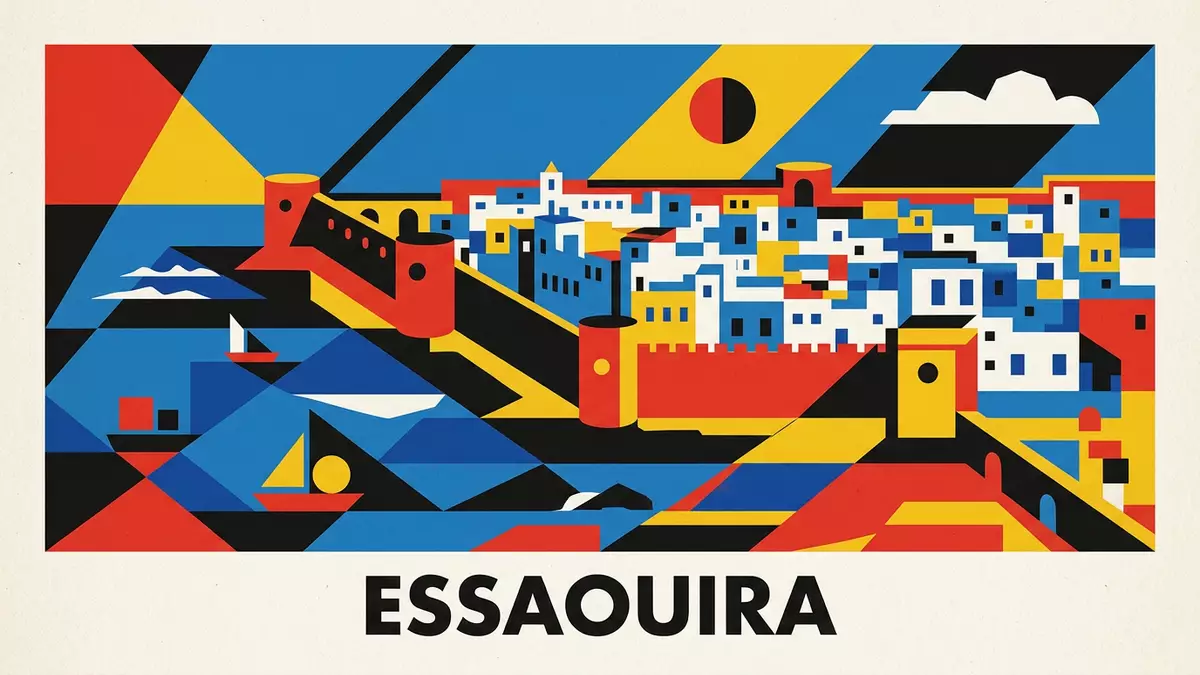
On Morocco’s Atlantic shore, the Medina of Essaouira forms a carefully planned 18th?century fortress?town, its grid of streets set behind stone ramparts facing the ocean. Recognised as a cultural World Heritage Site in 2001, it stands as a rare example of European military town?planning transplanted to a North African port.
Fortified Atlantic port planned in the eighteenth century
The Medina of Essaouira occupies a rocky peninsula on the Atlantic coast, where the walled old town is framed by long ramparts and seafacing bastions. The urban fabric in its present form dates to the second half of the eighteenth century, when a new fortified port town was laid out on the Atlantic shore of Morocco.late-18th-century fortified town Behind the walls lies a planned grid of straight streets and rectangular blocks, an arrangement that contrasts with the more irregular street patterns often associated with older medinas in the region.European street plan
The town’s historic name, Mogador, derives from a Phoenician word meaning “small fortress”, hinting at the long strategic interest in this stretch of coast and its offshore islets.name originating from the Phoenician word Migdol In the eighteenth century the fortified town was shaped by a wall influenced by the work of French military engineer Sébastien Le Prestre de Vauban, whose bastioned designs were widely adopted in Europe.wall influenced by the Vauban model Essaouira’s seafront position made it a major trading seaport linking Morocco and regions south of the Sahara with European markets over the following centuries.international trading seaport
Streets, quarters and everyday urban fabric
Within the walls, the Medina of Essaouira contains distinct quarters that reflect its planned role as both administrative centre and trading hub. Historic descriptions list a kasbah forming the administrative precinct, a commercial medina of markets and workshops, and a mellah that served as the Jewish quarter, each composed of tightly packed residences and narrow lanes.Kasbah, Medina, and Mellah The street grid, laid out in regular lines, creates long vistas interrupted by gates, towers and occasional small squares, where arcaded facades frame everyday activity.
Stone and limewashed masonry dominate the built fabric, with houses typically rising several storeys and presenting simple elevations to the street. Blue?painted wooden doors and shutters are common throughout Essaouira, adding strong colour to pale walls and echoing the port’s maritime setting. The town’s ramparts incorporate platforms carrying cannon pointed towards the open Atlantic, an enduring reminder of the site’s defensive character.seafacing ramparts and cannons Within the grid, covered souks and open stretches of street host markets where goods have circulated between hinterland and ocean for generations.
UNESCO designation and coastal landscape
The Medina of Essaouira is inscribed on the UNESCO World Heritage List as a cultural property under criteria (ii) and (iv), reflecting both its role in intercultural exchange and its value as an example of 18th?century military architecture in North Africa.UNESCO inscription and mapped boundaries The protected area encompasses the walled town and a buffer zone that includes the archipelago off Essaouira’s shore, extending the heritage site beyond the built fabric to the coastal setting.World Heritage Site information
Offshore, the Mogador islands form part of the same inscription and have long been used as a base in the Atlantic, now noted as a protected habitat for seabirds.Mogador islands bird sanctuary Together, the peninsula, its fortifications and the nearby islands create a layered coastal landscape, where urban stonework meets waves and wind. The town’s position on the edge of the ocean shapes its character: streets running towards the seafront end at ramparts and gates, and views along the walls take in both the Atlantic swells and the clustered roofs of the medina behind.
Visiting Medina of Essaouira: what travellers from Western Europe should know
- The Medina of Essaouira forms the historic walled centre of Essaouira on Morocco’s Atlantic coast, reached by road from other Moroccan cities and by local transport within Essaouira.
- Inside the walls, movement between quarters involves walking along paved streets and passing through gateways; some sections of the ramparts are accessed by staircases leading to elevated walkways.
- The coastal position exposes parts of the medina and the seafront ramparts to Atlantic winds and salt air throughout the year, which can affect comfort along the outer walls.
- The official language is Arabic and the currency is the Moroccan dirham.
- Entry requirements depend on your nationality; UK travellers can check the FCDO travel advice at gov.uk/foreign-travel-advice, Irish travellers the Department of Foreign Affairs at ireland.ie.
Searching for Medina of Essaouira on social platforms
These links open searches for Medina of Essaouira on each platform.
Frequently asked questions about Medina of Essaouira
Where is the Medina of Essaouira located?
The Medina of Essaouira stands on a rocky Atlantic peninsula within the city of Essaouira in Morocco, forming its historic walled core.
What can visitors expect when exploring the medina?
Visitors encounter straight streets in a planned grid, stone houses with blue doors, markets in narrow lanes and long ramparts with views over the Atlantic.
What makes the Medina of Essaouira distinctive among Moroccan coastal towns?
Essaouira’s medina is distinctive for its eighteenth?century planned street grid, Vauban?influenced fortifications and combined urban and island World Heritage landscape.


