
Medina of Essaouira: a gridded Atlantic fortress city
Published on 09/12/2026 at 21:55 | Editorial responsibility: Rafael Müller, Editor-in-Chief AD HOC NEWS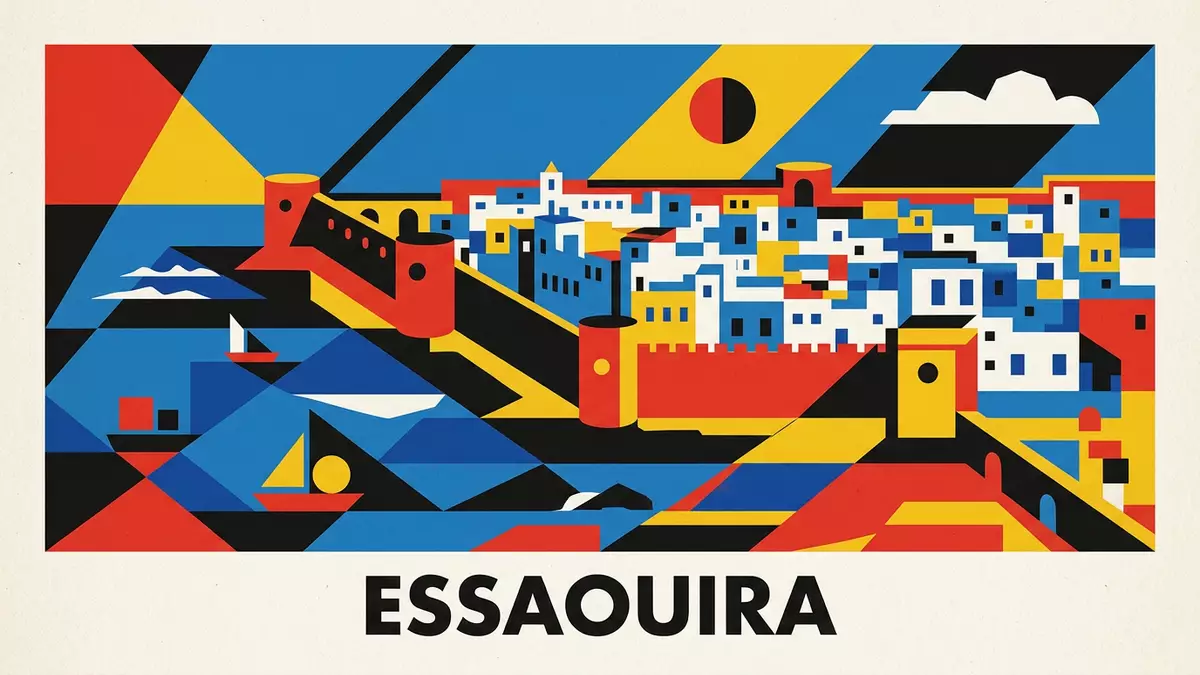
The Medina of Essaouira in Morocco is a walled Atlantic port city where straight streets, stone ramparts and old cannons create a compact fortress-like old town beside the ocean. Recognised as a cultural UNESCO World Heritage Site since 2001, it presents a rare example of a gridded North African medina laid out in the eighteenth century and enclosed by walls influenced by European military design.
A late eighteenth-century fortified port on the Atlantic
The historic core of Essaouira developed in the second half of the eighteenth century as a planned fortified town on Morocco’s Atlantic coast. The urban layout follows a rectilinear grid rather than the maze-like pattern common in older Moroccan medinas, with streets running broadly at right angles and opening into squares and small marketplaceslate-18th-century fortified town. The town’s earlier name, Mogador, traces back to a Phoenician word meaning a small fortress, echoing the defensive character that still defines the waterfront.
The walls surrounding the Medina of Essaouira draw on principles of European military architecture while standing firmly in a Moroccan and Arabo-Muslim contextfortified town of the mid-eighteenth century. Seaward bastions project from the ramparts toward the Atlantic, while landward gates pierce the walls and lead into the gridded streets. Behind the fortifications, whitewashed houses with simple façades and blue-painted details line narrow lanes, creating a continuous band of built form between the harbour and the inland quarters.
Harbour walls, Skala ramparts and cannons
One of the most distinctive walks in the Medina of Essaouira follows the ramparts known as the Skala de la Ville, the long sea-facing wall on the outer edge of the medina. Here a broad stone platform runs above the ocean-facing side of the town, with a line of old bronze cannons pointing out toward the Atlantic swells and the offshore islands known as the Iles PurpurairesSkala de la Ville rampart. From the parapet, views stretch along the honey-coloured walls, across the fishing harbour and over the clustered blue boats tied up below.
Closer to the harbour, the Skala du Port forms a separate bastion with its own line of cannons and a vantage over the anchored fishing fleetSkala and sea walls. Inside the walls, workshops and galleries occupy vaulted spaces beneath the ramparts, in places working local woods such as thuya into carved boxes and furniture. The combination of defensive stonework, maritime views and everyday craft activity gives the sea walls a layered character that links military history with the town’s trading and artisanal life.
UNESCO medina, trading heritage and urban life
The Medina of Essaouira, formerly Mogador, is inscribed on the UNESCO World Heritage List as site number 753, recognised for both its urban form and its historical role as a trading port linking Morocco, sub-Saharan regions and EuropeUNESCO World Heritage Site. Within the walls, markets and souks still cluster along main streets and around central squares, and the harbour continues to connect the town with Atlantic fishing grounds. The historic grid, the gates and the ramparts frame this activity rather than standing aside from it.
Several named gates pierce the fortifications, including Bab Doukkala, Bab Marrakech, Bab Sbaa and the harbour-side Porte de la Marinemain gates of the medina. These openings mark the transition from the modern town and car parks outside into the largely pedestrian grid within. Squares such as Place Moulay Hassan connect the waterfront with inland streets, while lanes lined with shops, cafés and merchants run toward residential quarters deeper in the medina. The combination of ocean frontage, regular street pattern and continuous walls makes the old town both legible and compact on foot.
Visiting Medina of Essaouira: what travellers from Western Europe should know
- The Medina of Essaouira stands on Morocco’s Atlantic coast in the city of Essaouira, south-west of Casablanca, with the walled old town beside the fishing harbour.
- Access into the medina is through gates such as Bab Doukkala, Bab Marrakech, Bab Sbaa and Porte de la Marine, after which streets are flat and laid out on a compact grid suitable for walking.
- The seafront Skala de la Ville rampart is built of stone above the Atlantic shore, with steps leading to the broad walkway and cannon line along the outer edge.
- Within the walls, streets are mostly pedestrian, with vehicles kept outside the main gates, so arrivals by road typically end at parking areas near Bab Doukkala or Bab Marrakech.
- Arabic is the official language and the currency is the Moroccan dirham; entry requirements depend on your nationality; UK travellers can check the FCDO travel advice at gov.uk/foreign-travel-advice, Irish travellers the Department of Foreign Affairs at ireland.ie.
Searching for Medina of Essaouira on social platforms
These links open searches for Medina of Essaouira on each platform.
Frequently asked questions about Medina of Essaouira
Where is the Medina of Essaouira located?
The Medina of Essaouira is the walled historic quarter of the city of Essaouira on Morocco’s Atlantic coast, enclosing a planned old town beside the harbour.
What can visitors expect on a visit to the medina?
Visitors encounter straight streets laid out on a grid, stone ramparts including the Skala de la Ville, gates such as Bab Doukkala, and lively souks and squares within the walls.
What makes the Medina of Essaouira distinctive?
It combines an eighteenth-century gridded street plan, fortifications influenced by European military design, a line of cannons above the Atlantic and recognition as a UNESCO World Heritage cultural site.


