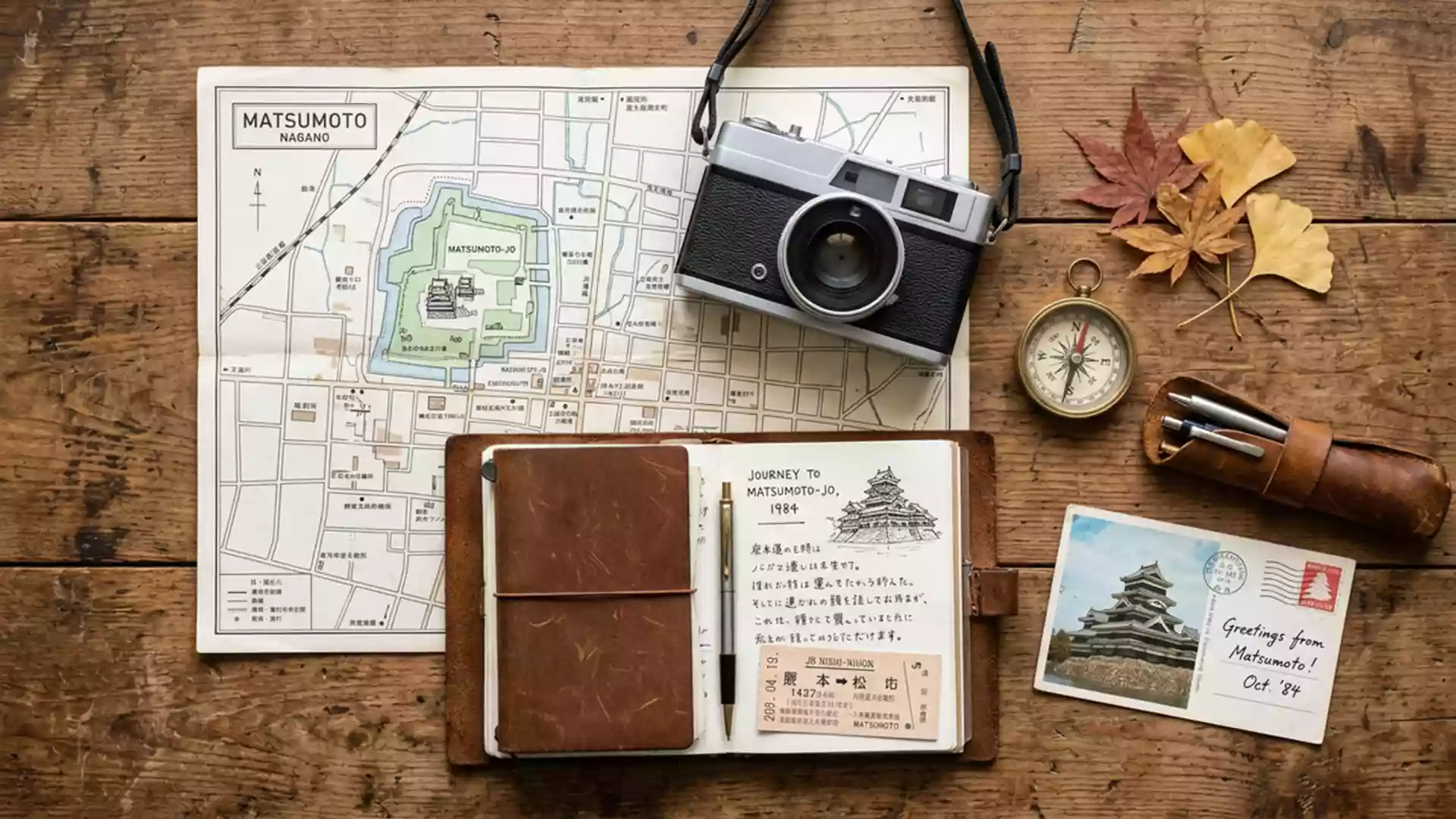
Matsumoto-jo, the black flatland castle of central Japan
Published on 09/11/2026 at 19:09 | Editorial responsibility: Rafael Müller, Editor-in-Chief AD HOC NEWS
Matsumoto-jo, better known in English as Matsumoto Castle, is a striking flatland fortress in Matsumoto City in central Japan, with a black timber tower mirrored in a broad moat. Completed in the late sixteenth century, its original multi-storey wooden keep survives as a rare example of Japan’s castle architecture preserved largely in its historic form.
A flatland stronghold ringed by water and mountains
Matsumoto-jo stands on a plain in Matsumoto City in Nagano Prefecture on the island of Honshu, enclosed by a system of moats and walls rather than perched on a hill.Matsumoto-jo in Matsumoto City The castle’s site lies at the northern edge of the urban area, with the waters of the moat forming a wide reflective ring around the central compound.a flatland castle at an alluvial terrace
Beyond the outer defences, the landscape opens towards the Japanese Alps, which frame the city with high, snow-bearing peaks in colder months.Matsumoto-jo ringed by the Northern Japan Alps The castle itself occupies a compact precinct with stone ramparts rising from the water and inner courtyards between the tower, gates and smaller turrets.
Black timber towers from the Sengoku and Edo periods
The present main keep of Matsumoto-jo belongs to the late Sengoku period and was completed around 1594 under the rule of Ishikawa Kazumasa and his son Yasunaga, who shaped the castle as a fortified centre of regional power.completion around 1594 under Lord Ishikawa The tower is recognised as having five external levels and six internal floors, a configuration that makes it the oldest surviving keep of its type in Japan.oldest surviving five-storey, six-floor keep
The castle’s origins lie earlier in the sixteenth century, when the Ogasawara family established a fort on the site during the Warring States period, then known as Fukashi Castle.Ogasawara family fort and Ishikawa family construction During the Edo period Matsumoto-jo served as the seat of the Matsumoto Domain under the Tokugawa shogunate, with successive lords from several families administering the surrounding region from its halls.administrative centre of Matsumoto Domain
National Treasure status and a rare original interior
Matsumoto-jo is designated as a National Treasure of Japan, a formal status shared with only a small group of castles whose historic fabric and cultural value are protected at the highest level.National Treasure designation in 1952 Unlike many Japanese castles rebuilt in concrete in the twentieth century, Matsumoto-jo retains an extensive wooden structure, with steep internal staircases, dark timber beams and structural features that reflect its original defensive role.one of Japan’s original castles
The keep incorporates elements added in more peaceful times, including a Moon-Viewing Tower dating from the early seventeenth century, which introduces large openings and lighter construction on one side of the complex.Moon-Viewing Tower addition in the seventeenth century Inside, the sequence of floors ranges from low-ceilinged spaces with armour displays to upper levels with views across the moat and city, giving a continuous impression of climbing through a functioning military structure that has been preserved rather than reconstructed.
Visiting Matsumoto-jo: what travellers from Western Europe should know
- Matsumoto-jo stands in the Marunouchi district of Matsumoto City in Nagano Prefecture on the island of Honshu, within walking distance of JR Matsumoto Station on the main railway line through the city.
- The climb through the keep involves steep internal wooden staircases between the floors, and the route passes through confined spaces and low beams that demand care and sure footing.
- The castle lies in a basin surrounded by the Japanese Alps, so weather conditions can vary markedly with the season, and views from the upper levels extend towards high mountain ridges on clear days.
- The official language is Japanese and the currency is the yen.
- Entry requirements depend on your nationality; UK travellers can check the FCDO travel advice at gov.uk/foreign-travel-advice, Irish travellers the Department of Foreign Affairs at ireland.ie.
Searching for Matsumoto-jo on social platforms
These links open searches for Matsumoto-jo on each platform.
Frequently asked questions about Matsumoto-jo
Where is Matsumoto-jo located?
Matsumoto-jo stands in Matsumoto City in Nagano Prefecture in central Honshu, Japan, on a flat plain bordered by the Japanese Alps.
What should visitors expect inside the castle?
Inside the keep, visitors encounter steep wooden staircases, multi-level timber interiors and displays of historic arms and armour, with upper floors offering views across the moat and city.
What makes Matsumoto-jo distinctive among Japanese castles?
Matsumoto-jo combines a black timber flatland tower, intact wooden interiors and the oldest surviving five-storey, six-floor keep recognised as a National Treasure of Japan.