
Masjed-e Nasir ol-Molk and Shiraz’s Qajar glass
Published on 08/28/2026 at 09:46 | Editorial responsibility: Rafael Müller, Editor-in-Chief AD HOC NEWS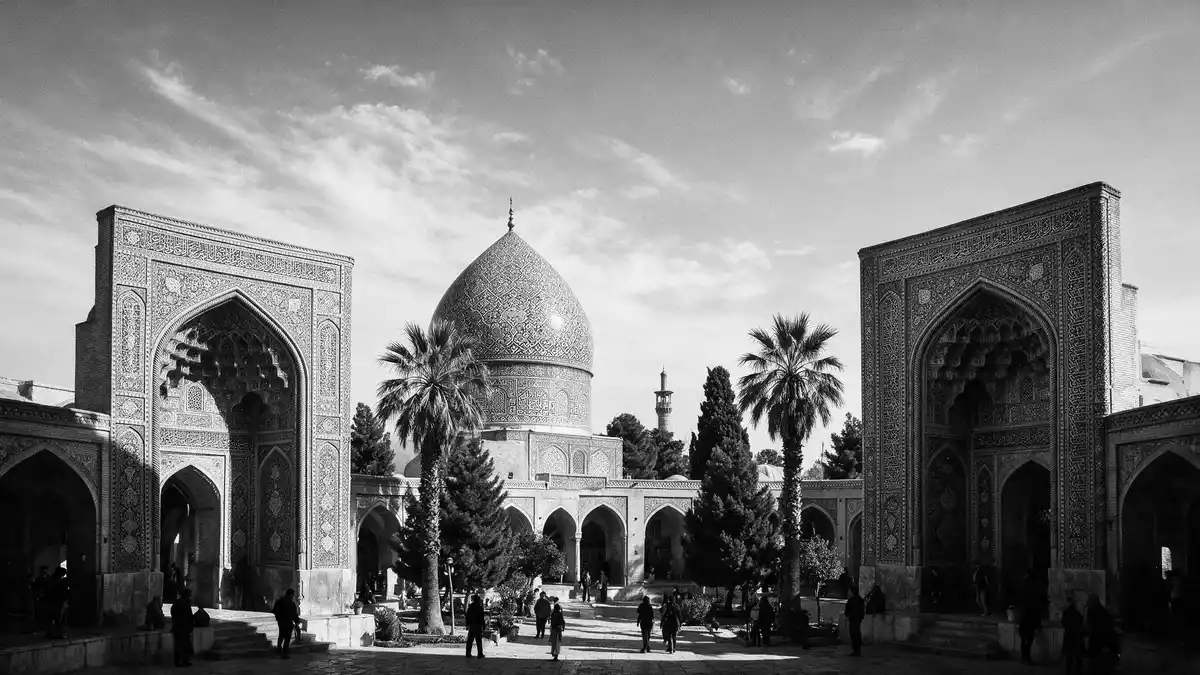
Masjed-e Nasir ol-Molk in Shiraz is a Qajar-era mosque known for its coloured glass, painted surfaces and careful masonry. Completed in 1888, it is one of the clearest late nineteenth-century statements of religious architecture in the city.1888
Qajar fabric in Shiraz
The mosque belongs to the Qajar period, and that setting matters as much as its decorative finish. Its main prayer spaces, courtyard and portal sit within a layout that follows Iranian mosque tradition while giving the interior an unusually rich surface treatment.
Mirza Hasan Ali Nasir al-Molk gave the mosque its name, and Mohammad Hasan-e-Mem?r is named among the architects. The building stands in Shiraz, near the Shah Cheragh area, and its form still reads as a working mosque rather than a detached monument.Mirza Hasan Ali Nasir al-Molk
Coloured glass and tiled surfaces
The most striking feature is the interior’s use of coloured glass. Together with tilework and carved and painted surfaces, it gives the prayer hall a dense visual texture that feels far removed from plain civic masonry.
The mosque’s reputation rests on what can be seen rather than on any hidden mechanism. Light passes through the coloured panes, but the lasting effect lies in the materials themselves: glass, tile, plaster and stone arranged with exactness.coloured glass
The mosque’s place in Persian religious architecture
Masjed-e Nasir ol-Molk is not only admired for ornament. It also shows how a mosque can hold together formal prayer space, a courtyard and a highly worked surface programme within a single composition.
That balance gives it wider architectural interest. The building is late nineteenth century in date, Qajar in period and Persian in character, with a name linked to Mirza Hasan Ali Nasir al-Molk and a design attributed to Mohammad Hasan-e-Mem?r.late nineteenth century
Visiting Masjed-e Nasir ol-Molk: what travellers from Western Europe should know
- The mosque is in Shiraz, in Fars, and the surrounding district includes the Shah Cheragh area. Public transport and taxis serve the city centre, and the mosque is reached on foot from nearby streets.
- The building includes courtyards, prayer halls and a decorated portal. Visitors encounter stone, tile and coloured glass in a relatively compact religious complex.
- The mosque stands in a dense urban quarter with other major Shi‘a religious sites close by. The street pattern around it is part of the experience of approaching an old urban mosque.
- English is not an official language in Iran, and the currency is the Iranian rial.
- Entry requirements depend on your nationality; UK travellers can check the FCDO travel advice at gov.uk/foreign-travel-advice, Irish travellers the Department of Foreign Affairs at ireland.ie.
Searching for Masjed-e Nasir ol-Molk on social platforms
These links open searches for Masjed-e Nasir ol-Molk on each platform.
Frequently asked questions about Masjed-e Nasir ol-Molk
Where is Masjed-e Nasir ol-Molk?
It stands in Shiraz, in southern Iran, within the old urban fabric of the city. The mosque is associated with the Gowd-e Araban area and the Shah Cheragh district.
What does a visit involve?
The place is a mosque with a courtyard, prayer halls and richly decorated surfaces. Its interior uses coloured glass, tilework and carved detail, so the building rewards a close look.
What makes it distinctive?
Its late Qajar date, its link to Mirza Hasan Ali Nasir al-Molk and its decorative use of glass and tile define it. The result is a mosque whose character is architectural as much as devotional.


