
Marienplatz in München, where market history meets neo?Gothic stone
Published on 09/19/2026 at 19:51 | Editorial responsibility: Rafael Müller, Editor-in-Chief AD HOC NEWS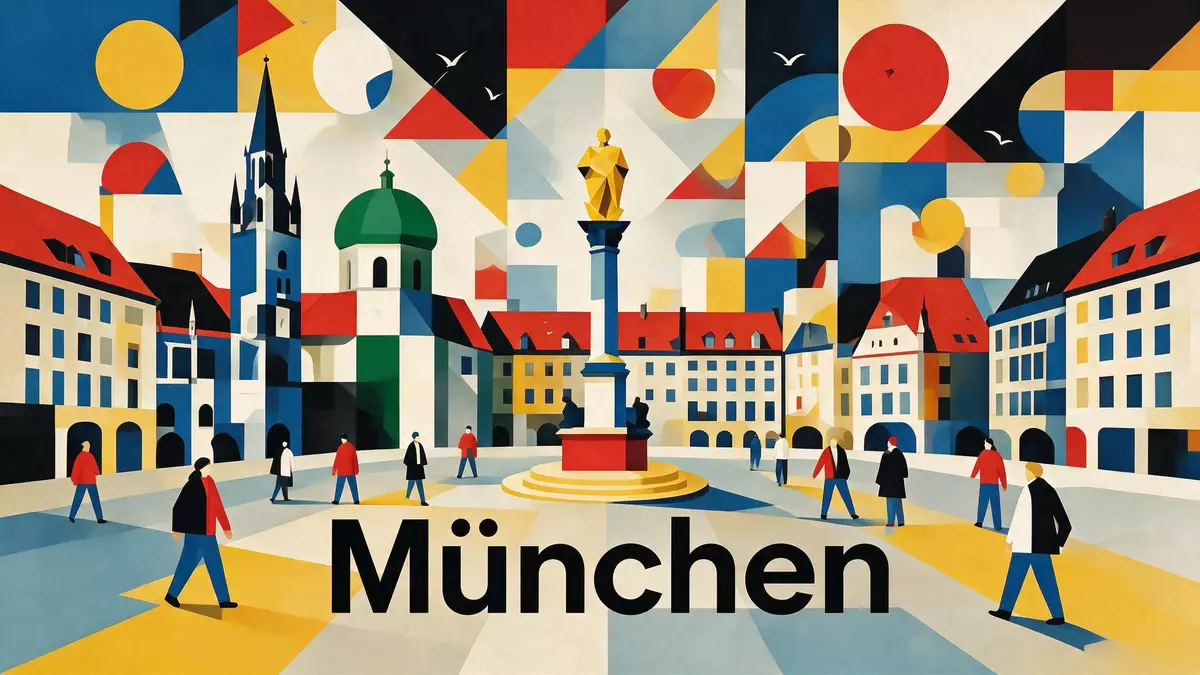
Marienplatz in München is the city’s historic central square, a former marketplace turned stone stage framed by civic buildings and a Baroque column at its centre. It has served as the main square since the founding of Munich in 1158, tying the story of the city to this open space from the twelfth century onwards.
From medieval marketplace to Marienplatz
The origins of Marienplatz lie in the twelfth century, when Munich was established under Henry the Lion and a market square grew at a crossroads in the emerging settlement. The square functioned as the city’s principal marketplace, with traders and farmers selling grain and other produce in front of early public buildings on the eastern side.centre of the city since 1158
For centuries the square’s names reflected its commercial role, shifting from simple market designations to terms linked specifically to grain trading. It was only in the nineteenth century, after the relocation of the grain market to a purpose?built hall near Blumenstrasse in 1854, that the square received the name Marienplatz, taking its title from the Marian column already standing at its centre.renamed Marienplatz in 1854
The Mariensäule: a Baroque column in the middle of the square
The Mariensäule, the Marian column rising from the centre of Marienplatz, anchors the square both visually and historically. Commissioned by Maximilian I, Elector of Bavaria, and erected in 1638 after the Thirty Years’ War, it stands on a stone pedestal and is topped by a gilded statue of the Virgin Mary, giving the square its present name.Mariensäule erected in 1638
Placed in the middle of the open space, the column creates a vertical counterpoint to the surrounding façades and marks a historical moment when the marketplace began to take on a more symbolic civic role. Its Baroque detailing sits between older ecclesiastical structures and later secular architecture, making the Mariensäule a tangible connection between seventeenth?century Bavaria and the later urban fabric of München.votive Marian column at the centre
Neues Rathaus: a neo?Gothic stage on the north side
Dominating the north side of Marienplatz is the Neues Rathaus, the New Town Hall whose neo?Gothic façade turns the square into a stone theatre. Designed by architect Georg von Hauberrisser and built between 1867 and 1909, the elongated frontage combines pointed arches, traceried windows and statues that give the impression of a medieval civic palace despite its nineteenth?century origin.Neues Rathaus built 1867–1909
The tower of the Neues Rathaus rises above the square and houses a mechanical glockenspiel that animates the façade with figures from Munich’s history. When it plays, wooden characters representing the 1568 wedding of Duke Wilhelm V and Renate of Lorraine, and the tradition of the Schäfflertanz, rotate above the stone arcades, adding movement to the vertical mass of the town hall and reinforcing Marienplatz as a civic gathering point.glockenspiel scenes in the tower
Framing buildings and spatial character
Marienplatz is enclosed by buildings that mark several stages of München’s development, giving the square a layered architectural character. On the eastern side stands the Altes Rathaus, the Old Town Hall whose tower and gables recall earlier municipal authority, while to the north the neo?Gothic Neues Rathaus stretches along the full edge of the square, presenting arcades and balconies above the ground?level openings.Altes Rathaus and Mariensäule
Within this frame, the open surface of Marienplatz remains largely unobstructed, allowing wide views to the surrounding church towers and façades of München’s old town. The Fischbrunnen, a fountain on one side of the square, links the present layout to the former market activity, while the paving and gentle level changes across the space define routes between tram stops, side streets and passageways leading towards other parts of the Altstadt.
Visiting Marienplatz: what travellers from Western Europe should know
- Marienplatz lies in the Altstadt of München, at the point where important streets of the old town meet, and is reached directly by U?Bahn and S?Bahn lines stopping at the Marienplatz station beneath the square.
- The square itself is level and paved, with broad surfaces that can be crossed on foot and steps leading into surrounding buildings such as the Neues Rathaus and the Altes Rathaus.
- Nearby, streets like Kaufingerstrasse and Weinstrasse radiate from Marienplatz towards other districts, so the square often serves as a starting point for walking routes through München’s historic centre.
Searching for Marienplatz on social platforms
These links open searches for Marienplatz on each platform.
Frequently asked questions about Marienplatz
Where is Marienplatz in München?
Marienplatz is located in the Altstadt, the historic centre of München, at a junction of major streets and above the Marienplatz underground and suburban rail station.
What can visitors expect when they arrive at Marienplatz?
Visitors encounter an open paved square framed by the neo?Gothic Neues Rathaus, the Altes Rathaus, the Mariensäule and surrounding streets leading into München’s old town.
What makes Marienplatz distinctive among München’s squares?
Marienplatz combines a twelfth?century origin as a marketplace with nineteenth?century neo?Gothic civic architecture and the seventeenth?century Marian column that gives the square its name.


