
Machu Picchu and the stone terraces above Aguas Calientes
Published on 09/17/2026 at 17:32 | Editorial responsibility: Rafael Müller, Editor-in-Chief AD HOC NEWS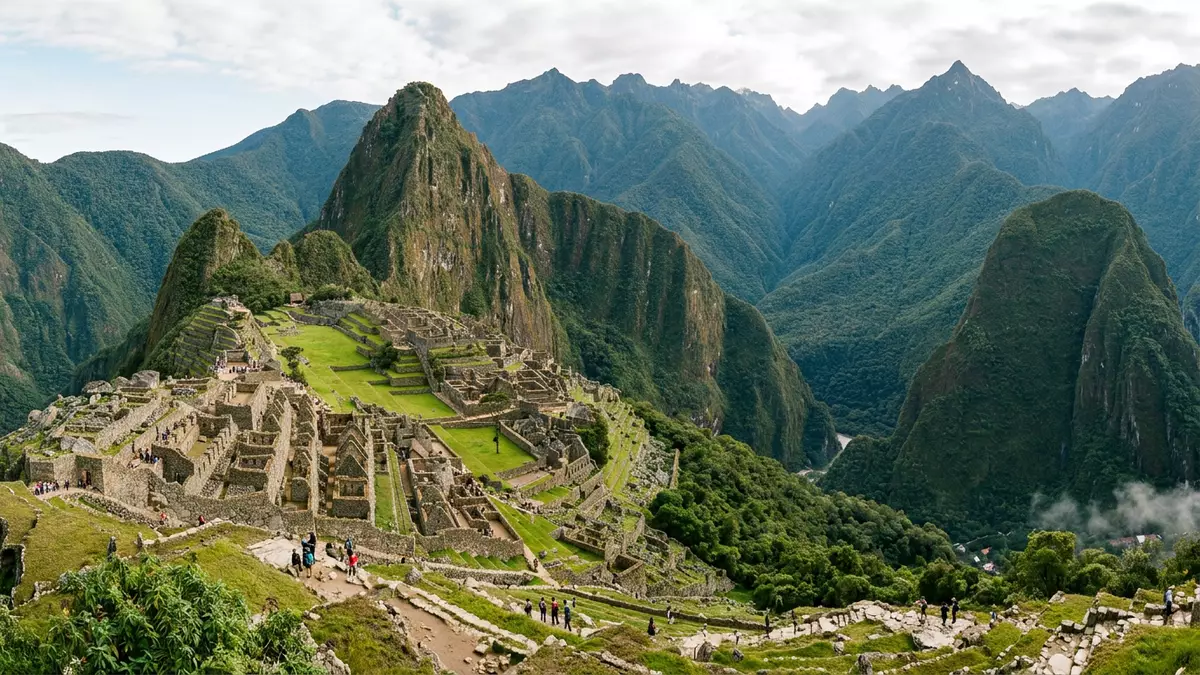
High above the small town of Aguas Calientes in southern Peru, Machu Picchu occupies a narrow Andean ridge, with stone terraces and buildings stepping down towards the Urubamba valley. Built in the fifteenth century during the height of the Inca empire, the site combines dense masonry, steep agricultural slopes and surrounding forested peaks in a single planned mountain citadel.
Terraces, ridge and surrounding mountains
Machu Picchu stands at about 2,430 m (7,972 ft) above sea level on a spur between higher summits in the Vilcabamba range of the Andes. The Historic Sanctuary of Machu Picchu recognised by UNESCO covers more than 32,000 ha of ridges, slopes and valleys surrounding the core ruins, with the citadel forming the centre of a wider protected landscape.Historic Sanctuary of Machu Picchu The ridge falls steeply to the Urubamba River far below, and the contrast between the river gorge and the high platform helps fix the site in the wider geography of southern Peru.mountain slopes and river gorge
From the main terraces the peaks of Huayna Picchu and Machu Picchu Mountain rise above the stonework, framing the archaeological core between two higher summits. The setting at the meeting point between the Peruvian Andes and the upper Amazon basin gives the Sanctuary a mixture of cloud forest, rock faces and narrow ridges, with vegetation climbing around the built platforms. The combination of steep topography, masonry and forest is visible from almost every viewpoint within the ruins.
Inca masonry and urban layout
The ruins show carefully planned Inca urbanism, with finely cut stone walls forming temples, palaces and ceremonial structures, and more roughly dressed masonry used for domestic buildings and storage. Blocks are fitted without mortar in the most important structures, and the stonework is aligned along narrow lanes and open plazas that step down with the slope of the ridge.Inca stone architecture and layout Agricultural terraces run along the flanks of the site, supported by retaining walls that hold soil on the steep ground and create bands of cultivable land.
UNESCO’s inscription describes Machu Picchu as a mixed cultural and natural World Heritage site, recognising both the archaeological monument and its landscape as a single property inscribed in 1983.mixed cultural and natural World Heritage property The Peruvian authorities had already declared the area a National Historic Sanctuary by 1981, placing the ridge and its surrounding slopes under protection as an archaeological park.National Historic Sanctuary designation Within this protected framework, the layout of temples, residential sectors and terraces remains legible, giving a sense of how an Inca royal estate or ceremonial centre occupied a confined mountain platform.
Approach from Aguas Calientes and the wider region
Machu Picchu lies in the Cuzco Department of Peru, in Urubamba Province, roughly north-west of the regional capital Cusco in the eastern Andes.location in the Peruvian Andes The modern approach runs from the valley settlement of Aguas Calientes, also known as Machupicchu Pueblo, which sits beside the Urubamba River at a lower elevation than the ridge itself.Aguas Calientes in the valley Travellers reach the town by rail along the river valley or by road from other points in the region, and from there follow the steep route up towards the ruins on the ridge.
The approach to the archaeological sector involves a sustained ascent from the valley floor, with paths and access roads climbing through forest and along the side of the mountain. Once within the Sanctuary, movement around the ruins involves stairways, sloping paths and stone steps between terrace levels. The wider World Heritage property extends beyond the visible ruins to include high ridgelines, forest and river sections, linking Machu Picchu to other archaeological sites and natural features in the Urubamba valley.extent of the World Heritage area
Visiting Machu Picchu: what travellers from Western Europe should know
- Machu Picchu stands above the Urubamba valley in southern Peru, with access from the town of Aguas Calientes by rail along the river and onward transport up the mountain.
- The terrain within the Sanctuary is steep, with numerous stone stairways, uneven paths and terraces at different levels, so walking around the ruins involves climbing and descending on rock steps.
- The surrounding region lies in the Peruvian Andes; the official language is Spanish and the currency is the Peruvian sol.
- Entry requirements depend on your nationality; UK travellers can check the FCDO travel advice at gov.uk/foreign-travel-advice, Irish travellers the Department of Foreign Affairs at ireland.ie.
Searching for Machu Picchu on social platforms
These links open searches for Machu Picchu on each platform.Frequently asked questions about Machu Picchu
Where is Machu Picchu located?
Machu Picchu lies in the Cuzco Department of southern Peru, on a mountain ridge above the Urubamba River near the town of Aguas Calientes in the eastern Andes.
What should visitors expect during a visit?
A visit involves steep paths, stairways and terraces at different levels, set among dense stone ruins and surrounding forested slopes, with sustained walking on uneven ground.
What makes Machu Picchu distinctive among archaeological sites?
The site combines Inca stone architecture, extensive agricultural terraces and a dramatic mountain setting within a single mixed cultural and natural World Heritage Sanctuary recognised since 1983.


