
Machu Picchu and the stone ridge above the valley
Published on 09/10/2026 at 21:30 | Editorial responsibility: Rafael Müller, Editor-in-Chief AD HOC NEWS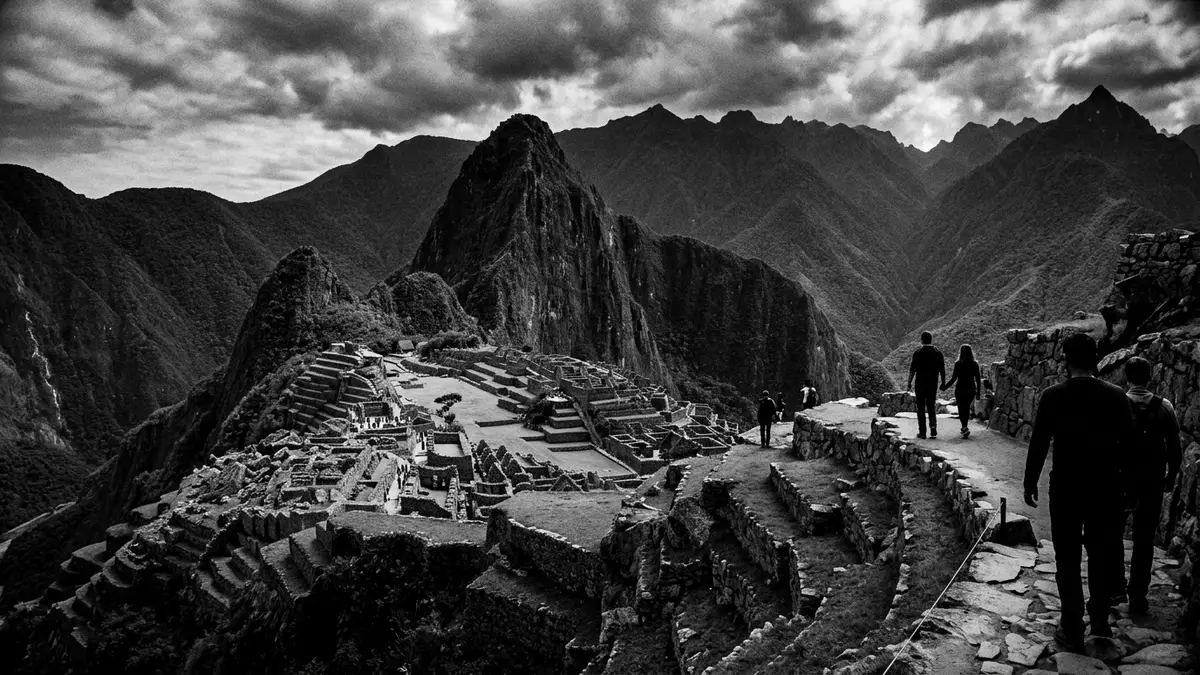
Machu Picchu rises from a narrow ridge above the Urubamba Valley in Peru, with terraces, ramps and stone walls set into the mountain landscape. The Historic Sanctuary of Machu Picchu was inscribed on the UNESCO World Heritage List in 1983, and the site stands at about 2,430 m (7,972 ft).
Machu Picchu on the ridge above the valley
The citadel belongs to the Inca world of the fifteenth century, and the surviving fabric is built in carefully fitted stone. UNESCO describes it as part of the Historic Sanctuary of Machu Picchu, a mixed cultural and natural property that links the monument with its surrounding slopes and peaks.
The setting gives the place much of its character. Walls, terraces and ramps sit against steep rock, with the ridge line carrying the main cluster of structures and the surrounding landscape dropping away on either side.
Inca masonry, terraces and ramps
The architecture mixes formal masonry with agricultural terraces and circulation routes. That combination gives the place a strong visual order, from the retaining walls of the terraces to the stone-built spaces of the citadel itself.
Hiram Bingham brought Machu Picchu to wider attention in 1911, and the site has remained one of the best-known Inca remains in the Andes. Its designation as a World Heritage Site in 1983 places it among the major protected archaeological landscapes of South America.
UNESCO protection and the Inca landscape
The UNESCO inscription covers more than the ruined core. It includes the mountain slopes, peaks and valleys around the monument, and the recognised area extends across a large section of the surrounding terrain.
That wider frame matters because the citadel reads as part of a landscape rather than as an isolated ruin. Stone, ridge, slope and valley belong to a single historic setting associated with the Inca Empire and with the fifteenth century.
Visiting Machu Picchu: what travellers from Western Europe should know
- The site lies in Peru, above Aguas Calientes, and access runs through the valley by rail and onward transport.
- The terrain includes steep slopes, stone steps and terrace edges. The altitude is about 2,430 m (7,972 ft), so the setting is elevated and rugged.
- The official language is Spanish and the currency is the Peruvian sol.
- Entry requirements depend on your nationality; UK travellers can check the FCDO travel advice at gov.uk/foreign-travel-advice, Irish travellers the Department of Foreign Affairs at ireland.ie.
Searching for Machu Picchu on social platforms
These links open searches for Machu Picchu on each platform.
Frequently asked questions about Machu Picchu
Where is Machu Picchu?
Machu Picchu is in Peru, above Aguas Calientes and within the Historic Sanctuary of Machu Picchu. It sits on a ridge in the Andes above the Urubamba Valley.
What should travellers expect?
The site combines stone architecture, terraces and steep mountain terrain. The elevation is about 2,430 m (7,972 ft), so the landscape is high and uneven.
What makes it distinctive?
Its distinctive quality lies in the pairing of Inca masonry with a mountain setting that forms part of the protected site. The World Heritage inscription from 1983 links the citadel with the surrounding slopes and valleys.


