
Machu Picchu and the stone ridge above Aguas Calientes
Published on 09/08/2026 at 21:05 | Editorial responsibility: Rafael Müller, Editor-in-Chief AD HOC NEWS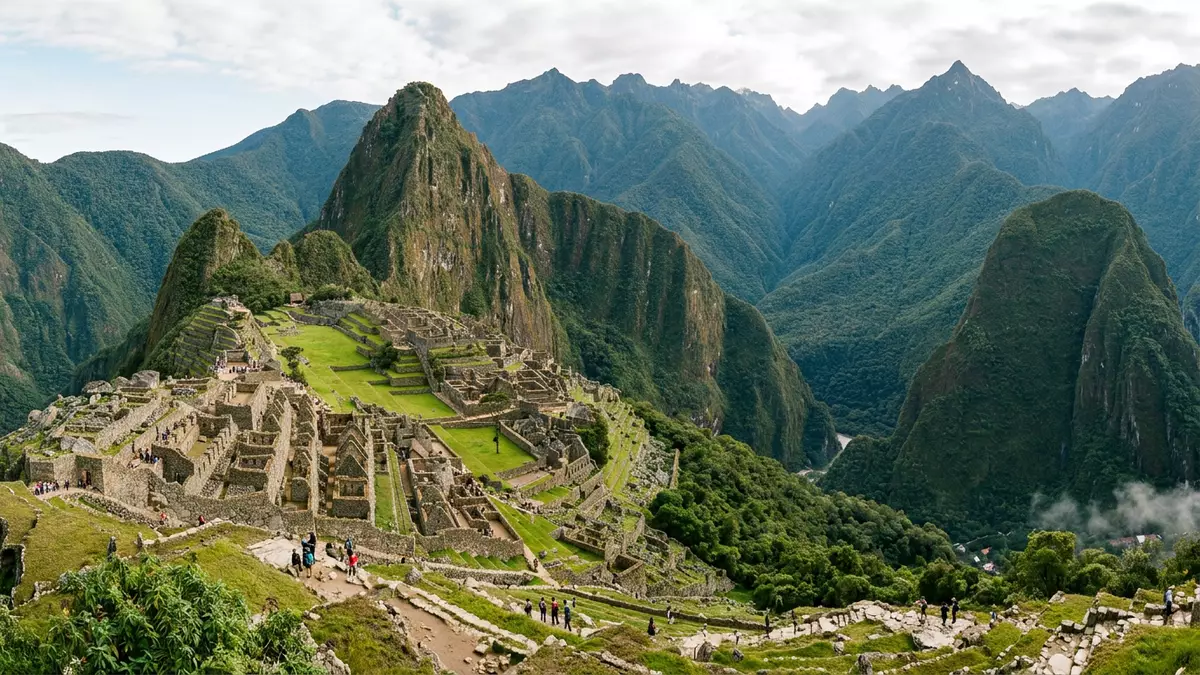
Machu Picchu rises above Aguas Calientes on a narrow ridge in the Peruvian Andes. The site combines Inca stonework, terraces, and steep mountain ground in a compact archaeological landscape.
Inca stone on a high ridge
The Historic Sanctuary of Machu Picchu is a mixed World Heritage property with cultural and natural values. UNESCO describes it as a fifteenth-century Inca place set among mountain slopes, peaks, and valleys.
The protected area covers 32,592 hectares, and its heart is the archaeological monument at more than 2,400 metres above sea level. The setting places the citadel in direct relation to the eastern Andes and the upper Amazon basin.
Pachacuti, the Inca period, and the built landscape
The site belongs to the reign of Pachacuti and to the height of the Inca Empire. Its stone walls, terraces, and ramps follow the rock ridge rather than levelling it away.
White granite appears in walls and terraces across the monument, and the overall composition reads as an ordered settlement of courts, platforms, and enclosed spaces. Hiram Bingham’s 1911 expedition later brought the place into wider scholarly attention, but the surviving form is an Inca one.
A sanctuary above the Urubamba valley
The location above the Urubamba valley gives the place a strong sense of height and enclosure. The ridge, slopes, and terraces create a landscape that is both agricultural and ceremonial in character.
The surrounding sanctuary includes mountain terrain as part of the protected whole, not merely as a backdrop. This is why the site is read as both an archaeological centre and a mountain landscape.
Visiting Machu Picchu: what travellers from Western Europe should know
- The site lies above Aguas Calientes in southern Peru, and access is by rail from the Cusco region before the final mountain approach.
- The ground is steep and uneven, with stone steps, terraces, and narrow passages across the ridge.
- The official language is Spanish and the currency is the Peruvian sol.
- Conditions on the mountain change with the seasons; the local cable-car operators and alpine clubs provide information.
Searching for Machu Picchu on social platforms
These links open searches for Machu Picchu on each platform.
Frequently asked questions about Machu Picchu
Where is Machu Picchu?
It stands in the Peruvian Andes above Aguas Calientes, within the Historic Sanctuary of Machu Picchu. The wider protected landscape includes mountain slopes, peaks, and valleys.
What does a visit involve?
The terrain is the main feature: stonework, terraces, and steep ground across a ridge. The site reads as an archaeological landscape rather than a single building.
What makes it distinctive?
The place combines Inca engineering, high mountain scenery, and a preserved archaeological core. The surviving layout belongs to the fifteenth century and to Pachacuti’s era.


