
Machu Picchu and the Inca city in the clouds
Published on 08/21/2026 at 22:33 | Editorial responsibility: Rafael Müller, Editor-in-Chief AD HOC NEWS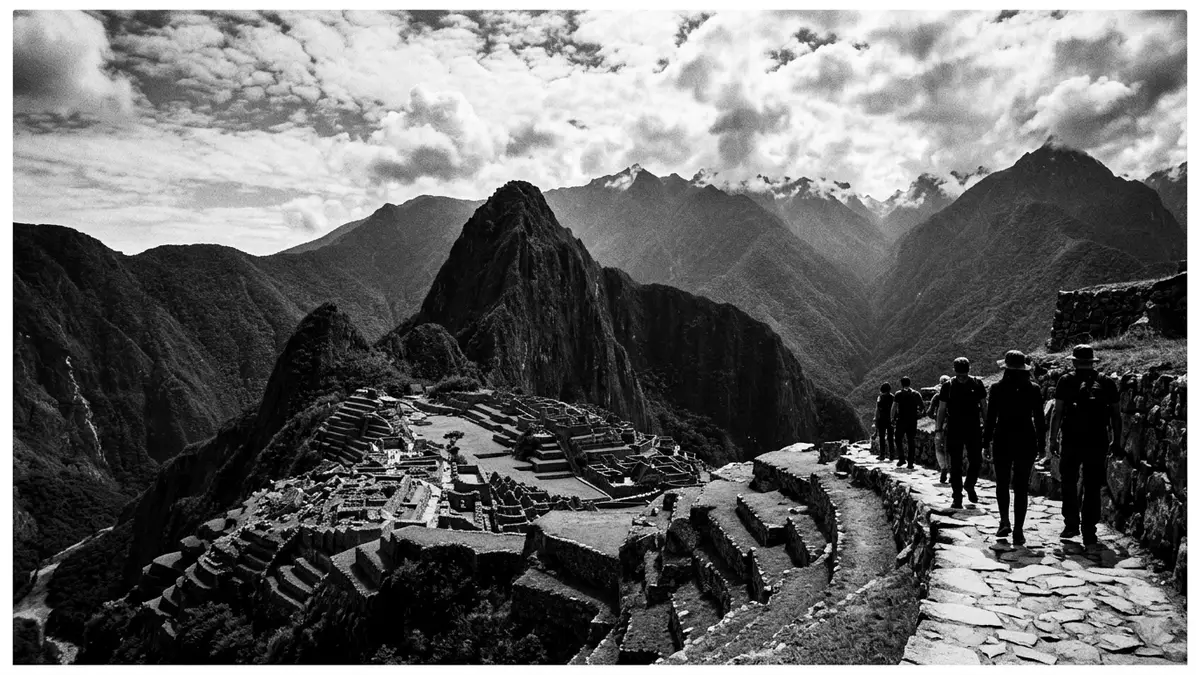
Machu Picchu is an Inca stone city laid out along a high ridge above Aguas Calientes in southern Peru, where terraces, plazas and temples cling to steep Andean slopes. Built in the fifteenth century and abandoned in the sixteenth century, it stands within the Historic Sanctuary of Machu Picchu, a protected mountain landscape recognised as a UNESCO World Heritage Site in 1983.
Stone terraces on a razorback ridge
The core of Machu Picchu stretches along a narrow mountain crest more than 2,400 m (7,874 ft) above sea level, with the ridge dropping sharply on either side towards the Rio Urubamba far below.more than 2,400 m above sea level The site forms part of a wider sanctuary of more than 32,000 hectares of slopes, peaks and valleys, where dense vegetation wraps the surrounding ridges in cloud forest.more than 32,000 hectares
From above, the layout reads as a careful balance between built stone and cultivated ground. Flights of agricultural terraces step down the flanks of the ridge, edged by dry-stone walls that hold narrow bands of soil, while the urban core gathers on the higher saddle in a compact cluster of houses, shrines and open courtyards. Channels, stairways and retaining walls thread through the complex, tying the different levels into a continuous walkable landscape.
An Inca citadel in the fifteenth century Andes
Machu Picchu belongs to the late phase of the Inca Empire, which spread across much of the central Andes in the fifteenth century under rulers such as Pachacuti Inca Yupanqui.late phase of the Inca Empire Its surviving masonry shows the characteristic Inca blend of finely dressed stone in certain precincts and more modest construction elsewhere, with large blocks cut to fit tightly without mortar in key temples and plainer walls forming domestic quarters.
The city was abandoned in the sixteenth century as the Spanish conquest dismantled Inca political power, leaving its stonework to weather on the ridge until the twentieth century brought worldwide attention.city was abandoned in the sixteenth century In 1981 the Peruvian state created a National Historic Sanctuary here, and in 1983 UNESCO added the Historic Sanctuary of Machu Picchu to the World Heritage List as a mixed cultural and natural property, recognising both the Inca city and the mountain environment that frames it.added the Historic Sanctuary of Machu Picchu to the World Heritage List
A mountain approach from Aguas Calientes
For travellers from Western Europe the journey typically funnels through the Cusco Region into the small town of Aguas Calientes, officially Machupicchu Pueblo, which sits in the Urubamba Province beside the Vilcanota River.Aguas Calientes, officially Machupicchu Pueblo This town lies in a steep, forested valley at about 2,040 m (6,693 ft), enclosed by high peaks that mark the eastern slopes of the Andes on the way down towards the Amazon Basin.steep, forested valley at about 2,040 m
A railway brings trains along the river to Aguas Calientes, which functions as the gateway settlement for the archaeological site. From the town, a road winds up the slope in a series of tight bends towards the entrance area, while a separate footpath climbs the hillside for those who take the ascent on foot. The transition from river-level streets to high ridge terraces is part of the experience, as jungle vegetation, stonework and shifting views of the surrounding mountains replace the enclosed canyon of the valley.
Visiting Machu Picchu: what travellers from Western Europe should know
- Machu Picchu lies in the Cusco Region of southern Peru, with most international journeys reaching Cusco before continuing by rail along the Vilcanota River to Aguas Calientes.
- The approach from Aguas Calientes up to the archaeological site follows a steep mountainside, whether by the winding road or on the stone stairway that climbs through forest.
- The ridge-top city sits at high altitude compared with many Western European cities, and the surrounding terrain combines stone steps, terraces and uneven paths across the ruins.
- The official language is Spanish and the currency is the Peruvian sol.
- Entry requirements depend on your nationality; UK travellers can check the FCDO travel advice at gov.uk/foreign-travel-advice, Irish travellers the Department of Foreign Affairs at ireland.ie.
Searching for Machu Picchu on social platforms
These links open searches for Machu Picchu on each platform.Frequently asked questions about Machu Picchu
Where is Machu Picchu?
Machu Picchu stands on a mountain ridge in the Cusco Region of southern Peru, above the town of Aguas Calientes in the Urubamba Province.
What should visitors expect on a visit?
Visitors encounter stone terraces, stairways and plazas spread along a narrow ridge at high altitude, with weather that can shift quickly in the surrounding cloud forest.
What makes Machu Picchu distinctive among Inca sites?
Machu Picchu combines finely worked Inca stone architecture with a dramatic mountain setting, where the archaeological city and its steep terraces form part of a larger protected sanctuary.


