
Machu Picchu: an Inca city on a high Andean ridge
Published on 09/12/2026 at 12:26 | Editorial responsibility: Rafael Müller, Editor-in-Chief AD HOC NEWS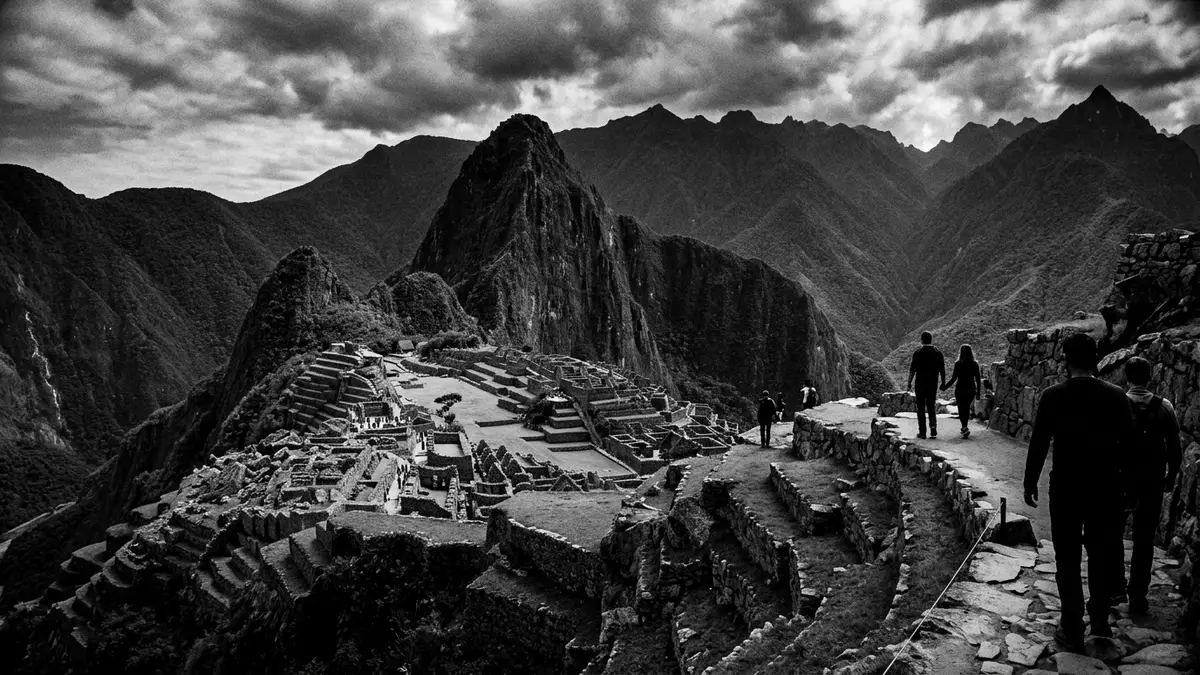
Machu Picchu is an Inca city on a narrow mountain ridge above Aguas Calientes in southern Peru, combining stone architecture with steep Andean terrain. Recognised as the Historic Sanctuary of Machu Picchu, it dates to the fifteenth century and stands at about 2,430 m (7,972 ft) above sea level.
An Inca citadel between Andes and Amazon
The Historic Sanctuary of Machu Picchu occupies a high saddle where the Peruvian Andes drop towards the upper Amazon Basin, with the ruins overlooking the valley of the Río Urubamba.Historic Sanctuary of Machu Picchu The site lies in south-central Peru, north-west of Cusco, in a landscape of forested slopes, sharp ridges and deep river gorges that frame the stone terraces and buildings.south-central Peru, 75 km northwest of Cuzco
The citadel itself stands at about 2,430 m (7,972 ft), while Aguas Calientes below lies at roughly 2,040 m (6,693 ft), beside the river at the foot of the ridge.Machu Picchu sits at 2,430 meters The surrounding sanctuary covers tens of thousands of hectares of mountain slopes, peaks and valleys, protecting the archaeological complex and the cloud-forest environment around it.World Heritage property comprises more than 32,000 hectares
Fifteenth-century estate of Pachacuti Inca Yupanqui
Machu Picchu belongs to the height of the Inca Empire in the fifteenth century, with radiocarbon studies and historical analysis placing its construction and occupation in the period around 1420 to 1530.in use from about A.D. 1420 to A.D. 1530 Most modern archaeologists attribute the creation of the settlement to Pachacuti Inca Yupanqui, the ninth Inca ruler based in Cusco, whose reign from 1438 to 1471 marked the expansion of the Inca state into a continental empire.built by the Inca Pachacutec, who ruled from 1438 to 1471
Archaeological and documentary work associates Machu Picchu with the mid-fifteenth century, describing it as a royal estate and sanctuary connected to the wider road system of the Qhapaq Ñan.settlement built as a sanctuary by the Inca Pachacuteq Yupanqui The city was abandoned in the sixteenth century as Spanish conquest reached the region, leaving terraces, temples and dwellings largely unused until they entered wider international awareness in the early twentieth century.Built in the fifteenth century Machu Picchu was abandoned when the Inca Empire was conquered
Terraces, temples and stone urbanism
Machu Picchu combines agricultural terraces with a compact urban sector, all laid out along the ridge with steep drops on either side. Flights of steps link the lower farming terraces with plazas, fountains and ceremonial buildings, where finely finished stonework stands alongside more utilitarian masonry.urban creation of the Inca empire at its height Within the sacred area are structures such as the Temple of the Sun and the Temple of the Three Windows, worked from blocks that fit closely without mortar in characteristic Inca style.Temple of the Sun, Temple of the Three Windows, Main Temple
From the upper terraces and viewpoints, visitors see the entire ridge running towards Huayna Picchu and the curve of the Río Urubamba far below, with stone buildings following the contours rather than a strict grid. The terraces cut into the slopes show how the Inca builders stabilised the ridge and created cultivable platforms, while channels and fountains distribute spring water through the settlement in a sequence of basins and runs visible beside stairways and walls.spring canal, plazas, stairways and fountains took shape
Visiting Machu Picchu: what travellers from Western Europe should know
- Machu Picchu lies north-west of Cusco in southern Peru, above the access town of Aguas Calientes on a ridge overlooking the Río Urubamba; trains and roads serve Aguas Calientes from the wider region.75 km northwest of Cuzco
- The approach to the ruins involves significant gradients and many stone steps, both on the paths that climb up from Aguas Calientes and within the site between terraces, plazas and viewing platforms.
- The sanctuary stands at about 2,430 m (7,972 ft), while Aguas Calientes lies near 2,040 m (6,693 ft), so travellers encounter high-altitude terrain but lower elevations than in nearby Cusco.Aguas Calientes (Machu Picchu Pueblo) sits at approximately 2,040 meters
- The official language is Spanish and the currency is the Peruvian sol.
- Entry requirements depend on your nationality; UK travellers can check the FCDO travel advice at gov.uk/foreign-travel-advice, Irish travellers the Department of Foreign Affairs at ireland.ie.
Searching for Machu Picchu on social platforms
These links open searches for Machu Picchu on each platform.
Frequently asked questions about Machu Picchu
Where is Machu Picchu located?
Machu Picchu stands on a ridge above Aguas Calientes in south-central Peru, north-west of Cusco, overlooking a bend of the Río Urubamba in the eastern Andes.
What should visitors expect at the site?
Visitors encounter stone terraces, temples, plazas and fountains arranged along steep slopes, with many stairways, significant altitude and wide views of surrounding mountains and river valleys.
What makes Machu Picchu distinctive among Inca sites?
Machu Picchu combines finely worked stone architecture, complex terracing and a dramatic Andean setting within a protected sanctuary that preserves both the ruins and their mountainous, forested environment.


