
Machu Picchu: an Inca city above the cloud forest
Published on 08/20/2026 at 16:54 | Editorial responsibility: Rafael Müller, Editor-in-Chief AD HOC NEWS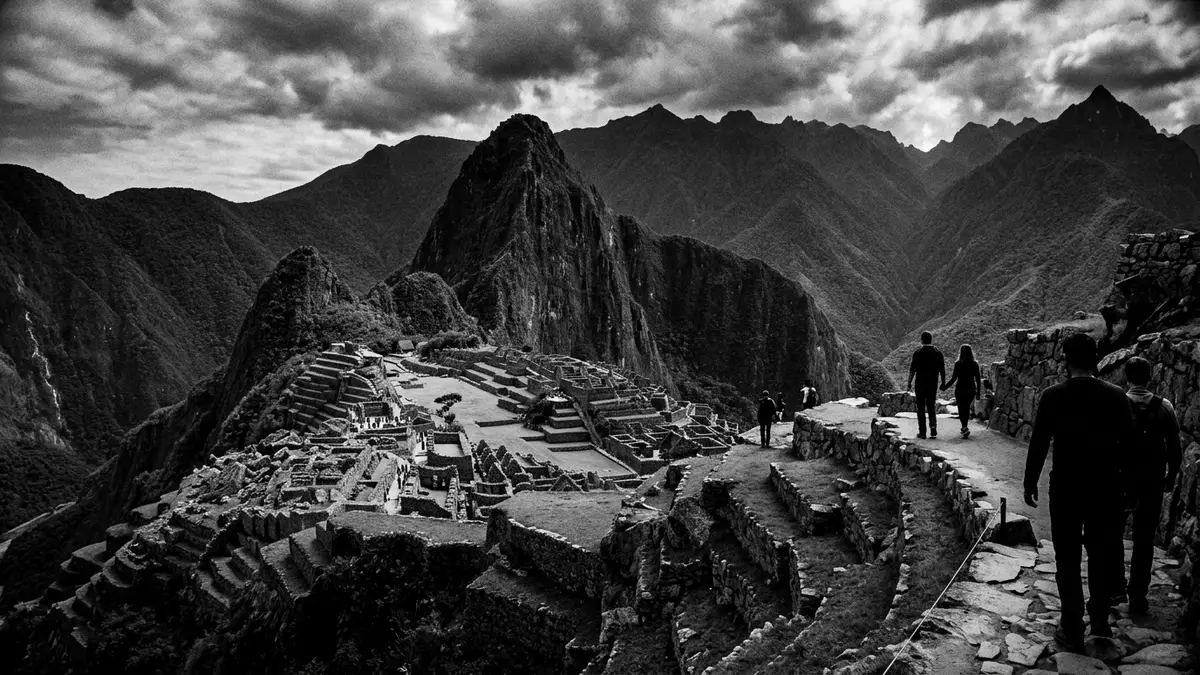
Machu Picchu is a fifteenth?century Inca citadel on a mountain ridge above Aguas Calientes in southern Peru, where stone terraces and temples cling to steep subtropical slopes in the Eastern Cordillera. Built in the mid?fifteenth century under the Inca emperor Pachacuti Inca Yupanqui, it stands about 2,430 m (7,970 ft) above sea level on a spur high above the Urubamba River canyon, facing the peaks of Machu Picchu and Huayna Picchu in a dramatic Andean setting.
A highland city between Andes and Amazon
Machu Picchu occupies a ridge at around 2,430 m (7,970 ft), part of the Eastern Cordillera where the Peruvian Andes drop towards the edge of the Amazon Basin and the landscape tightens into deep, forested valleys.a 2,430 m mountain ridge From the ruins the Urubamba River is visible far below in a canyon that carries humid air and cloud across the slopes, giving the sanctuary a mix of high?mountain and cloud?forest vegetation.
The broader protected area is designated by Peru as the Historic Sanctuary of Machu Picchu and covers tens of thousands of hectares of mountain slopes, peaks and valleys around the stone city, recognising both cultural remains and their natural surroundings.Historic Sanctuary of Machu Picchu Within this landscape the citadel occupies narrow terraces and platforms along the crest, with steep drops on several sides and views toward both the higher peak of Huayna Picchu and the surrounding Andean summits.
Inca stonework, terraces and sacred precincts
Machu Picchu is laid out in sectors of finely worked stone buildings, plazas and stairways, with distinct areas for ritual, residence and agriculture characteristic of high Inca architecture in the fifteenth century.mid?fifteenth century estate Many important structures use precisely cut granite blocks fitted without mortar, while surrounding walls and terraces rely on more regular masonry; the contrast between refined temple precincts and simpler retaining works is visible across the site.
The city’s agricultural terraces run in tight bands down the slopes, supported by massive stone retaining walls that stabilise the ridge and create level ground for crops in a narrow mountain setting.mountain ridge above the Urubamba Valley Above them the urban sector clusters around plazas with ritual buildings such as the Temple of the Sun, the Main Temple and the Temple of the Three Windows, alongside rooms interpreted as royal residences, storehouses and workshops; stairways connect these levels in continuous stone flights that follow the ridge.
History, rediscovery and World Heritage status
Archaeological and historical work links Machu Picchu to the reign of Pachacuti Inca Yupanqui, the ninth Sapa Inca, with construction in the middle of the fifteenth century and use into the early sixteenth century before the Spanish conquest of the Andes.built under Pachacuti in the mid?fifteenth century Radiocarbon dating of burials at the site points to occupation from about 1420 to around 1530, giving the mountain city roughly a century of active life within the expanding Inca Empire.
Machu Picchu received formal protection from Peru as a National Historic Sanctuary in 1981 and in 1983 was inscribed by UNESCO as the Historic Sanctuary of Machu Picchu, a mixed World Heritage Site recognised for outstanding cultural and natural values.World Heritage inscription in 1983 The inscription covers both the archaeological complex, with its terraces, plazas and temples, and the surrounding high?Andean environment where steep slopes, endemic flora and the canyon of the Urubamba River together frame the citadel.
Visiting Machu Picchu: what travellers from Western Europe should know
- Machu Picchu lies in the Machupicchu District of Urubamba Province in southern Peru, reached via the town of Aguas Calientes, which sits below the citadel beside the Vilcanota–Urubamba River.
- The site occupies a steep mountain ridge at around 2,430 m (7,970 ft), with long stone stairways, uneven terraces and significant changes in level that require sustained walking on stone steps.
- The official language is Spanish and the currency is the Peruvian sol.
- Entry requirements depend on your nationality; UK travellers can check the FCDO travel advice at gov.uk/foreign-travel-advice, Irish travellers the Department of Foreign Affairs at ireland.ie.
Searching for Machu Picchu on social platforms
These links open searches for Machu Picchu on each platform.Frequently asked questions about Machu Picchu
Where is Machu Picchu?
Machu Picchu stands on a mountain ridge above the town of Aguas Calientes in the Machupicchu District of Urubamba Province, in southern Peru’s Andes.
What should travellers expect on a visit?
A visit involves walking on stone terraces and stairways around 2,430 m (7,970 ft), passing Inca temples, plazas and agricultural terraces set above a deep river canyon.
What makes Machu Picchu distinctive among Inca sites?
Machu Picchu combines finely worked imperial Inca stone architecture with extensive terraces on a narrow ridge, framed by steep Andean peaks and protected as a Historic Sanctuary.


