
Machu Picchu: an Inca citadel above the Urubamba Valley
Published on 09/14/2026 at 18:51 | Editorial responsibility: Rafael Müller, Editor-in-Chief AD HOC NEWS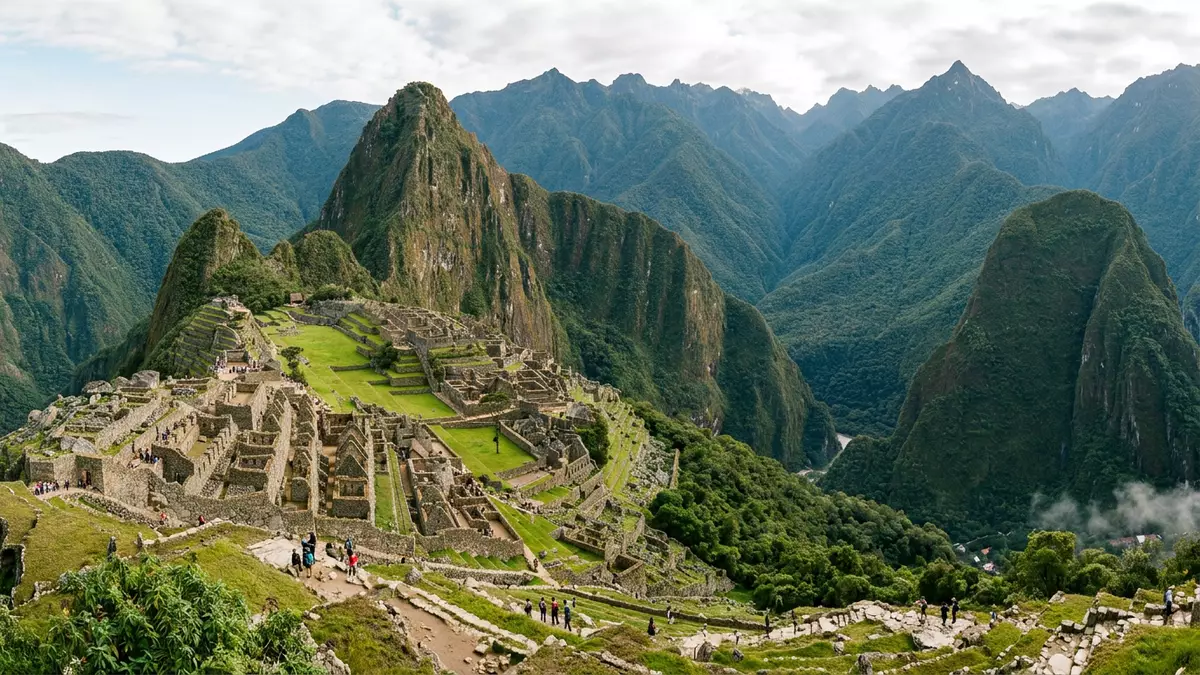
High above the town of Aguas Calientes in southern Peru, Machu Picchu occupies a narrow Andean ridge with agricultural terraces, stone houses and temples stepping down towards the Urubamba River far below. The fifteenth?century Inca citadel stands around 2,430 m (7,970 ft) above sea level, overlooking a deep valley in the eastern Andes.
An Inca royal estate in the clouds
Machu Picchu belongs to the Urubamba Province in the Cusco Region, set between the peaks of Machu Picchu mountain and Huayna Picchu on the eastern slopes of the Andes.Inca settlement in the High Andes The site occupies a ridge above the Urubamba River, in terrain sometimes described as high jungle, where steep mountains carry dense vegetation and clouds drift along the valley walls.royal estate in Peru’s high jungle
The stone citadel is part of the larger Historic Sanctuary of Machu Picchu, a protected area of tens of thousands of hectares that covers mountain slopes, peaks and valleys around the archaeological core.Historic Sanctuary of Machu Picchu It stands on a ridge roughly 650 m (2,133 ft) above the river, with the Urubamba looping around three sides, giving the impression of a stone city encircled by water and forested cliffs.ridge high above the Rio Urubamba
Fifteenth?century Inca construction and layout
Machu Picchu dates to the mid?fifteenth century and is associated with the reign of the Inca emperor Pachacuti Inca Yupanqui, who ruled from 1438 to 1471.constructed during Pachacuti’s reign Built in finely worked white granite, the settlement combines urban sectors with agricultural terraces, linked by stairways, plazas and narrow lanes. The stonework uses precisely cut blocks laid without mortar, a hallmark of high?status Inca construction.finely worked Inca stone walls
The site is often described in sectors: an area of agricultural terraces descending along the slopes, and an urban zone with residences, ceremonial spaces and a broad central plaza.citadel and surrounding terrain Within the urban zone, visitors encounter roofless masonry buildings, temple platforms, carved ritual stones and water channels running along stairways. The alignment of certain structures and windows reflects the Inca interest in cardinal directions and solar events, and the whole ensemble fits tightly to the contours of the ridge.
World Heritage sanctuary and rediscovery
The wider sanctuary was declared a National Historic Sanctuary of Peru in 1981 and inscribed on the UNESCO World Heritage List in 1983 under both cultural and natural criteria.National Historic Sanctuary and World Heritage UNESCO’s listing recognises Machu Picchu as a masterpiece of Inca urbanism and engineering, and as part of a mountain landscape where human settlement and steep Andean ecology are closely interwoven.World Heritage site since 1983
Machu Picchu was abandoned in the sixteenth century after the Spanish conquest of the Inca Empire and lay overgrown on its ridge for centuries before being brought to wider attention in 1911 by Hiram Bingham and a Yale University expedition.abandoned after the collapse of the Inca empire Since its inscription as a World Heritage property, the sanctuary has been managed as a protected archaeological and natural area, with research programmes and conservation work focusing on both the stone structures and the surrounding cloud?forest slopes.
Visiting Machu Picchu: what travellers from Western Europe should know
- Machu Picchu lies in the Cusco Region of southern Peru, above the Urubamba River and near the town of Aguas Calientes, reached by rail along the valley floor.near the town of Aguas Calientes
- The archaeological site stands on a high ridge, and visiting involves walking on stone paths and stairways at altitude, with significant changes in level between terraces and the main urban sectors.ridge at 2,430 metres
- The official language is Spanish and the currency is the Peruvian sol.
- Entry requirements depend on your nationality; UK travellers can check the FCDO travel advice at gov.uk/foreign-travel-advice, Irish travellers the Department of Foreign Affairs at ireland.ie.
Searching for Machu Picchu on social platforms
These links open searches for Machu Picchu on each platform.
Frequently asked questions about Machu Picchu
Where is Machu Picchu?
Machu Picchu is in the Cusco Region of southern Peru, on a mountain ridge above the Urubamba River, near the town of Aguas Calientes.
What should visitors expect on a visit?
Visitors walk among stone terraces, temples and houses connected by stairways at altitude, with views over the surrounding Andean peaks and the winding Urubamba Valley.
What makes Machu Picchu distinctive?
The site combines finely built fifteenth?century Inca architecture with a dramatic location on a narrow ridge, and forms the core of a large protected mountain sanctuary.


