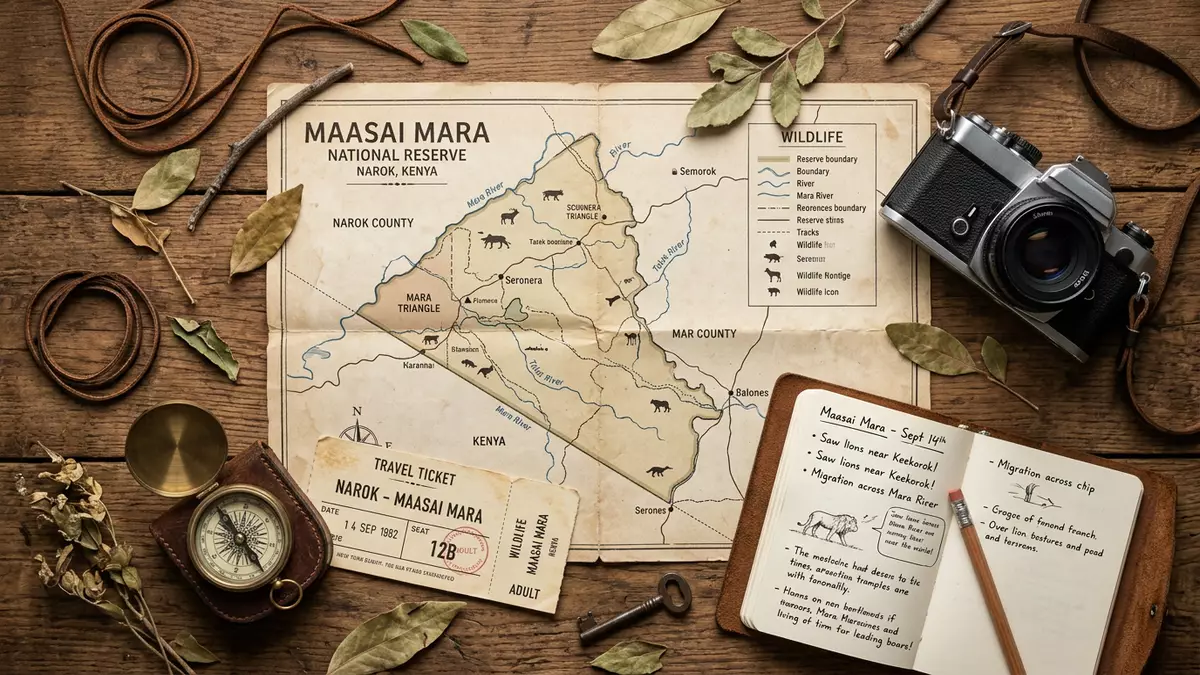
Maasai Mara National Reserve on the open savannah
Published on 08/08/2026 at 15:09 | Editorial responsibility: Rafael Müller, Editor-in-Chief AD HOC NEWS
Maasai Mara National Reserve in Narok is a broad savannah reserve in south-western Kenya, marked by open grassland, scattered acacia and long views across the plains. The landscape itself is the main attraction: wide horizons, river corridors and a terrain shaped by movement, season and grazing.
Open plains and river country in Narok
The reserve forms part of the wider Serengeti ecosystem and lies close to the border with Tanzania. Its name is associated with the Maasai people and the Mara River, both central to the region’s identity.
Visitors usually picture wildlife first, but the setting matters just as much. The reserve combines flat country with wooded riverbanks, patches of shrubland and areas of open grazing.
Wildlife, grassland and long-distance movement
Elephants, lions, zebras, giraffes and buffalo are among the species strongly linked with the reserve. The area is also known for large-scale animal movement linked to rainfall and grazing conditions across the wider ecosystem.
That mix of species and open terrain gives the reserve a direct, uncluttered character. Game drives focus on visibility across the plains, with animals appearing against grass, dust and distant tree lines.
Maasai presence and landscape context
The Maasai name remains part of the reserve’s identity, and the surrounding district carries that cultural weight. Narok is the main regional reference point for many travellers heading into the reserve.
The reserve is not a city park or a landscaped enclosure. It is a working wildlife landscape with rough tracks, broad horizons and a strong sense of scale.
Visiting Maasai Mara National Reserve: what travellers from Western Europe should know
- The reserve is reached from Narok by road, with further access by safari vehicle across the reserve roads.
- Admission arrangements and opening hours are set by the site's operator and change with the season; the official website is the only binding source.
- Dry months bring easier viewing across shorter grass, while greener periods bring denser vegetation and more colour in the plains.
- Tracks can be dusty, bumpy and uneven, and some areas involve long stretches on unsealed roads.
- Swahili and English are both useful in the wider region, while cash and card payment options may differ by operator and location.
- Entry requirements depend on your nationality. UK travellers should check the FCDO travel advice at gov.uk/foreign-travel-advice; Irish travellers the Department of Foreign Affairs at ireland.ie; EU and EEA citizens their own national foreign ministry.
Searching for Maasai Mara National Reserve on social platforms
These links open searches for Maasai Mara National Reserve on each platform.
Frequently asked questions about Maasai Mara National Reserve
Where is Maasai Mara National Reserve?
It lies in Narok in south-western Kenya, near the border with Tanzania. The reserve sits within a wider grassland system that continues across the region.
What should a visit feel like?
Expect open country, safari tracks and long views rather than enclosed paths or formal architecture. The reserve works best as a landscape seen from a vehicle on the move.
What makes it distinctive?
The combination of broad savannah, river corridors and major wildlife movement defines the reserve. Its Maasai name and Narok setting add cultural and geographic depth to that landscape.