
Luxor Temple and the ceremonial heart of ancient Thebes
Published on 08/28/2026 at 13:09 | Editorial responsibility: Rafael Müller, Editor-in-Chief AD HOC NEWS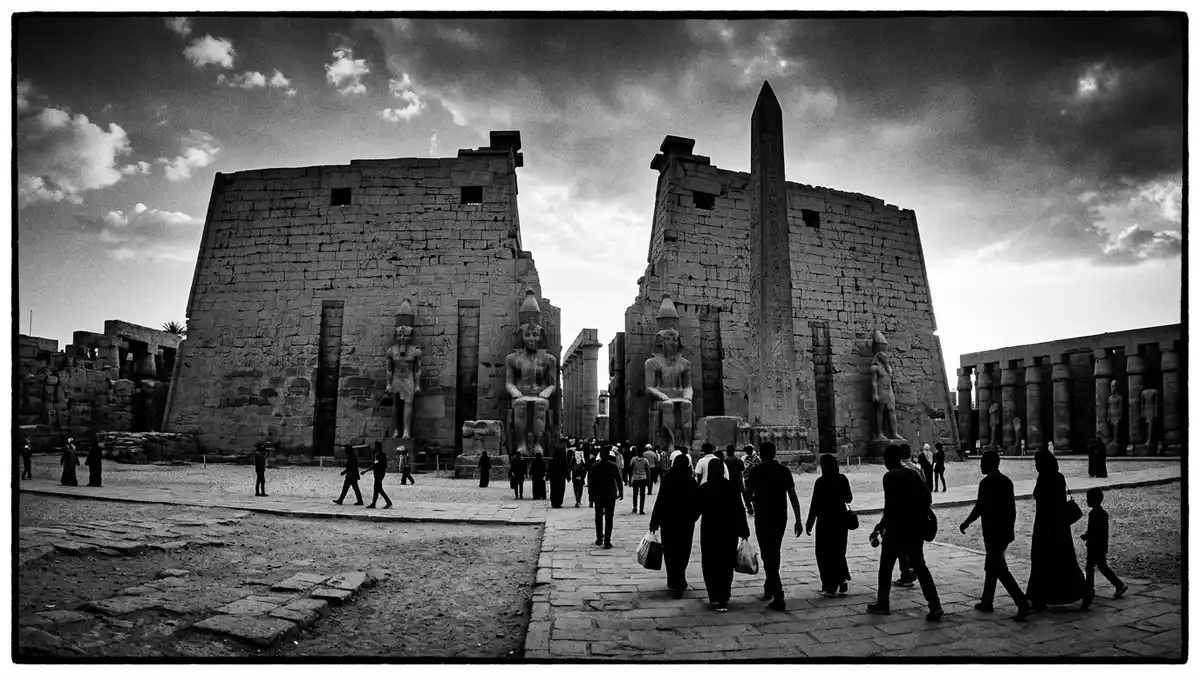
Luxor Temple in Luxor, Egypt is a New Kingdom temple complex on the east bank of the Nile that formed a ceremonial heart of ancient Thebes and still dominates the riverfront with its stone courts and towering columns.
A riverfront temple of the New Kingdom
Luxor Temple stands on the east bank of the Nile in the city of Luxor, ancient Thebes, and its main phase of construction belongs to the eighteenth dynasty of Egypt in the fourteenth century BC.east bank of the Nile The complex is aligned close to the river and forms part of a wider sacred landscape of Thebes, linked by a processional way to Karnak Temple in the north.processional way to Karnak
The surviving structures at Luxor Temple belong mainly to the reign of Amenhotep III in the eighteenth dynasty, with extensive additions by Ramesses II in the nineteenth dynasty.Amenhotep III and Ramesses II Earlier evidence on the site includes a shrine dating to Hatshepsut, while later pharaohs such as Tutankhamun and Horemheb extended and completed parts of the complex.tutankhamun and horemheb
Courts, colonnades and sanctuary
Approaching Luxor Temple from the north, visitors encounter the monumental pylon and forecourt built by Ramesses II, framed by statues of the king and flanked by obelisks in front of the gateway.pylon and statues of Ramesses II Behind this outer entrance, the celebrated colonnade leads towards the inner court, its tall papyrus-style columns bearing reliefs that include scenes from the Opet festival.
Further inside, the core of Luxor Temple built under Amenhotep III consists of an open court and a series of columned halls, leading towards a sanctuary area dedicated to the Theban triad Amun, Mut and Khonsu.Theban triad Amun, Mut and Khonsu Chapels at the rear of the complex include structures attributed to Amenhotep III and later rulers, and the reliefs along the walls preserve festival processions, offerings and royal imagery that reflect the temple’s ritual role.festival scenes on the walls
From pharaonic sanctuary to layered place of worship
Luxor Temple was a principal venue for the Opet festival, when cult images of Amun, Mut and Khonsu travelled from Karnak to Luxor along the processional way and were reunited in the temple’s courts.Opet festival procession The complex’s long history continued beyond the pharaonic period, with alterations and additions during the Ptolemaic era that introduced further cult spaces within the ancient walls.changes in the Ptolemaic era
In the Roman period, Luxor Temple and its surroundings served as a legionary fortress and the seat of the Roman administration for the region, enclosing the ancient halls within fortifications.Roman fortress and government centre Later, the complex saw the construction of a mosque in one of its courts, adding another layer to a site that carries evidence of Egyptian, Greco-Roman and Islamic worship within the same architectural framework.mosque within the temple
Visiting Luxor Temple: what travellers from Western Europe should know
- Luxor Temple stands in central Luxor on the east bank of the Nile, close to the modern city’s riverfront and reached along urban streets from the surrounding districts.
- Within the complex, movement passes through stone courts and columned halls, and some areas involve stairways and uneven ancient paving underfoot.
- The wider setting includes the Nile to the west and the processional avenue that links Luxor Temple with Karnak Temple further north in Luxor.
- The official language is Arabic and the currency is the Egyptian pound.
- Entry requirements depend on your nationality; UK travellers can check the FCDO travel advice at gov.uk/foreign-travel-advice, Irish travellers the Department of Foreign Affairs at ireland.ie.
Searching for Luxor Temple on social platforms
These links open searches for Luxor Temple on each platform.
Frequently asked questions about Luxor Temple
Where is Luxor Temple located?
Luxor Temple is in Luxor in southern Egypt, on the east bank of the Nile within the urban fabric of the modern city.
What should visitors expect inside the complex?
A visit leads through monumental gates, open stone courts and columned halls, with carved reliefs and chapels arranged along a clear axial route.
What makes Luxor Temple distinctive among Egyptian temples?
The complex combines New Kingdom architecture by Amenhotep III and Ramesses II with later Roman and Islamic layers, all preserved on a single riverside site.


