
Luxor Temple and the ceremonial axis of ancient Thebes
Published on 09/15/2026 at 08:49 | Editorial responsibility: Rafael Müller, Editor-in-Chief AD HOC NEWS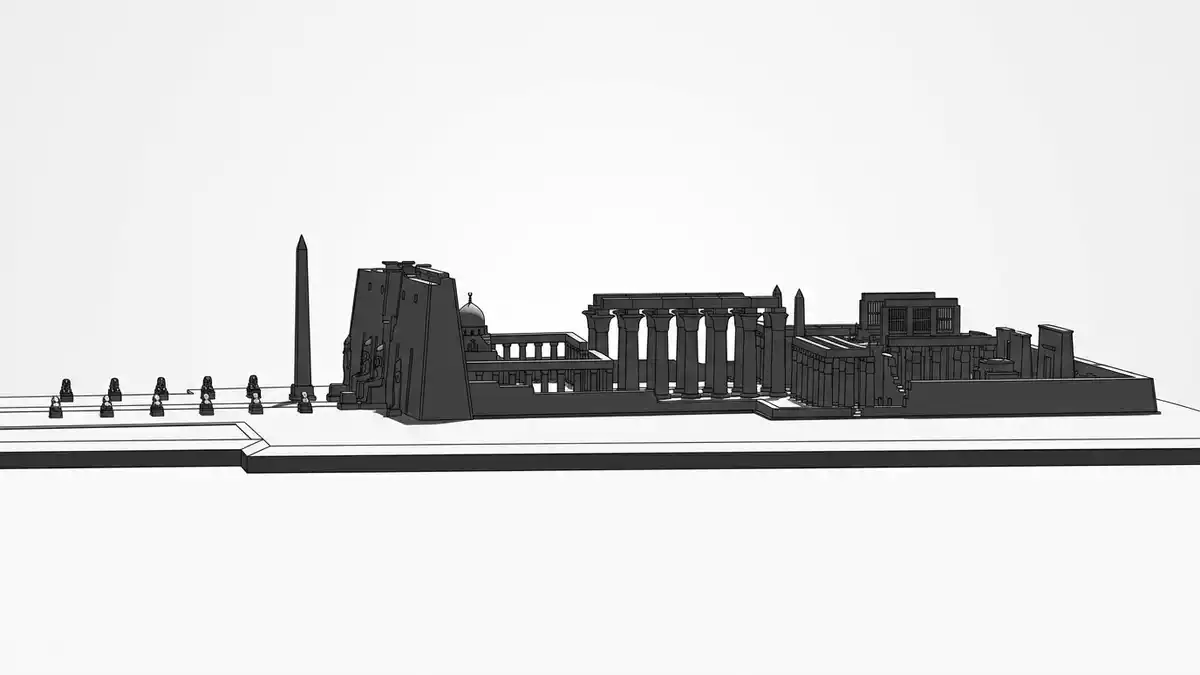
Luxor Temple is one of the defining monuments of Luxor on the east bank of the Nile, a New Kingdom sanctuary whose stone courts and colonnades still trace the ceremonial axis of ancient Thebes. Built chiefly under Amenhotep III in the fourteenth century BC and expanded by Ramesses II in the thirteenth century BC, it condenses centuries of royal architecture into a single elongated complex aligned with the river.
Luxor Temple on the east bank of the Nile
Luxor Temple stands in Luxor in southern Egypt, on the east bank of the Nile opposite the necropolis on the west bank. The modern city overlays ancient Thebes, and the temple lies close to the river, parallel to its course.close to the Nile River The sanctuary occupies a long, rectangular footprint in the urban fabric, with its entrance facing north towards Karnak.
In ancient Egyptian the complex was known as Ipet-resyt, the “southern sanctuary”, reflecting its position in relation to Karnak Temple further north.Ipet-resyt “Southern Sanctuary” Luxor Temple forms part of the wider Theban ceremonial landscape, with the city of Luxor providing present-day access, accommodation and urban context around its enclosure walls.
Dynastic building: from Hatshepsut to Ramesses II
The visible fabric of Luxor Temple dates largely to the eighteenth and nineteenth dynasties of the New Kingdom. The earliest surviving shrine belongs to the reign of Hatshepsut in the fifteenth century BC, whose work anchors the southern end of the complex.oldest existing structure Amenhotep III, ruling in the late eighteenth dynasty, built the main core, including the large peristyle court and the elegant colonnade that leads inward.
Ramesses II of the nineteenth dynasty added a monumental northern forecourt, entrance pylon and obelisks, giving Luxor Temple its present axial approach facing the city.entrance pylon and two obelisks Later rulers, including Tutankhamun, Horemheb and Alexander the Great, left further chapels and reliefs within the complex, so that the temple records successive phases of royal patronage over many centuries.completed by Tutankhamun and Horemheb
Ceremonial axis between Luxor and Karnak
Luxor Temple is linked to Karnak Temple to the north by a long processional way lined with sphinx statues. Sections of this avenue survive and connect the two sanctuaries across the urban space of Luxor, marking the ceremonial route taken in festival processions.processional way bordered with sphinxes The axis extends from the river-facing entrance of Luxor Temple through Ramesses II’s court and Amenhotep III’s colonnade towards the inner sanctuary.
In the New Kingdom Luxor Temple played a central role in the great Opet festival, during which the cult images of Amun, Mut and Khonsu travelled from Karnak along this route to Luxor.main venue for religious celebrations The alignment of pylons, courts and columned halls still conveys the directional character of the complex, with successive gateways framing views along the processional line.
Visiting Luxor Temple: what travellers from Western Europe should know
- Luxor Temple stands in central Luxor on the east bank of the Nile, within walking distance of the riverside corniche and road connections towards Karnak Temple.
- The temple complex contains broad stone courts and long paved axes; the ground inside is largely level, though approaches may involve steps over ancient thresholds.
- Luxor lies in Upper Egypt, where the climate is hot and dry for much of the year; the temple’s sandstone surfaces are exposed to strong sun during daylight hours.
- The official language is Arabic and the currency is the Egyptian pound.
- Entry requirements depend on your nationality; UK travellers can check the FCDO travel advice at gov.uk/foreign-travel-advice, Irish travellers the Department of Foreign Affairs at ireland.ie.
Searching for Luxor Temple on social platforms
These links open searches for Luxor Temple on each platform.
Frequently asked questions about Luxor Temple
Where is Luxor Temple located?
Luxor Temple is located in Luxor in southern Egypt, on the east bank of the Nile within the modern city centre.
What can travellers expect when visiting Luxor Temple?
Travellers encounter extensive sandstone courts, columned halls and relief-covered walls, with a clear axial route leading from Ramesses II’s pylon towards the inner sanctuary.
What makes Luxor Temple distinctive among Egyptian temples?
Luxor Temple is distinctive for its elongated ceremonial axis linking it to Karnak and for the way successive dynasties, from Hatshepsut to Ramesses II, left visible architectural layers within one complex.


