
Longshan Si in Taipeh, a courtyard temple woven into the city
Published on 08/28/2026 at 22:39 | Editorial responsibility: Rafael Müller, Editor-in-Chief AD HOC NEWS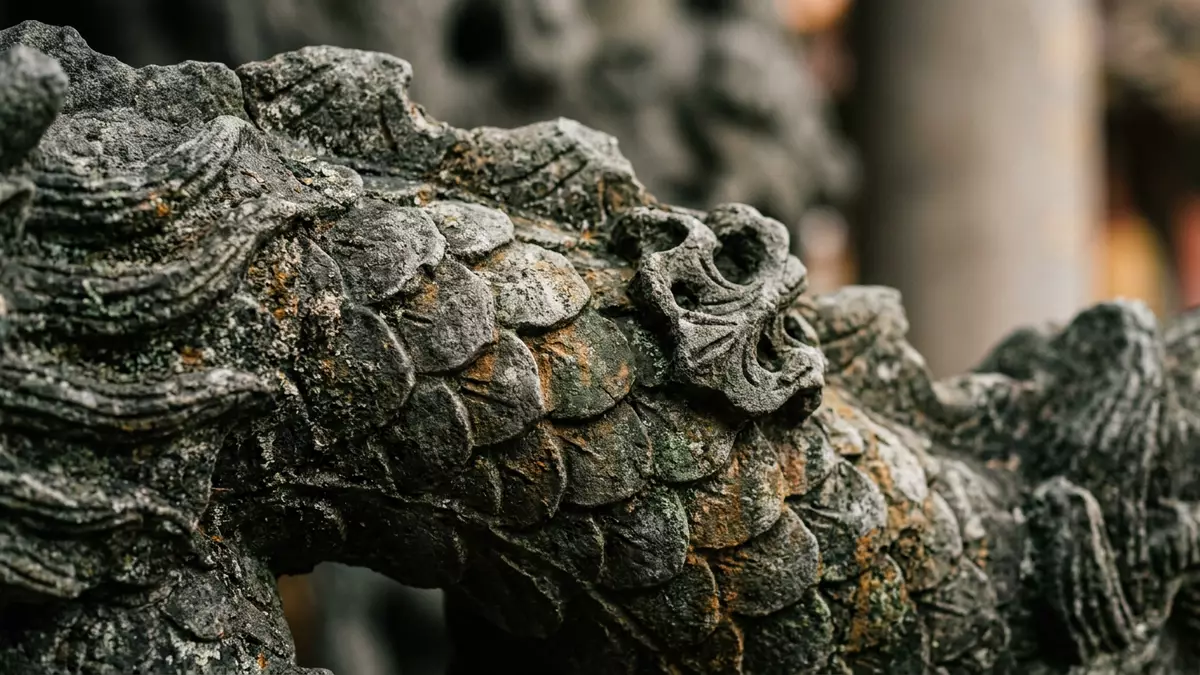
Longshan Si in Taipeh is a historic Buddhist temple complex where dense halls, courtyards and street-facing gates form a continuous front with the surrounding Wanhua district. Its origins in the eighteenth century and its richly layered architecture make it one of the clearest surviving traces of early urban Taipei, built by settlers from Fujian and repeatedly reconstructed as the city around it changed.
A Qing-era temple rooted in migration
Longshan Si stands in the western part of Taipeh, in the Wanhua district once known as Mengjia, an early Han Chinese settlement on the Danshui River plain. Construction of the temple began in 1738 under Qing rule, led by immigrants from Jinjiang, Nan'an and Hui'an in Fujian province, who brought their devotion to the bodhisattva Guanyin with them and established this complex as a branch temple of their home sanctuary.Built in 1738 The main fabric seen today largely dates from a major reconstruction between 1919 and 1924, organised after earthquakes and storms had damaged earlier structures and carried out under the direction of temple-building specialist Wang Yi-shun, whose work deepened the southern Fujian character of the complex.Renovation from 1919 to 1924
Through the Qing dynasty and into Japanese rule, Longshan Si served as a combined religious, communal and self-governing centre for Mengjia residents. Its halls sheltered worship of Buddhist, Taoist and folk deities, while the surrounding courtyards and forecourt provided space for meetings and local organisation in an era when this part of Taipeh was both harbour and trading hub.Centre of religion and self-governance The temple’s long continuity in that role is still legible in its dense plan and in the way its gates sit directly on Guangzhou Street, opening the religious compound onto everyday traffic.
Courtyards, halls and crafted surfaces
Architecturally, Longshan Si follows the three-part arrangement known from southern Fujian temple design. A front hall, a main hall and a rear hall are aligned along a central axis, with side halls and pavilions framing the courtyards to form a roughly square plan that reads as a layered courtyard compound from above.Three-section temple layout The complex mixes the siheyuan, or four-building courtyard type, with palace-style forms: roofs rise in sweeping tiers, eaves carry elaborate brackets, and colonnades mark off each hall from the next while preserving sight-lines along the main axis.Mix of siheyuan and palace forms
Bronze and timber are central to the temple’s surfaces. Bronze dragon columns mark parts of the complex, a distinctive feature in Taiwan, while carved wooden beams and painted panels carry scenes from Chinese lore and religious iconography.Bronze dragon columns Roofs on the bell and drum towers follow the sedan-chair type described in temple studies, adding a vertical accent within the otherwise horizontal courtyard plan. At ground level, stone paving and water features divide the circulation routes into smaller sequences, and the courtyards act as outdoor rooms between the incense halls.
Longshan Si in Taipeh’s urban fabric
Longshan Si faces south and fronts directly onto Guangzhou Street, with its principal gate and forecourt integrated into the dense street grid of Wanhua.South-facing orientation The temple’s position reflects the early development of Mengjia as a river-side settlement and trading area, and the complex remains surrounded by traditional shops and market streets that echo its eighteenth- and nineteenth-century role in daily civic life.Spiritual and social heart of the area Within the compound, hundreds of statues of Buddhist, Taoist and Confucian deities line altars and side chapels, marking the overlapping religious practices that have long met under its tiled roofs.Hundreds of statues of deities
Fire, earthquakes and wartime bombing have damaged Longshan Si at several points in its history, but the temple has repeatedly been repaired or rebuilt rather than abandoned. Its designation as a cultural heritage site by Taipeh authorities acknowledges both its architectural value and its long-standing role in the city’s religious landscape.Secondary National Heritage Site For visitors tracing Taipeh’s growth, the complex offers a rare chance to stand in an eighteenth-century temple courtyard while the later city presses against its perimeter, a direct contrast between historic compound and modern streets without leaving the Wanhua district.
Visiting Longshan Si: what travellers from Western Europe should know
- Longshan Si stands in Wanhua in western Taipeh, facing Guangzhou Street; the city’s metro network serves the area through Longshan Temple station on the blue line.
- The temple complex is laid out as a sequence of courtyards and halls, with stone paving, steps and some narrow passageways between altars and side chapels.
- Rain is common in Taipeh, and parts of the visit take place in open courtyards between covered halls, so surfaces can be wet and temple roofs shed water into the paved areas.
- Longshan Si lies close to the old streets of Mengjia, and traditional shops and markets surround the temple, making it simple to combine a visit to the complex with exploration of historic lanes.
- The official language is Chinese and the currency is the New Taiwan dollar.
Searching for Longshan Si on social platforms
These links open searches for Longshan Si on each platform.Frequently asked questions about Longshan Si
Where is Longshan Si located in Taipeh?
Longshan Si is located in the Wanhua district of western Taipeh, near Guangzhou Street and Mengjia’s historic streets, and is served by Longshan Temple metro station.
What should visitors expect inside the temple complex?
Visitors encounter successive courtyards, front, main and rear halls, side chapels and richly carved roofs, with altars to Buddhist, Taoist and folk deities arranged along the axes.
What makes Longshan Si distinctive among Taipeh’s temples?
Longshan Si combines eighteenth-century origins, a major early twentieth-century reconstruction by Wang Yi-shun and a dense siheyuan-palace layout, all tightly woven into the surrounding Wanhua streets.


