
Longshan Si in Taipeh, a courtyard temple of carved stone and smoke
Published on 09/01/2026 at 22:41 | Editorial responsibility: Rafael Müller, Editor-in-Chief AD HOC NEWS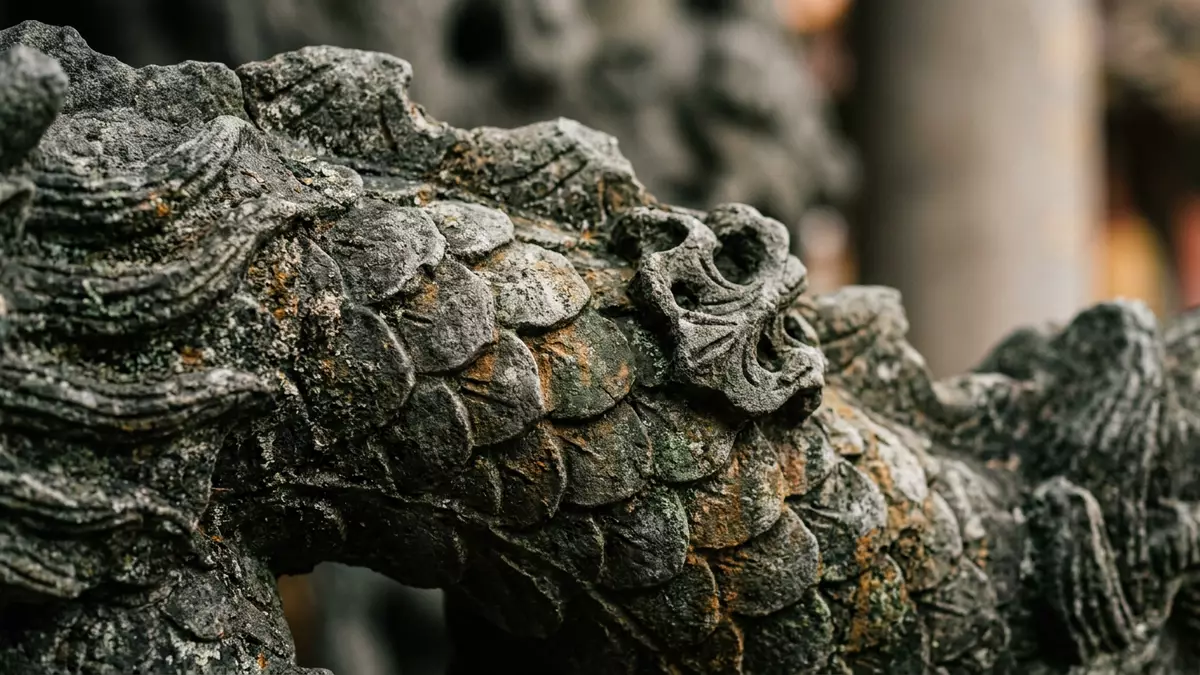
Longshan Si in Taipeh is a sprawling courtyard temple where carved roofs, dense shrines and rising incense blend into one compact urban block in the Wanhua District of Taipei, Taiwan. Built in 1738 during the Qing dynasty by settlers from Fujian, it has long served as a place of worship centred on the bodhisattva Guanyin and as a gathering point for the surrounding neighbourhood.
A courtyard temple at the heart of Wanhua
Longshan Si stands in the historic Wanhua District, one of the oldest quarters of Taipei, in streets laid out near the Danshui River and early trading ports.Wanhua District The temple complex occupies a block along Guangzhou Street, its outer walls and gates opening directly onto a dense grid of shops, markets and housing.
The plan follows a traditional Chinese courtyard arrangement with halls set along a clear north–south axis and spaces organised around a central open court.traditional courtyard arrangement Visitors step from the street through the entrance gate into this main courtyard, where stone paving, incense burners and a view towards the main hall establish the sequence from threshold to inner shrine.
Layers of history in timber, tile and stone
Construction of Longshan Si began in 1738, in the reign of the Qing emperor Qianlong, when immigrants from Quanzhou in Fujian established a temple in Mengjia as both a religious and community centre.founded in 1738 by immigrants from Fujian The building fabric reflects this eighteenth?century origin, with timber framing, tiled roofs, carved beams and bracket systems typical of southern Chinese temple architecture.
Over the centuries Longshan Si has undergone repairs and reconstructions after earthquakes, storms and wartime damage, yet its role as a religious centre has remained continuous. In the early twentieth century, major renovation work under temple builder Wang Yi?shun reshaped the complex into a more palatial series of halls and courtyards, strengthening foundations and enriching the decoration.renovated in 1920 under Wang Yi-shun Longshan Si was later designated an official historical site of Taipei City in 1985, recognising its architectural value and its long association with the Mengjia area.historical site designation in 1985
Guanyin and the crowded pantheon
The principal focus of worship at Longshan Si is Guanyin, the bodhisattva of mercy, whose statue stands in the main hall beyond the central courtyard.principal focus of worship is Guanyin Offerings, flowers and incense cluster in front of the shrine, with worshippers moving through the hall to bow and recite prayers.
Alongside Guanyin, the side and rear halls contain altars to a wide range of deities from Buddhist, Taoist and folk traditions, illustrating the mixed religious practice common in Taiwan. These shrines are framed by richly carved timber and painted panels, with lanterns and plaques bearing calligraphy that record gifts, dedications and temple history.altars to various deities Together, they turn the building into a dense three?dimensional record of belief and patronage rather than a single linear space.
Visiting Longshan Si: what travellers from Western Europe should know
- Longshan Si stands in the Wanhua District of Taipei, on Guangzhou Street, close to the Longshan Temple station on the Taipei MRT Bannan (Blue) Line.
- The temple complex is arranged around a paved courtyard, with steps at the main gate and further steps leading into the principal hall.
- The surrounding streets form a compact urban quarter with covered arcades, markets and small shops clustered around the temple block.
- The official language is Chinese and the currency is the New Taiwan dollar.
- Entry requirements depend on your nationality; UK travellers can check the FCDO travel advice at gov.uk/foreign-travel-advice, Irish travellers the Department of Foreign Affairs at ireland.ie.
Searching for Longshan Si on social platforms
These links open searches for Longshan Si on each platform.Frequently asked questions about Longshan Si
Where is Longshan Si located in Taipeh?
Longshan Si is in the Wanhua District of Taipei, Taiwan, occupying a block along Guangzhou Street close to Longshan Temple MRT station.
What should visitors expect inside the temple complex?
Visitors encounter a traditional courtyard layout with a main hall for Guanyin, side shrines to other deities, dense decoration and continuous incense and offerings.
What makes Longshan Si distinctive among temples in Taiwan?
Longshan Si combines eighteenth?century southern Chinese temple architecture, a crowded pantheon centred on Guanyin and an urban setting in one of Taipei’s oldest districts.


