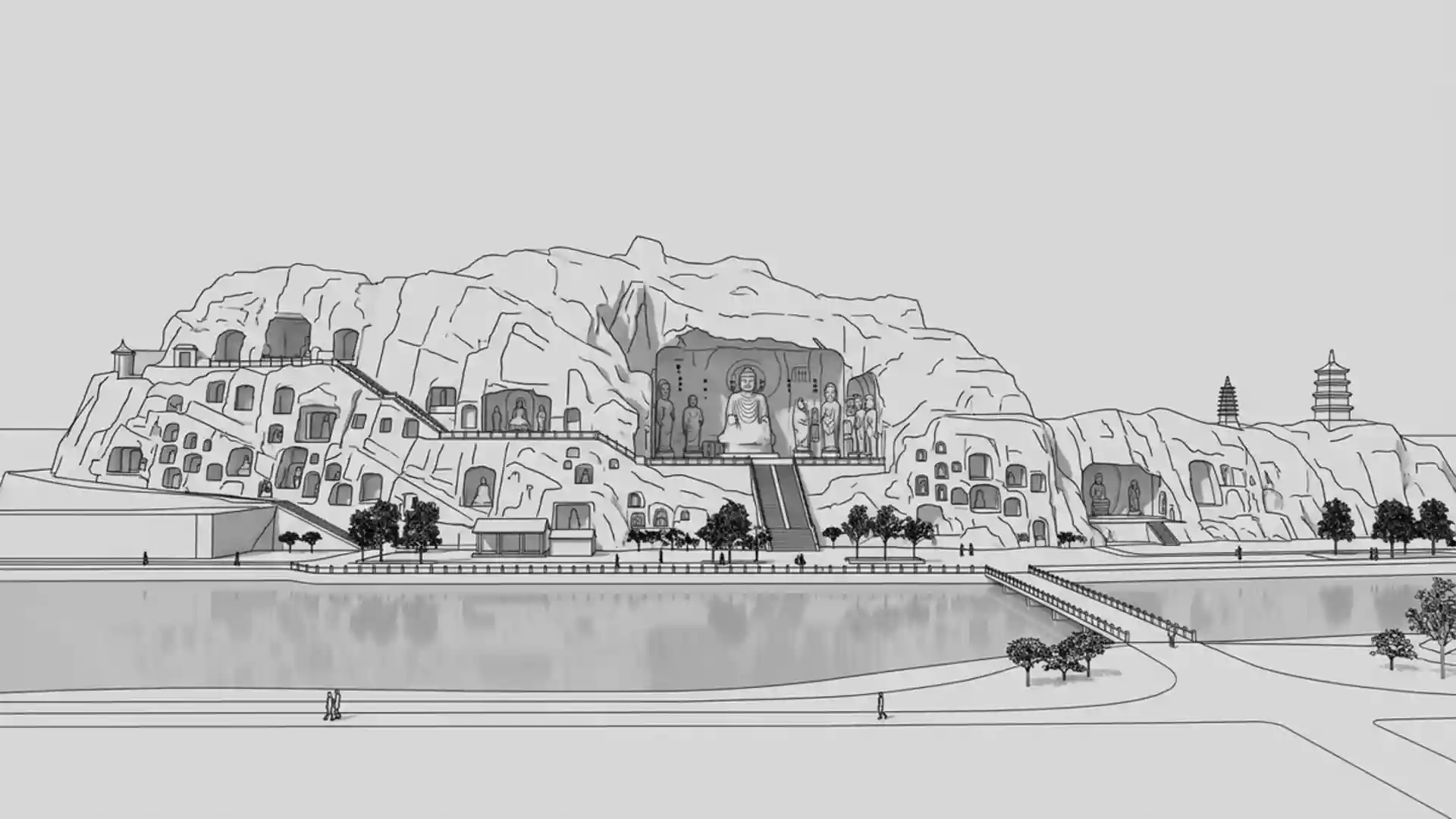
Longmen Shiku in Luoyang, a kilometre of carved Buddhist cliff
Published on 09/09/2026 at 11:49 | Editorial responsibility: Rafael Müller, Editor-in-Chief AD HOC NEWS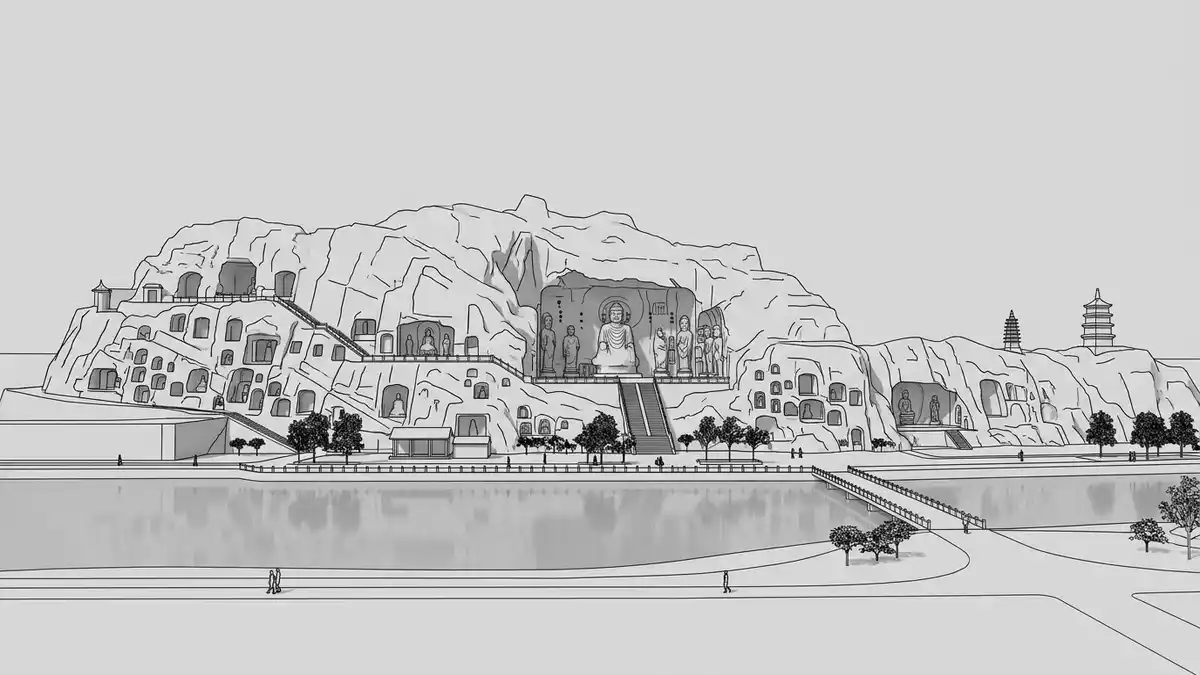
Longmen Shiku, known in English as the Longmen Grottoes, is a vast concentration of Chinese Buddhist cave temples cut into limestone cliffs south of Luoyang in Henan Province. The grottoes line a stretch of the Yi River and hold thousands of carved figures that chart Buddhist art from the late Northern Wei through the Tang dynasty.
A river gorge turned into a cliff of Buddhas
Longmen Shiku occupies limestone cliffs on both banks of the Yi River, in Luolong District just south of Luoyang in central China. The steep rock faces form a short gorge along the river, and over a stretch of about 1 km (0.6 miles) those cliffs were carved into caves and niches filled with Buddhist images.carved into the steep limestone cliffs over a 1km long stretch Walking the main riverside path, the grottoes appear less as isolated caves than as a continuous band of shrines, openings and carved panels.
The cave complex lies around 12 km (7.5 miles) south of Luoyang, on a section of river that once marked the southern edge of the historic city.located 12 kilometres south of present-day Luoyang The limestone here has weathered into vertical faces and terraces, and the main concentration of carvings follows the west bank before crossing a bridge to the east side. Across the gorge, cliffs rise above the water with openings, stairways and platforms, giving the impression of a sculpted riverside façade.
Dynasties, dates and the scale of the carvings
The story of Longmen Shiku begins in the late fifth century, when patrons of the Northern Wei dynasty initiated large-scale carving at the site. Work continued for roughly five centuries, through the transition to the Tang dynasty and beyond, and the grottoes are closely associated with the late Northern Wei and Tang periods between 316 and 907.Chinese art of the late Northern Wei and Tang Dynasties This long span of activity means that a walk along the cliff doubles as a visual timeline of changing styles in Buddhist sculpture.
In numerical terms, the complex is extraordinary. The gorge contains more than 2,300 caves and niches cut into the rock, with almost 110,000 stone statues recorded across the site.2300 caves and niches filled with Buddhist art Alongside the statues stand over 60 stupas and around 2,800 inscriptions carved on stone steles, many recording donors, dedications or historical context.more than 2,300 grottoes and niches and over 2,800 inscriptions Statues range from small figures just a few centimetres high to monumental Buddhas over 17 m (56 ft) tall, allowing visitors to move from intimate devotional spaces to cliff-scale ensembles.
From UNESCO inscription to a layered landscape of art
Longmen Shiku has been recognised as a cultural World Heritage Site since 2000, underscoring its significance as one of the finest collections of Chinese Buddhist stone carving.inscribed on the World Heritage List in 2000 The designation covers the full length of the carved gorge, including both cliff faces and the historic religious structures linked to the caves. The site is often grouped with the Mogao and Yungang cave complexes as part of a trio of major Chinese Buddhist grotto sites, each representing different regions and periods.
Within the scenic area, Longmen Shiku is usually described in four parts: the West Hill Grottoes, the East Hill Grottoes, Xiangshan Temple and Bai Garden, all linked by paths and stairways along the river and up the slopes.West Hill Grottoes, East Hill Grottoes, Xiangshan Temple and Bai Garden Many of the most studied caves lie on the west bank, where large ensembles of Buddhas and bodhisattvas occupy high cliff terraces, while the east side offers additional shrines and views back across the river to the main carved wall.
Visiting Longmen Shiku: what travellers from Western Europe should know
- Longmen Shiku lies in Luolong District, about 12 km (7.5 miles) south of central Luoyang in Henan Province, and is reached by road links from the city and its stations.
The entrance areas lead directly into a riverside walking route along the Yi River. - The terrain inside the scenic area combines relatively level riverside paths with stone stairways climbing between terraces, as many caves open partway up the cliff face.
Visitors spend much of their time on foot, moving between carved niches, viewing platforms and bridges. - Longmen Shiku stretches along a short gorge between Mount Xiang and Mount Longmen, with cliffs rising above the river and carved chambers set into the rock.
The landscape provides clear views of the sculpted cliff from different levels on both sides of the Yi River. - The official language is Chinese and the currency is the renminbi (Chinese yuan).
- Entry requirements depend on your nationality; UK travellers can check the FCDO travel advice at gov.uk/foreign-travel-advice, Irish travellers the Department of Foreign Affairs at ireland.ie.
Searching for Longmen Shiku on social platforms
These links open searches for Longmen Shiku on each platform.
Frequently asked questions about Longmen Shiku
Where is Longmen Shiku located?
Longmen Shiku is located in Luolong District south of Luoyang in Henan Province, with grottoes lining limestone cliffs on both sides of the Yi River.
What can visitors expect on a visit to Longmen Shiku?
Visitors walk along riverside paths and stone stairways past cave temples and carved cliff faces, seeing thousands of Buddhist statues, inscriptions and shrines in a compact gorge.
What makes Longmen Shiku distinctive among Buddhist cave sites?
Longmen Shiku combines a dense concentration of caves, monumental cliff carvings and a long history of sculpture from the Northern Wei and Tang dynasties within a short river gorge.