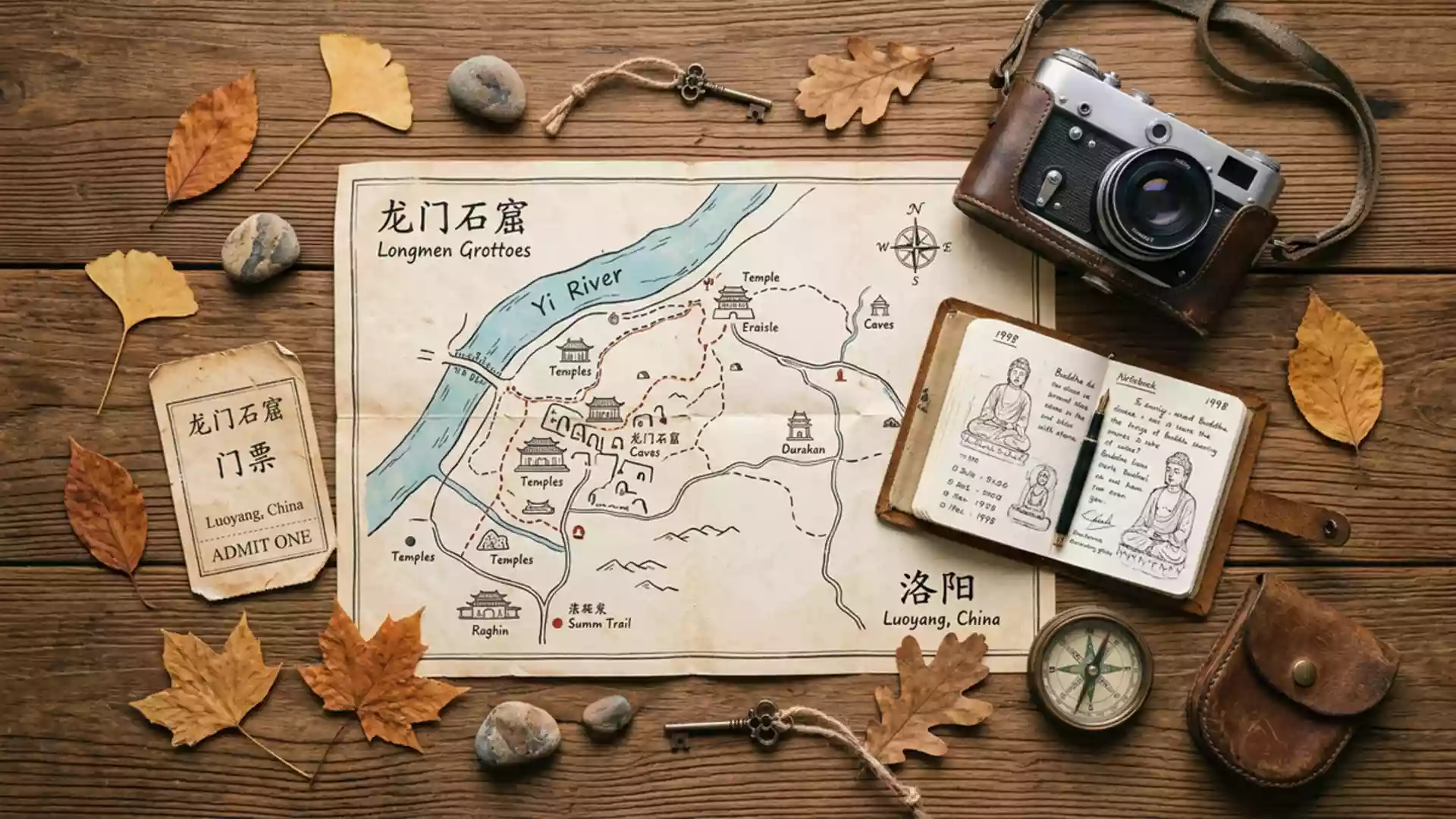
Longmen Shiku and the stone Buddhas of the Yi River cliffs
Published on 09/02/2026 at 15:17 | Editorial responsibility: Rafael Müller, Editor-in-Chief AD HOC NEWS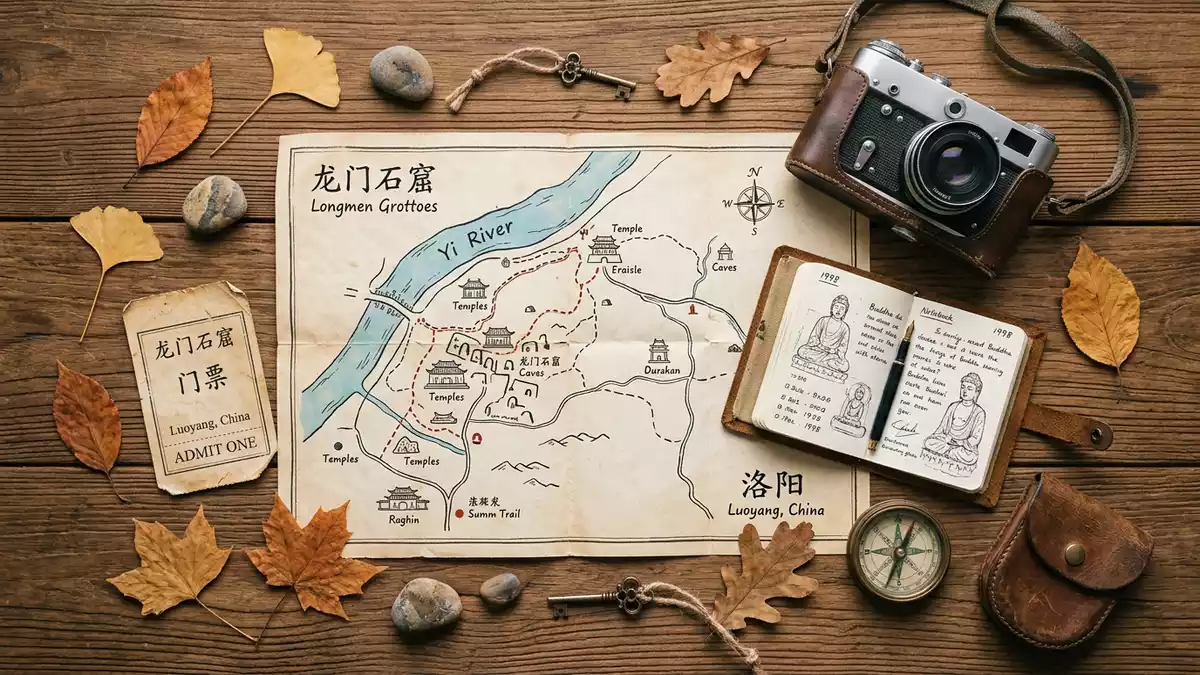
Longmen Shiku, better known in English as the Longmen Grottoes, lines the limestone cliffs south of Luoyang with a dense band of Buddhist carvings cut directly into the rock. Carving began in the late fifth century during the Northern Wei dynasty, after the imperial court moved to Luoyang in 495, and continued into the Tang dynasty, giving the site a timeline that spans several centuries of Chinese Buddhist art.Carving began in the late fifth century
Carved cliffs and riverside setting
The core of Longmen Shiku lies on facing cliffs along the Yi River, with caves, niches and sculpted façades running for about 1 km on both banks.The grottoes extend along the limestone cliffs beside the Yi River The rock here is fine-grained limestone, and the sculptors used it to create shallow reliefs, deep chambers and cliffside stairways that turn the valley into a continuous gallery.
The distribution of grottoes is not uniform, and the western bank in particular carries dense clusters of caves and figures that read like a layered stone scroll.Descriptions of the site emphasise the concentration of caves and figures Between the carved surfaces, paths and steps trace the contours of the cliffs, so that a visit unfolds as a sequence of terraces, cliff edges and recessed chambers cut into the rock wall.
Buddhist figures on a monumental scale
Longmen Shiku contains a vast number of images, from small devotional figures to monumental Buddhas whose faces rise high above the cave floors.The complex contains tens of thousands of statues and reliefs Many of the earliest carvings belong to the Northern Wei period, with slender figures and sharply defined drapery, while later Tang work introduces fuller forms and more rounded modelling.
Among the most cited ensembles is the Vairocana Buddha group at Fengxian Si, completed under the Tang dynasty and often used as a reference point for the scale and refinement of the site.The Tang period carvings at Fengxian Si mark a high point of the ensemble Here, a seated Buddha is framed by attendant figures and guardians carved directly from the cliff, with their surfaces bearing traces of carving campaigns that stretched over generations.
Dynasties, inscriptions and UNESCO recognition
The history of Longmen Shiku is closely tied to the Northern Wei and Tang dynasties, whose patrons and sculptors left an extensive record in stone.The main carving phases fall between the Northern Wei and Tang dynasties Inscriptions carved on steles and cave walls record donors, dates and dedications, making the cliffs a primary source for historians working on Chinese Buddhism, calligraphy and the social history of Luoyang.
In 2000 Longmen Shiku was inscribed on the UNESCO World Heritage List as a cultural site, with the listing highlighting both its artistic quality and its continuous record of Buddhist sculpture over several centuries.UNESCO added the Longmen Grottoes to the World Heritage List in 2000 The protected area covers the cliffs, river corridor and associated structures, marking the site out as a key stop on itineraries through China that trace the spread and transformation of Buddhist art.
Visiting Longmen Shiku: what travellers from Western Europe should know
- Longmen Shiku stands south of Luoyang, in Henan province in central China, and is reached along routes that follow the Yi River valley towards the cliffs.
- The cliff paths and cave entrances involve flights of steps cut into the rock and constructed walkways, so a visit includes repeated ascents and descents along the limestone faces.
- The site lies in a river valley, and some paths run close to the water, with views back across the Yi River towards the opposite line of grottoes.
- The official language is Chinese and the currency is the renminbi.
- Entry requirements depend on your nationality; UK travellers can check the FCDO travel advice at gov.uk/foreign-travel-advice, Irish travellers the Department of Foreign Affairs at ireland.ie.
Searching for Longmen Shiku on social platforms
These links open searches for Longmen Shiku on each platform.
Frequently asked questions about Longmen Shiku
Where is Longmen Shiku?
Longmen Shiku is on limestone cliffs along the Yi River south of Luoyang, in Henan province in central China.
What should visitors expect on a visit?
A visit involves walking along riverside paths and climbing stairways between caves, with repeated views of carved cliffs and large outdoor Buddha figures.
What makes Longmen Shiku distinctive?
The site combines an extensive concentration of Buddhist carvings from the Northern Wei and Tang dynasties with a dramatic riverside cliff setting recognised by UNESCO as a World Heritage Site.