
Longmen Shiku and the limestone cliffs of Luoyang
Published on 09/03/2026 at 14:17 | Editorial responsibility: Rafael Müller, Editor-in-Chief AD HOC NEWS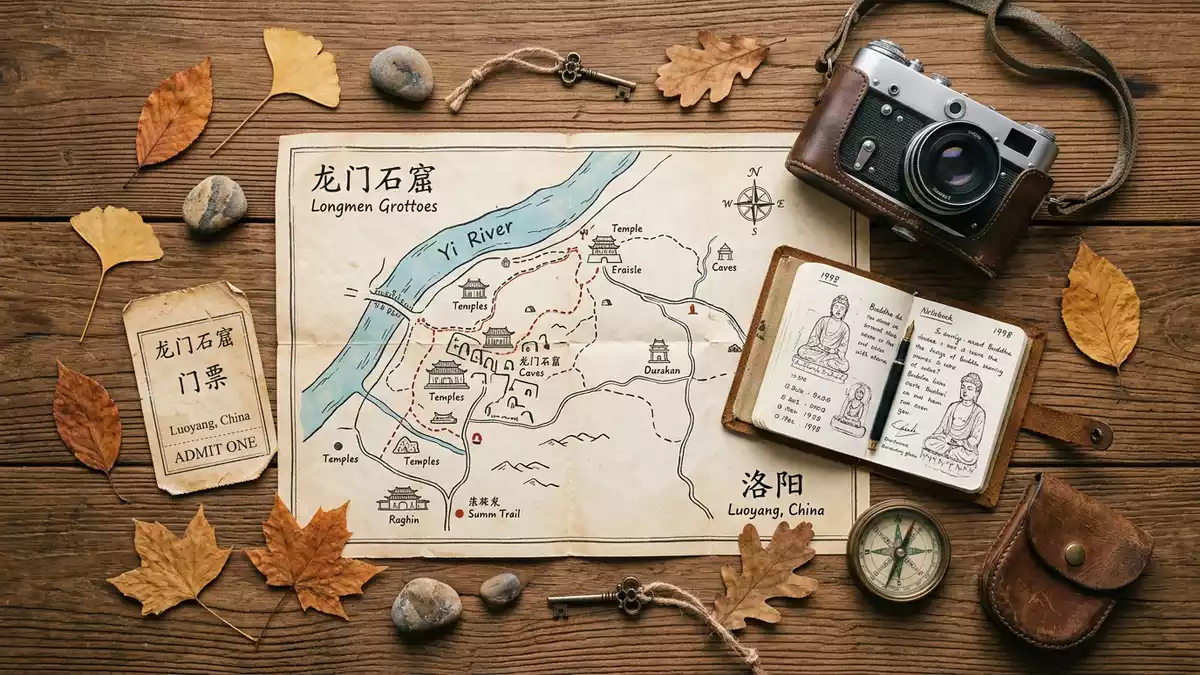
Longmen Shiku in Luoyang is a cliffside Buddhist landscape cut into limestone on both banks of the Yi River. The grottoes are a UNESCO World Heritage Site, and their scale is visible in the stone itself.UNESCO World Heritage Site
Stone cliffs, caves and inscriptions at Longmen
The site brings together more than 2,300 caves and niches, carved into a stretch of cliff about 1 km long. It also contains almost 110,000 Buddhist stone statues, more than 60 stupas and 2,800 inscriptions on steles.2,300 caves and niches
The carvings belong above all to the late Northern Wei and Tang dynasties, with the most intensive work running from the end of the fifth century into the mid-eighth century. The stone surfaces preserve faces, robes, halos, columns and long lines of writing in the same limestone setting.late Northern Wei and Tang dynasties
Longmen Shiku in the Buddhist history of Luoyang
Luoyang was a capital in the Northern Wei and early Tang periods, and Longmen belongs to that imperial landscape. The complex reflects a long Buddhist patronage tradition in which emperors, monks and private donors left their marks in stone.imperial landscape
Among the best-known monuments is Fengxian Temple, where a monumental Vairocana Buddha stands within the cliff face. Its figure reaches 17.14 m (56 ft), giving the western bank a striking vertical focus among the surrounding caves.Fengxian Temple
Why the caves matter as a cultural landscape
Longmen is not only a collection of statues. The carvings, the inscriptions and the river valley form a single historical setting, with limestone cliffs rising above the water and the images spread across both sides of the gorge.limestone cliffs
The site also preserves a dialogue between image and text. Donor inscriptions, memorial steles and devotional figures sit close together, making Longmen one of the most important stone-carving ensembles in China.donor inscriptions
Visiting Longmen Shiku: what travellers from Western Europe should know
- Longmen Shiku lies south of central Luoyang on the Yi River. Rail and road links reach the cave district, which sits in the Luolong area of the city.
- The caves are set into steep limestone cliffs. Paths, steps and changes in level are part of the terrain around the carved banks.
- The site is part of a river landscape, so the view changes from water to cliff face to cave openings. That contrast is central to the place.
- English is not an official language here; the official language is Chinese and the currency is the Chinese yuan.
- Entry requirements depend on your nationality; UK travellers can check the FCDO travel advice at gov.uk/foreign-travel-advice, Irish travellers the Department of Foreign Affairs at ireland.ie.
Searching for Longmen Shiku on social platforms
These links open searches for Longmen Shiku on each platform.
Frequently asked questions about Longmen Shiku
Where is Longmen Shiku?
Longmen Shiku is in Luolong District, south of Luoyang in Henan Province, beside the Yi River. The grottoes run along limestone cliffs on both sides of the water.
What does a visit involve?
The terrain includes cliffs, steps and uneven levels around the caves. The main impression is of carved rock, river valley and dense stone surfaces.
What makes Longmen Shiku distinctive?
Its scale, its limestone setting and its long span of Buddhist carving define it. The site combines thousands of caves, large stone figures and a dense body of inscriptions.


