
Longmen Shiku and the limestone cliffs of Luoyang
Published on 08/26/2026 at 13:35 | Editorial responsibility: Rafael Müller, Editor-in-Chief AD HOC NEWS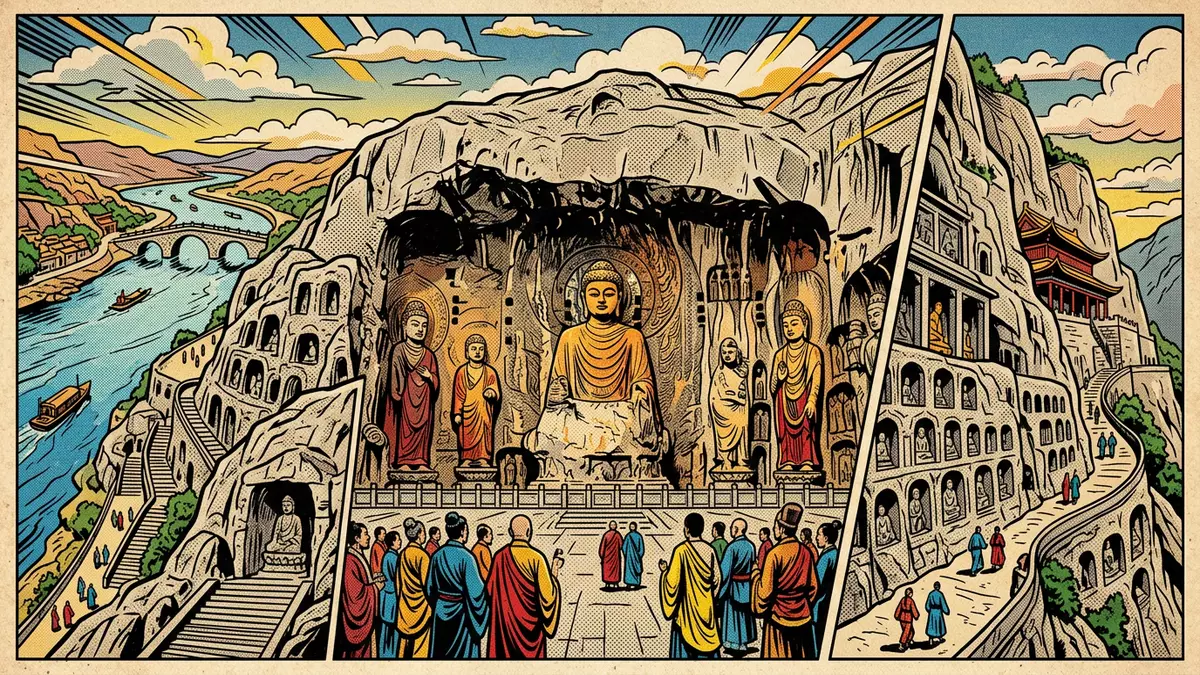
Longmen Shiku in Luoyang is a cliffside Buddhist landscape cut into limestone on both sides of the Yi River. The site was inscribed on the UNESCO World Heritage List in 2000, and its carved surfaces belong to the Northern Wei and Tang dynasties.
Longmen Shiku and the limestone walls of the Yi River
The eye meets a long band of cliffs rather than a single monument. More than 2,300 caves and niches are set into the rock, with statues and inscriptions spread across the river gorge.
The Buddhist carvings run through a broad historical span, from the late fifth century into the Tang period. That range gives Longmen Shiku its layered character: some figures are compact and restrained, others fuller and more expansive, and the stone surface carries both styles side by side.
One of the most striking facts is the density of material on the rock face. The site contains tens of thousands of Buddhist stone figures, alongside stupas and inscribed tablets, making the cliff itself the main exhibition surface.
UNESCO World Heritage List records the inscription and the setting on both sides of the Yi River.
The carving tradition at Longmen Shiku
Longmen Shiku is closely tied to imperial and religious patronage in Northern Wei and Tang China. The first major caves date from the Northern Wei period, when Luoyang was an imperial centre, and the complex expanded for centuries.
The rock art shows changing tastes in Buddhist sculpture as the dynasties changed. Earlier figures are often more formal in stance, while Tang-era work tends towards rounder bodies and softer modelling, all carved directly into the limestone walls.
The site’s importance lies not only in the number of carvings, but in the way the cliff preserves a sequence of styles. That sequence links art, devotion and court culture in one continuous river setting.
the nomination document identifies the place in Luoyang City, Henan Province, and helps place it within the city’s wider historical geography.
Stone figures, inscriptions and the river gorge
The scale of Longmen Shiku is easiest to grasp in the rock face itself. Caves, niches, statues and inscriptions are distributed along a steep limestone stretch, with the river running below.
That arrangement makes the site read less like a single temple and more like a carved escarpment. The visitor meets open-air niches, larger cave chambers and vertical surfaces crowded with reliefs, all within the same landscape of stone.
Longmen Shiku also belongs to a wider tradition of major Chinese grotto art. Its reputation rests on the survival of a large and coherent ensemble rather than on one isolated masterpiece.
the Northern Wei dynasty marks the beginning of the carved complex, while later Tang work gives the site much of its visual variety.
Visiting Longmen Shiku: what travellers from Western Europe should know
- The site lies south of central Luoyang, on the Yi River, with Longmen as the local place name attached to the grottoes.
- Expect limestone cliffs, stepped ground and extensive outdoor viewing, with carved surfaces spread over a long river stretch.
- The ensemble includes caves, niches, inscriptions and large stone figures, so the walk is as much about landscape as about individual artworks.
- Longmen Shiku is a major Buddhist rock-cut site in Henan, and the carvings extend across several historical layers.
Searching for Longmen Shiku on social platforms
These links open searches for Longmen Shiku on each platform.
Frequently asked questions about Longmen Shiku
Where is Longmen Shiku?
Longmen Shiku lies in Luoyang, Henan Province, beside the Yi River. The grottoes spread across limestone cliffs on both sides of the water.
What does a visit involve?
The site is an open-air rock-cut landscape with caves, niches and inscriptions set into steep stone. The route links carved cliff faces and river scenery in one complex.
What makes Longmen Shiku distinctive?
The site combines a large body of Buddhist sculpture with clear historical layering. Northern Wei and Tang carving traditions remain visible in the same limestone escarpment.