
Longhu Ta in Kaohsiung, twin dragon and tiger pagodas on Lotus Pond
Published on 08/30/2026 at 13:42 | Editorial responsibility: Rafael Müller, Editor-in-Chief AD HOC NEWS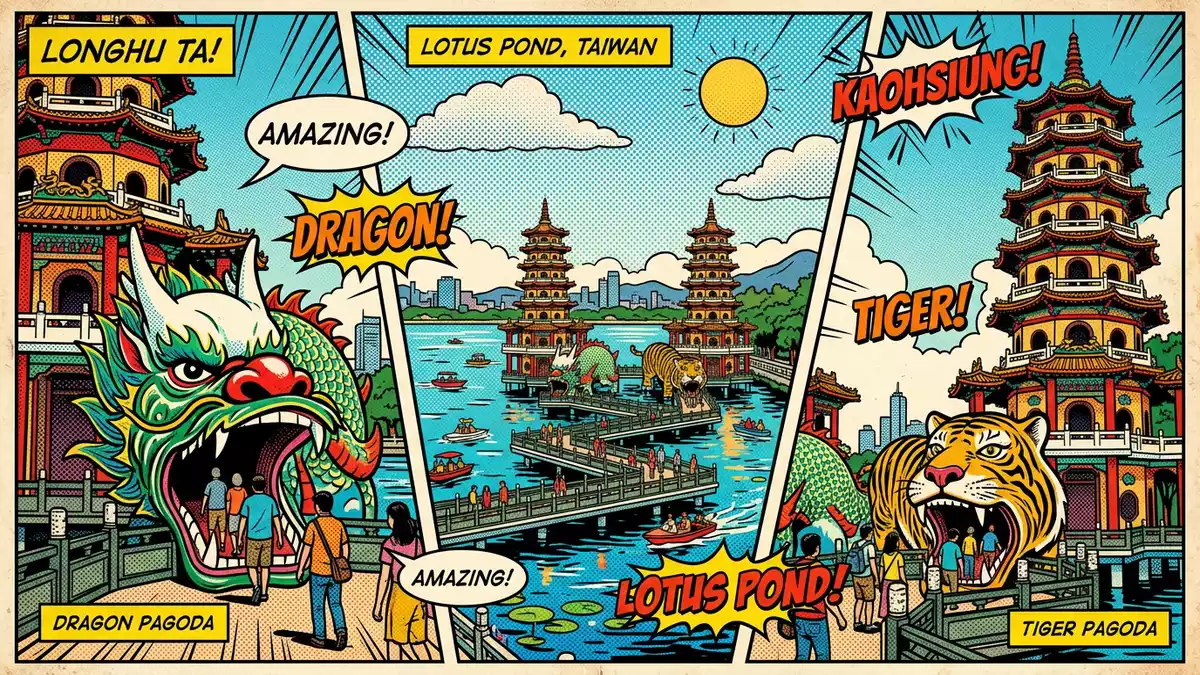
Longhu Ta in Kaohsiung is a twin set of brightly coloured pagodas on the shore of Lotus Pond, fronted by a dragon and a tiger that turn religious architecture into a walkable story. The complex stands in Zuoying District in southern Taiwan, its towers dating to the 1970s and rising above the lake as one of the most distinctive temple structures around Lotus Pond.
Dragon and tiger towers over Lotus Pond
Longhu Ta centres on two multi-storey pagodas standing out over the water of Lotus Pond, reached from the shore by causeways that give visitors the sense of walking towards the lake itself.Longhu Tower at Lotus Pond Each tower follows the traditional pagoda profile, with stacked roofs and balconies ringing each level, but the overall impression is strikingly contemporary in colour because of the vivid reds, yellows and greens that cover the facades.Dragon and Tiger Pagodas temple
In front of the pagodas stand two large animal figures: a dragon with an open mouth leading into an interior corridor and a tiger whose jaws frame the exit back towards the lakeside paths.dragon and tiger statues Visitors enter through the dragon, walk through a passage lined with paintings and reliefs, and emerge through the tiger, stepping out towards the pagoda platforms and the water. The towers themselves are seven storeys high, giving elevated views across Lotus Pond, nearby pavilions and the temple roofs of Zuoying.
A 1976 addition to Zuoying’s temple landscape
The Dragon and Tiger Pagodas, known locally as Longhu Ta, were built in 1976 as part of the broader Lotus Pond temple landscape in Zuoying District.built in 1976 Their construction added a distinctly late twentieth-century layer to an area already shaped by older temples and shrines, including complexes linked by bridges and promenades around the lakeshore.Lianchihtan scenic area While the basic pagoda form draws on older Chinese architectural traditions, the colour palette and the playful dragon and tiger figures reflect Taiwanese folk religious expression from that period.
Zuoying District, where Longhu Ta stands, lies in the northern part of Kaohsiung and is known for its concentration of temples and lakeside structures around Lotus Pond, also referred to as Lotus Lake.Bidong Village in Zuoying The pagodas are part of this ensemble, aligned along the shore so that their reflections appear in the water alongside other pavilions and gateways. The site’s position beside the lake gives the towers a dual presence: religious structures connected to nearby temples and visual landmarks in the broader waterscape.
Symbolism, artwork and views
Beyond their overall form, Longhu Ta is distinguished by its symbolic route and detailed artwork. The path that leads visitors through the dragon and out through the tiger follows a pattern widely described in Taiwan, with the dragon associated with good fortune and the tiger with strength. Inside the dragon corridor, panels and reliefs depict scenes from Chinese mythology, folk stories and moral tales, creating a gallery of images that visitors encounter as they walk towards the pagodas.interior panels and path
Each pagoda floor is arranged as a small viewing level, with railings and openings that frame the lake, the city skyline and the neighbouring temple complexes. From the upper levels, the view takes in the curve of Lotus Pond, other religious structures along its edge and the wider urban fabric of Kaohsiung beyond.seven-storey tower The experience shifts from close-up detail of mosaic tiles, carved figures and painted roofs at the lower levels to a broader landscape perspective higher up, with the lake surface and temple roofs forming the immediate foreground.
Visiting Longhu Ta: what travellers from Western Europe should know
- Longhu Ta stands beside Lotus Pond in Zuoying District, a northern part of Kaohsiung in southern Taiwan, and is reached via city transport connections to Zuoying area stops.
- The approach to the pagodas involves walking along lakeside paths and over causeways with several bends, followed by staircases inside the towers that climb through seven storeys.
- Lotus Pond is surrounded by other named temples and pavilions, so a visit to Longhu Ta takes place within a wider religious landscape of shrines and waterfront structures.
- The official language is Chinese and the currency is the New Taiwan dollar.
- Entry requirements depend on your nationality; UK travellers can check the FCDO travel advice at gov.uk/foreign-travel-advice, Irish travellers the Department of Foreign Affairs at ireland.ie.
Searching for Longhu Ta on social platforms
These links open searches for Longhu Ta on each platform.
Frequently asked questions about Longhu Ta
Where is Longhu Ta located in Kaohsiung?
Longhu Ta stands beside Lotus Pond, also called Lotus Lake, in Zuoying District in the northern part of Kaohsiung in southern Taiwan.
What can visitors expect when walking through Longhu Ta?
Visitors walk through the mouth of a dragon figure along an interior corridor with artwork, then exit through a tiger figure and reach the twin pagoda towers rising over the lake.
What makes Longhu Ta distinctive among Taiwan’s temple sites?
The combination of twin seven-storey pagodas, giant dragon and tiger sculptures and the lakeside setting on Lotus Pond gives Longhu Ta a distinctive blend of folk symbolism and waterside temple architecture.


