
Leptis Magna, a Roman city by the Libyan sea
Published on 09/07/2026 at 12:53 | Editorial responsibility: Rafael Müller, Editor-in-Chief AD HOC NEWS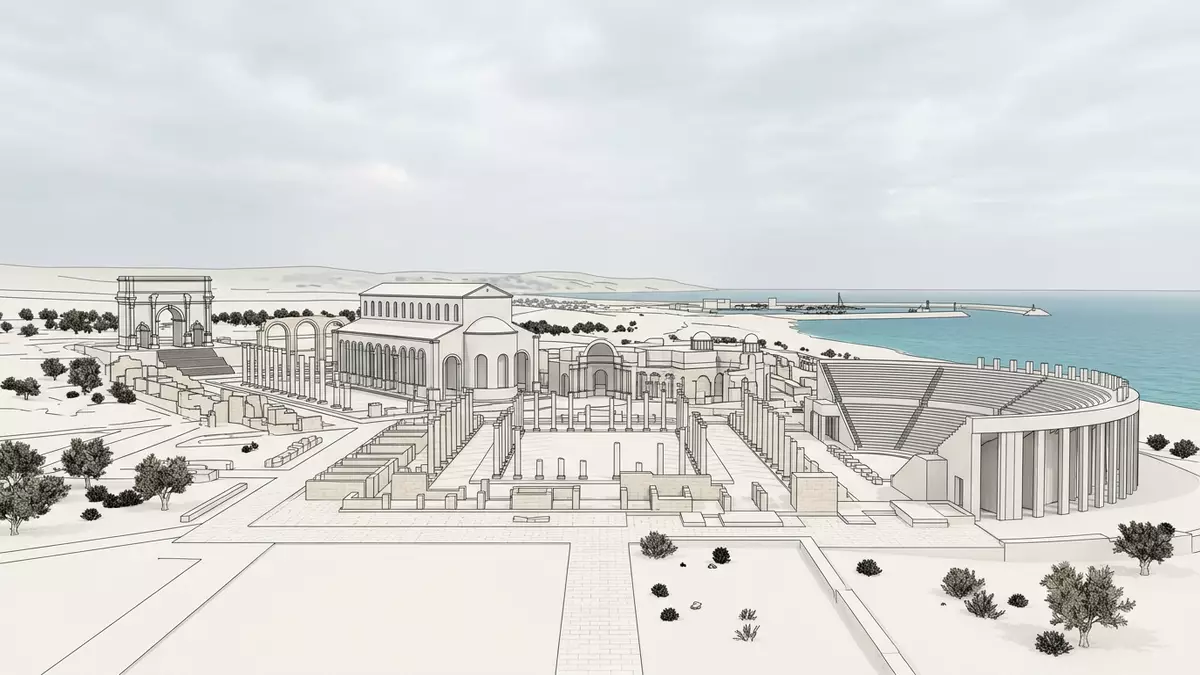
On the Mediterranean coast of Libya near Al Khums, the ruins of Leptis Magna preserve an extensive Roman city in stone, laid out beside the sea and the Wadi Lebda. Founded as a Phoenician trading settlement and later absorbed into the Carthaginian and Roman worlds, it grew into a major urban centre in the historical region of Tripolitania during the imperial period.
A Roman metropolis in Tripolitania
Leptis Magna stands on the Libyan shore east of Tripoli, close to the modern town of Al Khums, where the Wadi Lebda reaches the Mediterranean.Mediterranean coast of Libya The city belongs to the ancient region of Tripolitania, a coastal belt that once linked three major urban centres of Roman North Africa. Its position at a river mouth allowed the harbour to connect inland caravan routes with maritime trade, tying Leptis Magna to wider Mediterranean networks.
The origins of Leptis Magna lie in a Phoenician foundation on this coast, later brought firmly under Carthaginian control as one of the Punic colonies in Africa.Phoenician colonies in Tripolitania After the Roman conquest of Carthage in 146 BC, the city became part of the Roman sphere and was eventually incorporated into the province known as Africa. Under Roman rule, Leptis Magna developed from a regional harbour town into a substantial urban landscape with forums, baths and entertainment buildings laid out in stone.
Imperial grandeur under Septimius Severus
Leptis Magna is closely associated with the emperor Septimius Severus, who was born in the city and ruled the Roman Empire in the late second and early third centuries AD.enlarged and embellished by Septimius Severus During his reign, the urban fabric was both extended and monumentalised, leaving a concentration of grand public buildings that still structure the archaeological site. This Severan phase gave the city a distinctive stamp, visible in the scale of its forum and the arrangement of its colonnades.
Walking the ruins today reveals a sequence of Roman structures that together form one of the most complete cityscapes from the empire. The remains include a harbour area, market spaces, storehouses for goods, rows of shops and residential quarters that follow the orthogonal street grid. Public monuments such as theatres, amphitheatres, baths and basilicas rise in masonry, many with surviving columns and carved architectural details.imposing public monuments and districts Together they show how a Roman metropolis in North Africa combined commerce, spectacle and daily life within a coherent plan.
World Heritage ruins beside the Wadi Lebda
The archaeological site of Leptis Magna has been recognised as a cultural property of outstanding value and is inscribed on the UNESCO World Heritage List.Archaeological Site of Leptis Magna The inscription dates from 1982 and identifies the ruins as a masterpiece of human creative genius, a place that illustrates the interchange of human values and bears exceptional testimony to the Roman urban tradition in North Africa.UNESCO criteria for Leptis Magna
The city’s remains extend across a broad area near the shore, combining monumental stone architecture with streets and open spaces that have been uncovered over more than a century of archaeological work.main buildings uncovered from 1911 North African light falls across columns, paving and carved blocks, while the proximity of the sea and the dry climate have helped preserve inscriptions and reliefs cut into the masonry. The relationship between the city and the Wadi Lebda remains legible in the way streets align with the river mouth and the harbour works, giving visitors a sense of how water and stone shaped the Roman presence on this stretch of the coast.
Visiting Leptis Magna: what travellers from Western Europe should know
- The ruins lie near Al Khums on the Mediterranean coast of Libya, south-east of Tripoli, and are reached by road from the coastal highway that links the region.
- The archaeological area covers a wide expanse of stone-built streets and monuments, and a visit involves substantial walking across uneven surfaces and ancient paving.
- The official language is Arabic and the currency is the Libyan dinar.
- Entry requirements depend on your nationality; UK travellers can check the FCDO travel advice at gov.uk/foreign-travel-advice, Irish travellers the Department of Foreign Affairs at ireland.ie.
Searching for Leptis Magna on social platforms
These links open searches for Leptis Magna on each platform.Frequently asked questions about Leptis Magna
Where is Leptis Magna located?
Leptis Magna lies near Al Khums on the Mediterranean coast of Libya, east and south-east of Tripoli, at the mouth of the Wadi Lebda.
What can visitors expect to see at Leptis Magna?
Visitors encounter a wide spread of Roman ruins, including theatres, baths, forums, markets, streets and harbour remains that together form an extensive ancient cityscape.
What makes Leptis Magna distinctive among Roman sites?
Leptis Magna stands out for the completeness of its preserved urban layout and for the concentration of monumental buildings linked to the reign of Septimius Severus in Roman North Africa.


