Leon Viejo, a buried colonial city by lake and volcano
Published on 09/11/2026 at 17:47 | Editorial responsibility: Rafael Müller, Editor-in-Chief AD HOC NEWS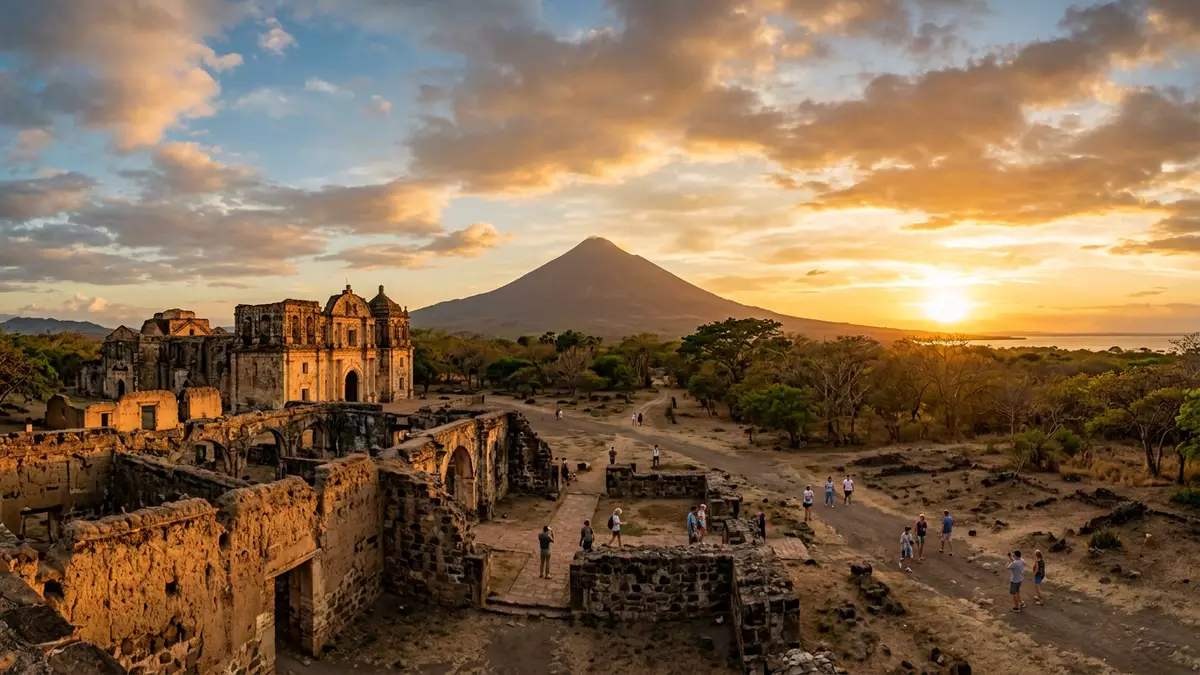
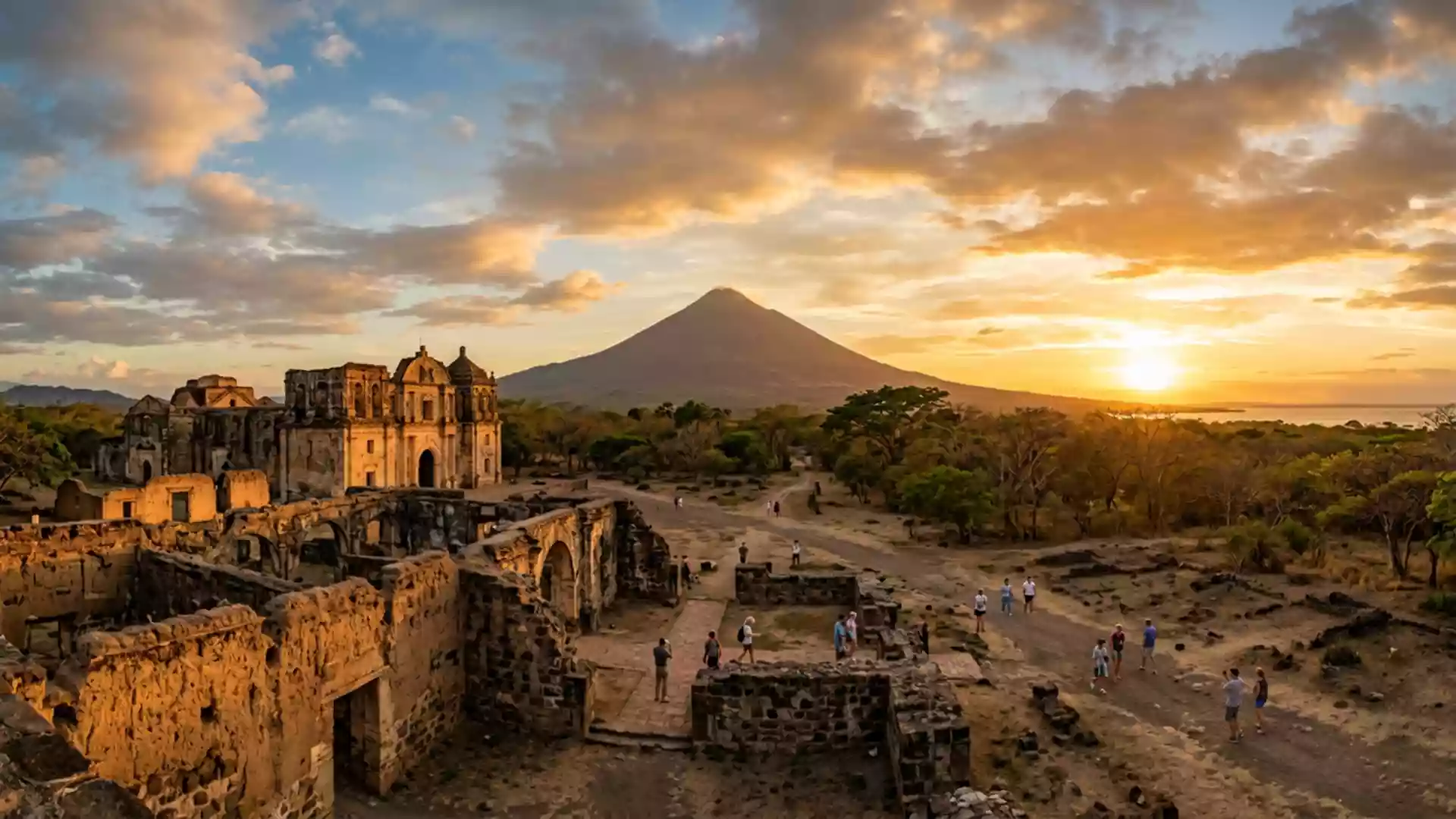
Leon Viejo in western Nicaragua preserves the buried layout of a sixteenth?century Spanish colonial town on the shore of Lake Managua, facing the volcanic cone of Momotombo across the water. Founded as Leon de Nagrando by Francisco Hernández de Córdoba in 1524, the settlement later declined and was abandoned in the early seventeenth century, leaving its streets, plazas and foundations to be uncovered centuries later.
A colonial town paused in the sixteenth century
Leon Viejo occupies the original site of the city of Leon, laid out as a Spanish colonial town with a central plaza and religious buildings grouped around it. The settlement was established in 1524 during the first phase of Spanish expansion into Central America, giving it a role in the early administration of the colonial province of Nicaragua.Established in 1524 The town later became the capital of the province, a status that reflected its importance in regional trade and governance.
The ruins record a town that did not grow into a major urban centre and was eventually abandoned after a sequence of natural disasters in the late sixteenth and early seventeenth centuries.Abandoned in the early seventeenth century Streets, building outlines and open spaces lie preserved in earth and stone, giving archaeologists and visitors a rare view of an early Spanish colonial settlement largely frozen at its initial scale rather than transformed by later growth.
Lake, volcano and a buried cityscape
The archaeological site of Leon Viejo stands near the small town of Puerto Momotombo in the municipality of La Paz Centro, on the western shore of Lake Managua, also known as Lake Xolotlán.Near Puerto Momotombo on Lake Managua Across the lake rises the stratovolcano Momotombo, a landmark that dominates views from the ruins and underlines how closely the colonial town was tied to its volcanic landscape.
The ruins extend across an area of roughly 31.9 hectares, encompassing excavated structures and surrounding ground with further archaeological potential.An archaeological area of about 31.9 hectares Within this area lie foundations of a cathedral, churches, a convent and domestic buildings, all laid out around a central square in the characteristic grid plan of Spanish colonial towns.Grid plan with a central plaza The combination of lake, volcano and exposed town plan makes Leon Viejo an unusual landscape where geological and urban forms are seen together.
World Heritage recognition and ongoing archaeology
Leon Viejo was rediscovered and cleared in the later twentieth century, leading to campaigns of excavation and conservation that continue to extend knowledge of its urban fabric.Rediscovery and excavation from 1967 In 1994 the site was declared Cultural Heritage of the Nation by Nicaraguan law, formalising its status within national heritage protection.
In 2000 the Ruins of Leon Viejo were inscribed on the UNESCO World Heritage List as Nicaragua’s first World Heritage Site.Inscribed on the UNESCO World Heritage List in 2000 The inscription recognises the site as one of the oldest Spanish colonial settlements in the Americas and highlights its value as evidence of sixteenth?century social and economic structures in the Spanish Empire.One of the oldest Spanish colonial settlements in the Americas Archaeological work and guided access have turned the once buried town into an open?air record of colonial urbanism.
Visiting Leon Viejo: what travellers from Western Europe should know
- Leon Viejo lies in the department of Leon on the western shore of Lake Managua, near the village of Puerto Momotombo; it is reached overland from the modern city of Leon or from Managua.
- The archaeological park is largely level but includes excavated structures and uneven ground, so sturdy footwear is useful for moving between exposed foundations and viewpoints over the lake.
- The site stands at low altitude beside Lake Managua, with little shade in some areas, and visits involve walking across open ground between the remains of buildings.
- Leon Viejo is in Nicaragua, where the official language is Spanish and the currency is the córdoba.
- Entry requirements depend on your nationality; UK travellers can check the FCDO travel advice at gov.uk/foreign-travel-advice, Irish travellers the Department of Foreign Affairs at ireland.ie.
Searching for Leon Viejo on social platforms
These links open searches for Leon Viejo on each platform.
Frequently asked questions about Leon Viejo
Where is Leon Viejo located?
Leon Viejo is in western Nicaragua, in the department of Leon near Puerto Momotombo, on the western shore of Lake Managua opposite the Momotombo volcano.
What can visitors expect at Leon Viejo?
Visitors encounter an archaeological park with exposed foundations of a sixteenth?century Spanish colonial town, a central plaza, religious buildings and views across Lake Managua towards Momotombo.
What makes Leon Viejo distinctive among colonial sites?
Leon Viejo is one of the oldest Spanish colonial settlements in the Americas and was inscribed on the UNESCO World Heritage List in 2000, preserving a town that stopped growing before later urban redevelopment.