
Leon Viejo, a buried colonial city by lake and volcano
Published on 08/31/2026 at 12:41 | Editorial responsibility: Rafael Müller, Editor-in-Chief AD HOC NEWS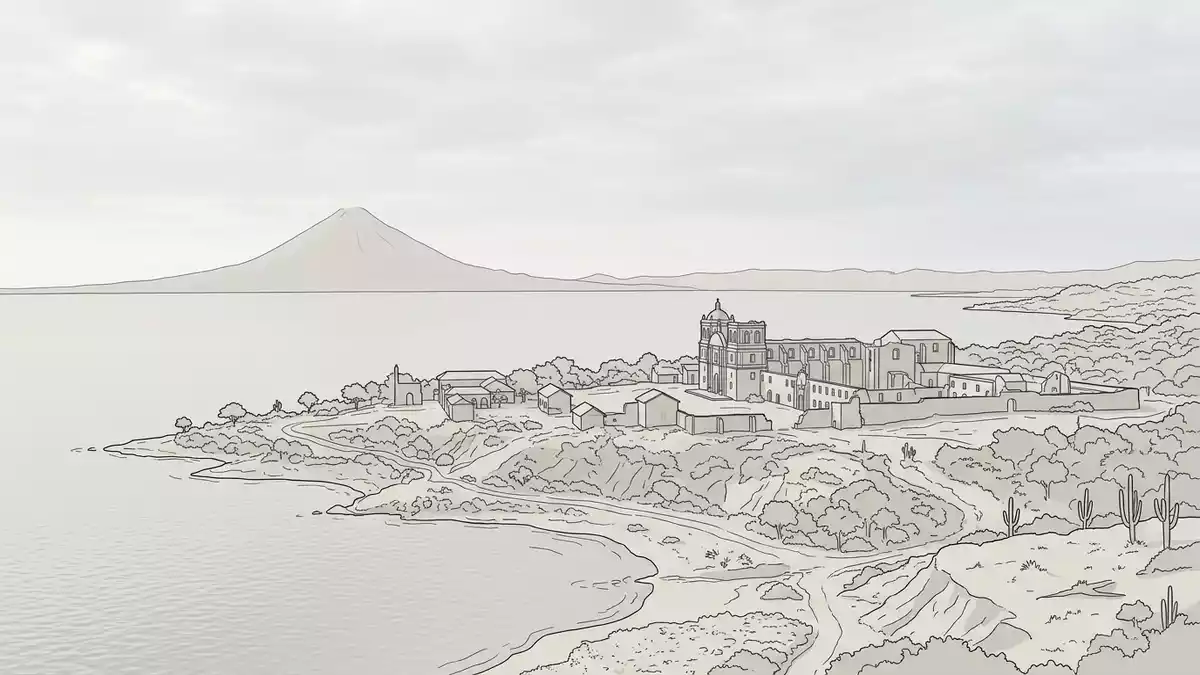
Leon Viejo in western Nicaragua is an archaeological window onto a sixteenth?century Spanish colonial town, preserved beside Lake Managua in the shadow of the Momotombo volcano and abandoned in the early seventeenth century.
A colonial city caught in time
Leon Viejo occupies the original site of the city of Leon, founded by the Spanish conquistador Francisco Hernández de Córdoba in 1524 on the western shore of Lake Managua in the department of Leon.founded in 1524 The settlement became the capital of the colonial province of Nicaragua only a few years after its foundation, giving it a central role in the early administration of Spanish rule in Central America.capital of the colonial province
Over the decades Leon Viejo suffered a series of disasters, including volcanic activity linked to Momotombo and a major earthquake recorded in 1610, after which the inhabitants decided to relocate the city to a safer site further inland.disasters and abandonment The old town was left to decay under layers of ash and soil, its streets and buildings buried and forgotten until archaeological work in the twentieth century began to uncover the layout of the colonial settlement.
Reading the ruins: streets, plazas and churches
The archaeological park at Leon Viejo presents the ground plan of a Spanish colonial town set out as an orthogonal grid of streets with a central square, a layout typical of urban design in the Americas during the sixteenth century.orthogonal grid with central square Low walls, foundations and excavated floor levels mark out the outlines of houses, public buildings and religious structures, so the visitor walks through a town reduced to its masonry footprint yet still legible as a planned city.
Among the most recognisable structures are the remains of the cathedral of Santa María de la Gracia, which served as the main church of the colonial town, and the convent of La Merced, reflecting the importance of religious orders in early Spanish Nicaragua.cathedral and convent remains Archaeological campaigns initiated after the rediscovery of the site in 1967 cleared these monuments and stabilised their stonework, revealing chapels, cloister spaces and service rooms arranged around the central plaza of the town.
Lake, volcano and UNESCO World Heritage status
Leon Viejo lies near the village of Puerto Momotombo at the western end of Lake Managua, also known as Lago Xolotlán, with the active stratovolcano Momotombo rising directly opposite across the shoreline.location by lake and volcano The setting between freshwater lake and volcanic cone forms a striking backdrop to the low archaeological remains, and the combination of natural landscape and buried town gives the site a distinctive character.
In 2000 the ruins of Leon Viejo were inscribed on the UNESCO World Heritage List as Nicaragua’s first World Heritage property, recognised for preserving one of the oldest Spanish colonial settlements in the Americas and for its testimony to sixteenth?century social and economic structures.UNESCO inscription in 2000 The listing highlights the city’s limited development before abandonment, which left the basic urban layout, simple cathedral, church and convent intact beneath the surface rather than replaced by later construction.preserved early colonial layout
Visiting Leon Viejo: what travellers from Western Europe should know
- Leon Viejo stands in the department of Leon on the western shore of Lake Managua, near the village of Puerto Momotombo; it is reached overland from the modern city of Leon or from Managua.
- The archaeological park consists of exposed foundations and low walls set on uneven ground, with footpaths and some stretches on compacted earth rather than paved surfaces.
- The terrain is largely open, with limited shade away from small shelter structures, so visitors encounter direct tropical sun while walking between the excavated remains.
- Spanish is the official language and the currency is the Nicaraguan córdoba.
- Entry requirements depend on your nationality; UK travellers can check the FCDO travel advice at gov.uk/foreign-travel-advice, Irish travellers the Department of Foreign Affairs at ireland.ie.
Searching for Leon Viejo on social platforms
These links open searches for Leon Viejo on each platform.Frequently asked questions about Leon Viejo
Where is Leon Viejo located in Nicaragua?
Leon Viejo is in the department of Leon on the western shore of Lake Managua near Puerto Momotombo, north?west of the national capital, Managua.
What can visitors expect when walking through Leon Viejo?
Visitors move along paths among low stone walls and foundations that mark the grid of streets, houses, a cathedral and a convent in an open archaeological park.
What makes Leon Viejo distinctive among colonial sites?
Leon Viejo is distinctive because its sixteenth?century urban plan and religious buildings remained buried after abandonment and were later uncovered, leading to UNESCO World Heritage inscription in 2000.


