
Las Vegas Strip, the theatrical boulevard of Nevada
Published on 08/28/2026 at 22:45 | Editorial responsibility: Rafael Müller, Editor-in-Chief AD HOC NEWS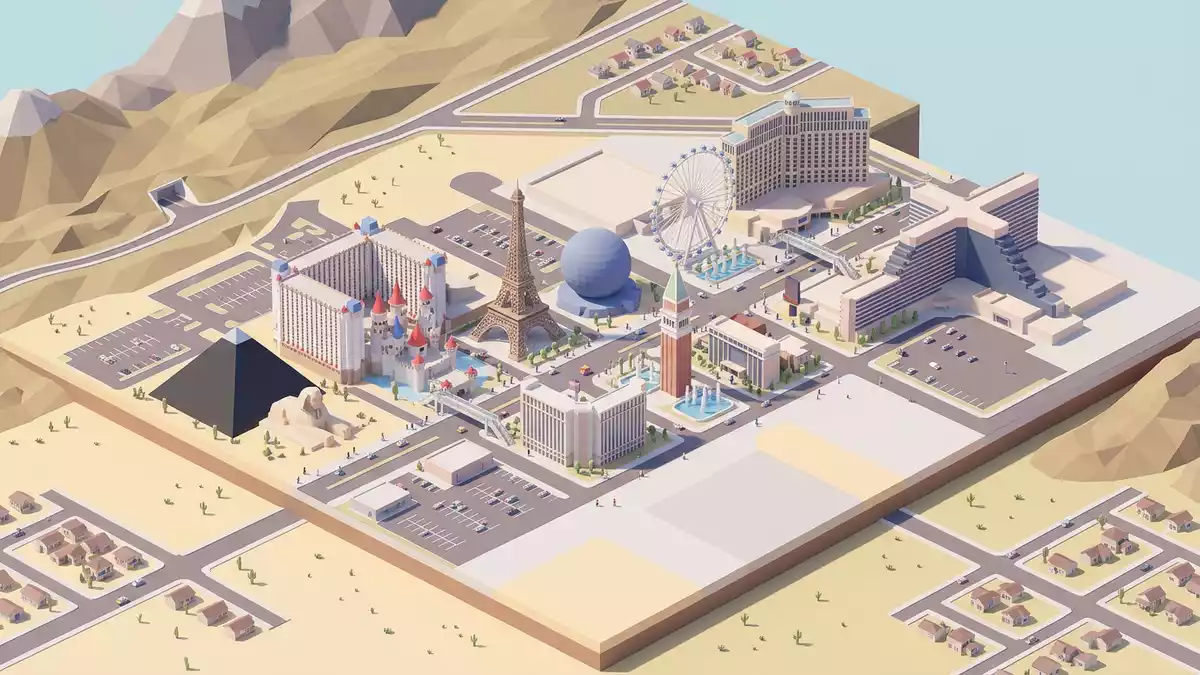
The Las Vegas Strip is the name given to the most intensely developed stretch of South Las Vegas Boulevard, where resort hotels and casinos line the roadway in a continuous run of theatrical architecture and neon light. This corridor in Clark County sits in the unincorporated communities of Paradise and Winchester, just south of the city limits of Las Vegas in Nevada, and extends for about 4.2 miles (6.8 km) along the former Highway 91.
A desert highway transformed into a resort corridor
Before it became a resort corridor, the section of Highway 91 that would later be known as the Strip was an open roadside in the Mojave Desert on the approach to Las Vegas. When Nevada legalised casino gambling in 1931, small clubs appeared along this route, including the Pair-o-Dice Club, one of the first casinos on the highway between Los Angeles and Las Vegas.the Strip as Highway 91 In 1941, hotelier Thomas Hull opened El Rancho Vegas here as a hotel-casino resort with bungalow-style rooms, a property that many historians treat as the prototype of the modern Strip resort.El Rancho Vegas resort in 1941
The success of El Rancho Vegas encouraged further resorts along the roadside, including the Hotel Last Frontier in 1942 and later properties such as Flamingo in the 1940s, consolidating the Strip as a distinct resort corridor separate from the older casino district around Fremont Street downtown.early Strip resorts along Highway 91 Over the following decades mid-century and late twentieth-century developers added larger hotel-casinos, and the Strip portion of Las Vegas Boulevard between Sahara Avenue and Russell Road became the most recognisable section of the road, lined with megaresorts and their illuminated facades.
Las Vegas Boulevard and the physical shape of the Strip
Las Vegas Boulevard itself runs for more than 50 miles (over 80 km) through Clark County, but only a short central section is known worldwide as the Las Vegas Strip.length of Las Vegas Boulevard The Strip effectively begins near Sahara Avenue, close to The Strat tower, and continues south through Paradise and Winchester until about Russell Road near Mandalay Bay, a roadside span of roughly 4.2 miles (6.8 km) that has been designated an All-American Road on account of its concentration of resorts.Strip section from Sahara to Russell
Along this stretch, the boulevard is laid out as a multi-lane road flanked by resort properties that front directly onto the street or sit behind forecourts and plazas. Many resorts build large entrance structures, marquees and façades facing the road, creating a continuous streetscape of signage and themed architecture on both sides.resorts lining South Las Vegas Boulevard Between these buildings, pedestrian bridges, walkways and escalators link different corners of the intersections, while service roads and car parks occupy the land behind the main frontage. To the south of Mandalay Bay the boulevard continues past the Welcome to Fabulous Las Vegas sign and towards less densely built sections sometimes referred to as the South Strip.
Resort architecture, themes and night-time light
The Las Vegas Strip is closely associated with large hotel-casino resorts that adopt theatrical themes, dramatic forms and extensive signage to attract attention along the boulevard. Properties in this corridor often combine guestroom towers with expansive podiums housing casinos, theatres, restaurants and shops, and many foreground their theme with exterior motifs drawn from Roman, Egyptian, contemporary or fantasy references. Resorts such as Caesars Palace introduced grand classical imagery from the mid-1960s onwards, while later developments constructed entire streetscapes and skyline elements around their chosen themes.development of themed megaresorts
Neon and electric light are central features of the Strip’s appearance after dark. Individual resort signs, animated billboards and lighting schemes contribute to a continuous glow along the 4.2-mile section of Las Vegas Boulevard that can be picked out in aerial views of the valley.collective glow of casinos and hotels The combined effect of these illuminated façades, video screens and architectural lighting turns the road itself into a kind of theatre, with each property presenting its own set piece beside its neighbours. During the daytime, the scale of the resorts, their distinctive forms and roadside forecourts remain visible against the backdrop of the surrounding desert basin.
Visiting Las Vegas Strip: what travellers from Western Europe should know
- The Las Vegas Strip lies south of central Las Vegas along South Las Vegas Boulevard in Clark County, Nevada, and is reached by road from Harry Reid International Airport and other parts of the Las Vegas Valley.
- The corridor is an urban roadway lined with large resorts, with wide pavements, pedestrian bridges over major junctions and extensive interior spaces; walking can involve long indoor and outdoor distances between properties.
- The Strip stands in Nevada in the United States; the official language is English and the currency is the US dollar.
- Entry requirements depend on your nationality; UK travellers can check the FCDO travel advice at gov.uk/foreign-travel-advice, Irish travellers the Department of Foreign Affairs at ireland.ie.
Searching for Las Vegas Strip on social platforms
These links open searches for Las Vegas Strip on each platform.
Frequently asked questions about Las Vegas Strip
Where is the Las Vegas Strip located?
The Las Vegas Strip is a section of South Las Vegas Boulevard in Clark County, Nevada, running through the unincorporated communities of Paradise and Winchester just south of the Las Vegas city limits.
What should visitors expect on a first walk along the Strip?
Visitors encounter a dense roadside landscape of large themed resorts, extensive pavements, pedestrian bridges and illuminated signage stretching for several miles along the boulevard.
What makes the Las Vegas Strip distinctive compared with other casino districts?
The Strip combines a continuous run of resort hotel-casinos along one main road with theatrical architecture, themed façades and concentrated night-time lighting in a single extended corridor.


