
Las Vegas Strip as an invented resort boulevard
Published on 09/07/2026 at 17:17 | Editorial responsibility: Rafael Müller, Editor-in-Chief AD HOC NEWS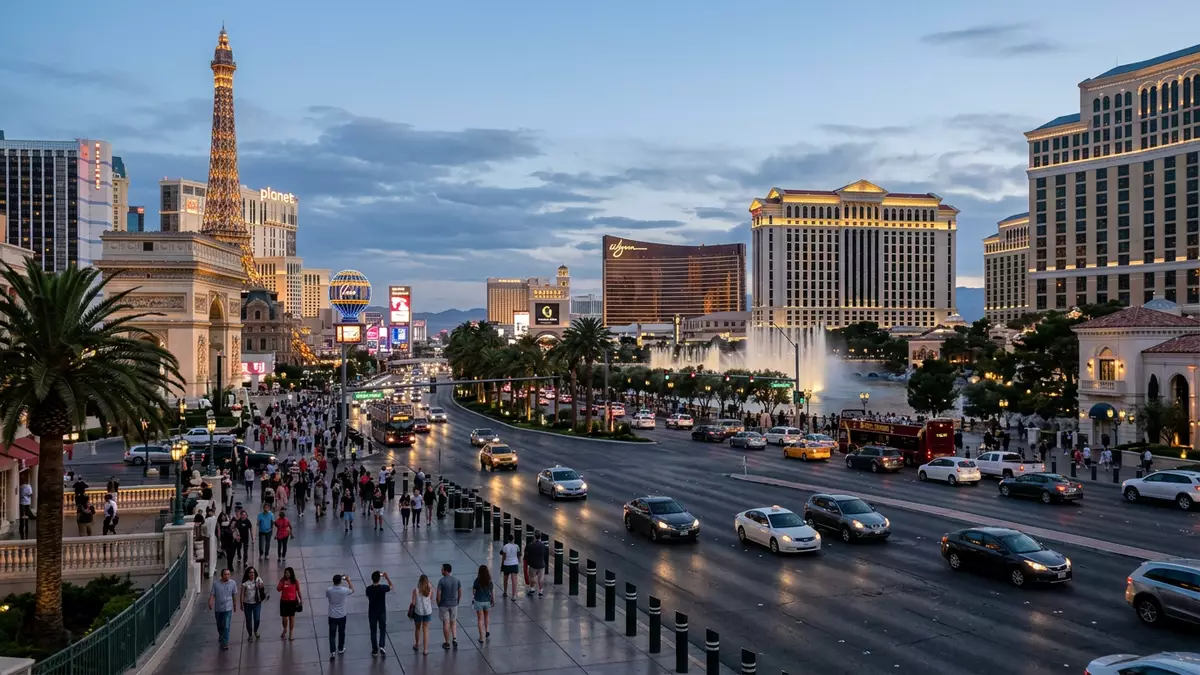
Las Vegas Strip in Las Vegas is a long, dense stretch of South Las Vegas Boulevard where resort hotels and casinos line the desert highway so closely that the road itself feels like a self-contained city. The corridor sits in Clark County in the state of Nevada, largely within the unincorporated townships of Paradise and Winchester rather than the formal city of Las Vegas, and extends for about 4.2 miles (6.8 km) between Sahara Avenue in the north and Russell Road in the south.stretch of Las Vegas Boulevard
A highway turned into a resort corridor
The origins of Las Vegas Strip lie on the former Los Angeles Highway, later designated Highway 91, which ran south from downtown Las Vegas through open desert land. In 1941 the El Rancho Vegas resort opened beside this highway, generally regarded as the first major casino hotel on the corridor and an early sign that the roadside would become a destination in its own right.El Rancho Vegas in 1941 Other resorts followed through the 1940s and 1950s, lining the highway beyond the city limits in Clark County and taking advantage of the broad road to create large roadside properties.
An important early landmark on the developing Strip was the Flamingo, opened in 1946 and associated with Benjamin “Bugsy” Siegel, which brought a more glamorous, entertainment-focused style of casino resort to the highway.the Flamingo opened in 1946 Over the decades the corridor expanded south along Las Vegas Boulevard, and large resorts began to replace earlier motels and smaller casinos, turning the once simple highway frontage into a continuous band of hotel towers, gaming floors and theatre venues.
Mega-resorts along South Las Vegas Boulevard
Las Vegas Strip occupies a portion of Las Vegas Boulevard South that has been designated an All-American Road and a Nevada Scenic Byway, recognising the concentration of entertainment structures along its length.All-American Road designation The road carries multi-lane traffic, but its visual character is defined by the resorts that stand on either side, which often incorporate large-scale themed facades, water features and lighting displays facing the boulevard. Between Mandalay Bay near the southern end and the Strat tower near the northern end, the Strip gathers many of the city’s largest integrated resorts in a continuous sequence of casino floors, hotels and entertainment venues.stretch from Mandalay Bay to the STRAT
The development of mega-resorts on Las Vegas Strip is often linked to the opening of The Mirage in 1989, which introduced an integrated model combining large hotel capacity, extensive gaming space, a prominent themed entrance and attractions clustered within a single property.The Mirage and the megaresort era Later properties expanded on this pattern with sizeable indoor shopping streets, arenas and theatres, and expansive landscaped frontage along Las Vegas Boulevard. Walking the 4.2-mile corridor passes a succession of large hotel complexes, many of which combine several towers and extensive podium buildings, so the roadside view alternates between tall accommodation blocks and broad lower structures housing casinos and public halls.
A man-made landscape in the Nevada desert
Geographically, Las Vegas Strip sits on the floor of the Las Vegas Valley, a desert basin framed by mountain ranges in southern Nevada.location in unincorporated Clark County The corridor runs roughly north–south, with long sightlines along Las Vegas Boulevard broken by the outlines of hotel towers and occasional freestanding structures such as observation wheels or sign pylons. Much of the Strip lies within the unincorporated township of Paradise, with sections extending into Winchester, and only a small portion touches the formal city limits of Las Vegas.Paradise and Winchester along Las Vegas Boulevard
The built landscape along the Strip combines broad pavements beside the carriageways with pedestrian bridges above busy junctions, providing elevated crossings between resorts and over major intersections such as Tropicana Avenue or Flamingo Road. Beneath the elevated walkways, the boulevard’s traffic lanes carry private cars, taxis and service vehicles, while service roads and driveways branch off into the forecourts of individual properties. The corridor’s position on a flat valley floor allows long views towards distant desert hills and the wider Las Vegas urban area beyond the resort band.
Visiting Las Vegas Strip: what travellers from Western Europe should know
- Las Vegas Strip follows South Las Vegas Boulevard through Clark County, Nevada, running between the area around Mandalay Bay near Russell Road and the vicinity of Sahara Avenue at the northern end.
- The roadside environment consists of broad pavements, pedestrian bridges over major junctions and extended resort frontages, so walking between properties involves long distances on foot and occasional stairways or escalators.
- Las Vegas lies in the United States, where the official language is English and the currency is the US dollar.
- Entry requirements depend on your nationality; UK travellers can check the FCDO travel advice at gov.uk/foreign-travel-advice, Irish travellers the Department of Foreign Affairs at ireland.ie.
Searching for Las Vegas Strip on social platforms
These links open searches for Las Vegas Strip on each platform.Frequently asked questions about Las Vegas Strip
Where is Las Vegas Strip located?
Las Vegas Strip occupies a section of South Las Vegas Boulevard in Clark County, Nevada, mainly within the unincorporated townships of Paradise and Winchester just outside the Las Vegas city limits.section of Las Vegas Boulevard in Clark County
What can travellers expect on a visit to Las Vegas Strip?
A visit to Las Vegas Strip involves walking along a multi-mile roadside corridor lined with large casino resorts, hotel towers, theatres and shopping areas, with broad pavements, pedestrian bridges and extensive frontage facing the boulevard.
What makes Las Vegas Strip distinctive among resort areas?
Las Vegas Strip is distinctive for combining the length of an urban arterial road with a near-continuous sequence of integrated resort properties, most of them located outside the formal city boundaries in an invented corridor built along the former Highway 91.


