Largo do Senado and Macau's pastel civic square
Published on 08/10/2026 at 15:15 | Editorial responsibility: Rafael Müller, Editor-in-Chief AD HOC NEWS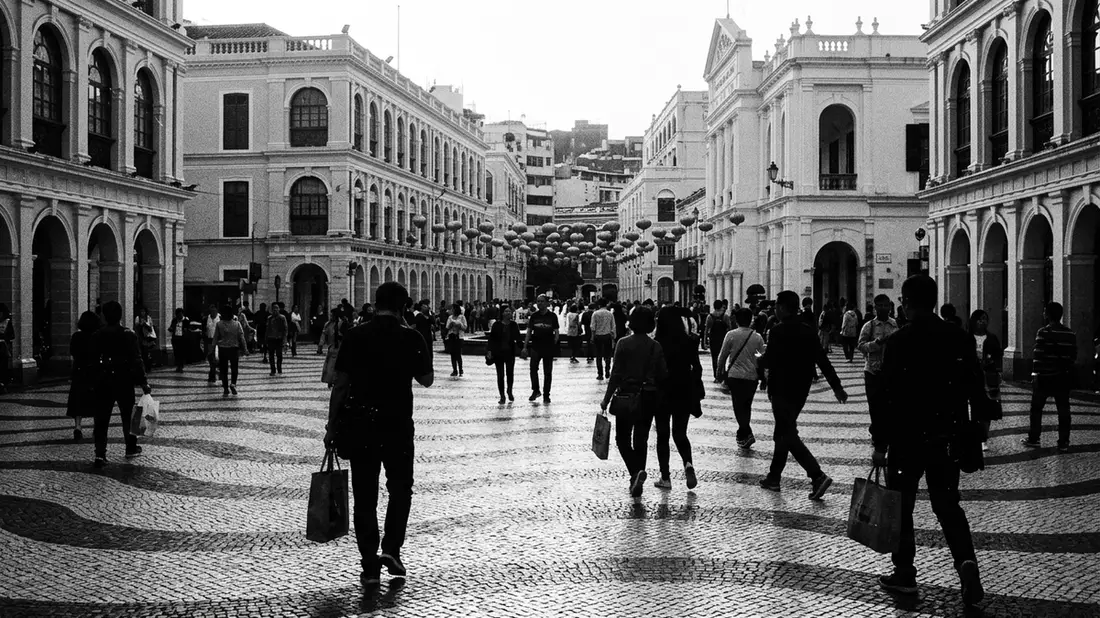
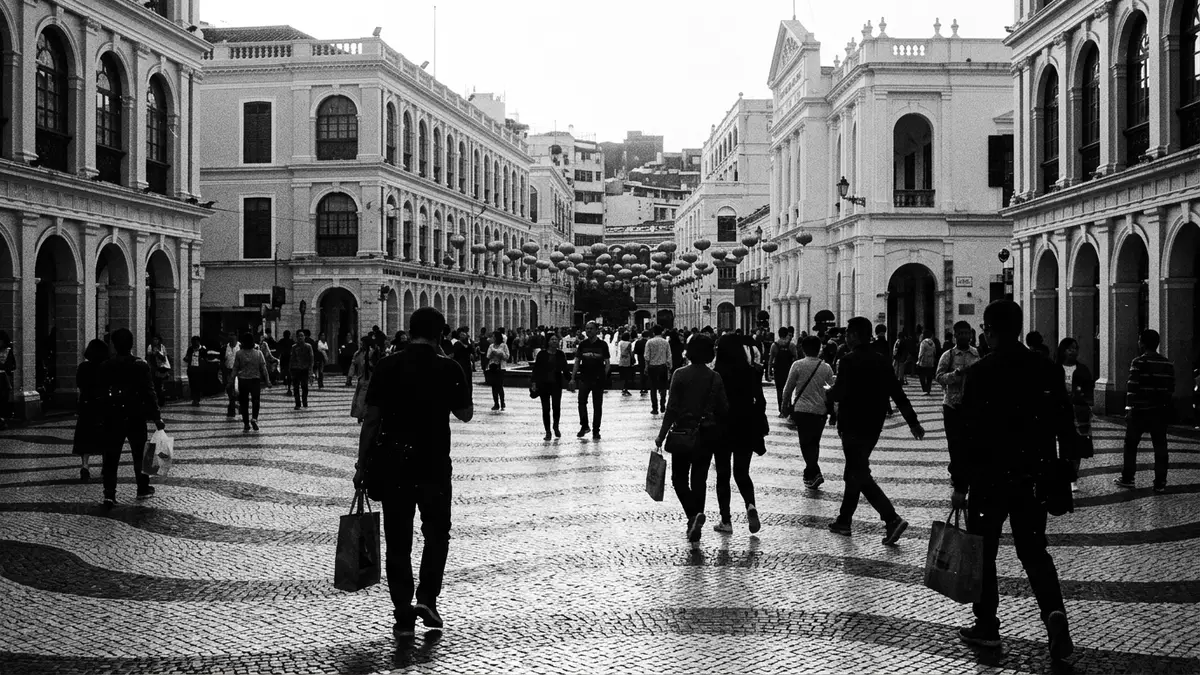
Largo do Senado is Macau’s best-known civic square, framed by pastel-coloured neo-classical buildings and a patterned stone pavement. The setting reflects Portuguese colonial urban design in the centre of a Chinese city, with Leal Senado and nearby churches giving the square its layered character.
Largo do Senado’s curved frontage and patterned ground
The square is open and lightly enclosed at the edges, with low-rise façades, arcades and a broad paved surface that draws the eye across the whole space. The black-and-white waves underfoot are one of its most recognisable features, while the surrounding buildings keep the scale intimate rather than monumental.
Leal Senado, the former municipal chamber, anchors the ensemble with a sober civic front. Around it stand buildings in a Portuguese style that belongs to Macau’s historic centre, including Santa Casa da Misericórdia and other administrative and religious structures.
Portuguese civic form in an East Asian setting
Largo do Senado belongs to the historic core that records Macau’s long period as a Portuguese-administered port. The square’s architecture mixes colonial façades, arcades and tiled surfaces with the commercial energy of a dense urban district.
That blend is visible without explanation: a European civic square sits among streets of Macau, with Chinese and Portuguese influences meeting in the surrounding district. The result is a place that works as both an urban crossroads and a public stage for the city’s everyday life.
A square surrounded by churches and institutions
Several important buildings stand within or close to the square, giving it a formal outline. The Dom Pedro V Theatre, St Dominic’s Church and other heritage buildings are part of the same historic area, and their façades help define the pedestrian space.
The square’s strength lies in that concentration of civic and religious architecture. Rather than a single monument, it reads as a small urban ensemble, with each frontage contributing to the whole.
Visiting Largo do Senado: what travellers from Western Europe should know
- The site is in central Macau and is reached on foot from nearby streets and by local public transport.
- Admission arrangements and opening hours are set by the site's operator and change with the season; the official website is the only binding source.
- Late afternoon and evening suit the square well, when the façades and paving are easy to take in at a leisurely pace.
- The pavement can be uneven in places, and the surrounding streets make a short walk the simplest way to explore the area.
- Macau uses both Chinese and Portuguese in public life, and payment is handled in the normal city way across shops and cafés nearby.
- Entry requirements depend on your nationality. UK travellers should check the FCDO travel advice at gov.uk/foreign-travel-advice; Irish travellers the Department of Foreign Affairs at ireland.ie; EU and EEA citizens their own national foreign ministry.
Searching for Largo do Senado on social platforms
These links open searches for Largo do Senado on each platform.
Frequently asked questions about Largo do Senado
Where is Largo do Senado?
It is in central Macau, within the historic district associated with Portuguese colonial urban planning. The square sits among heritage buildings and busy pedestrian streets.
What should visitors expect?
Expect an open public square with patterned paving, pastel façades and a strong sense of civic architecture. It works well as a place to pause between nearby churches, theatres and government buildings.
What makes it distinctive?
Its combination of Portuguese civic style, Chinese city setting and carefully paved public space gives it a clear identity. The square reads as a compact historic ensemble rather than a single monument.