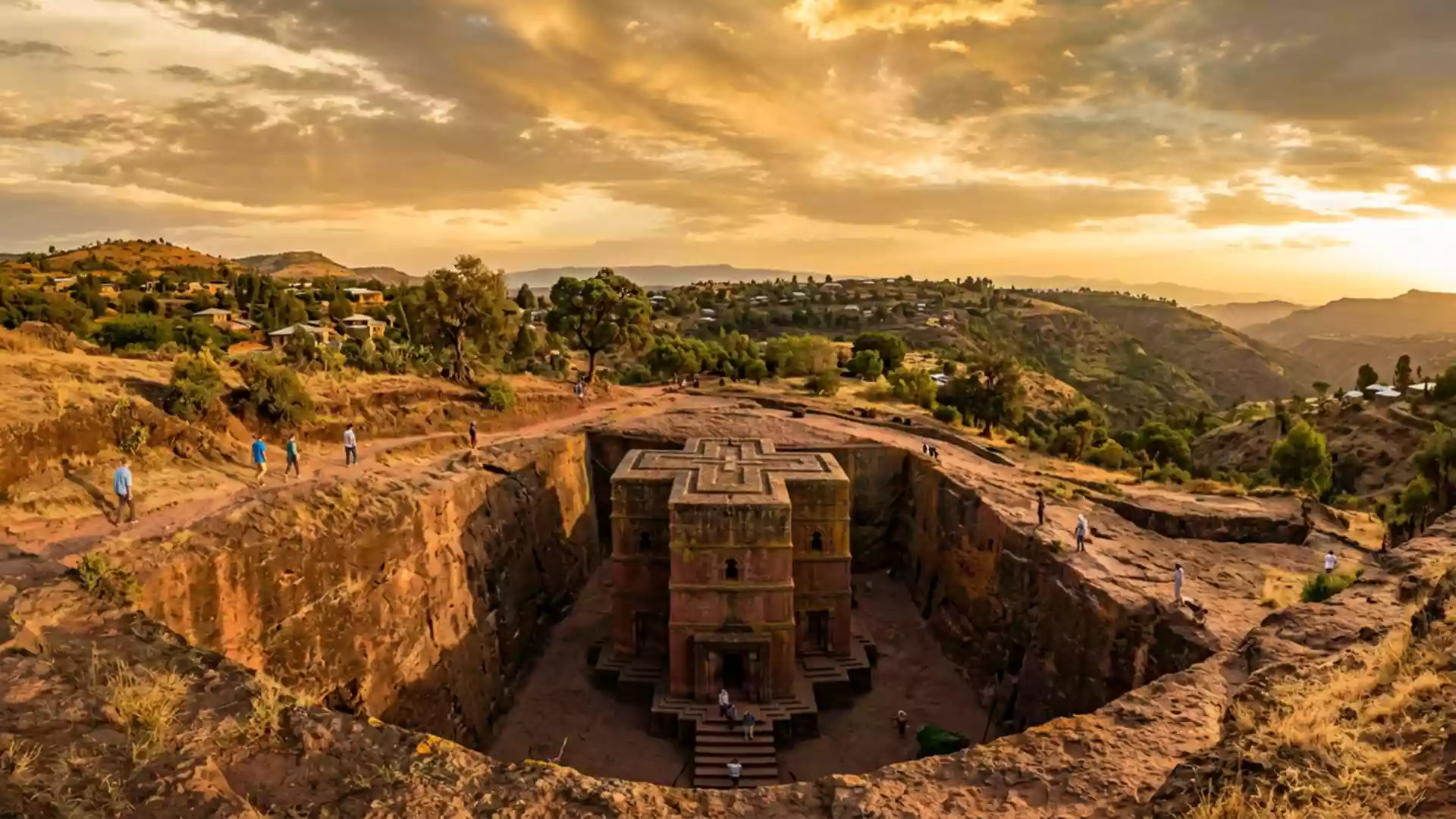
Lalibela’s rock?hewn churches carved into living Ethiopian rock
Published on 09/09/2026 at 18:21 | Editorial responsibility: Rafael Müller, Editor-in-Chief AD HOC NEWS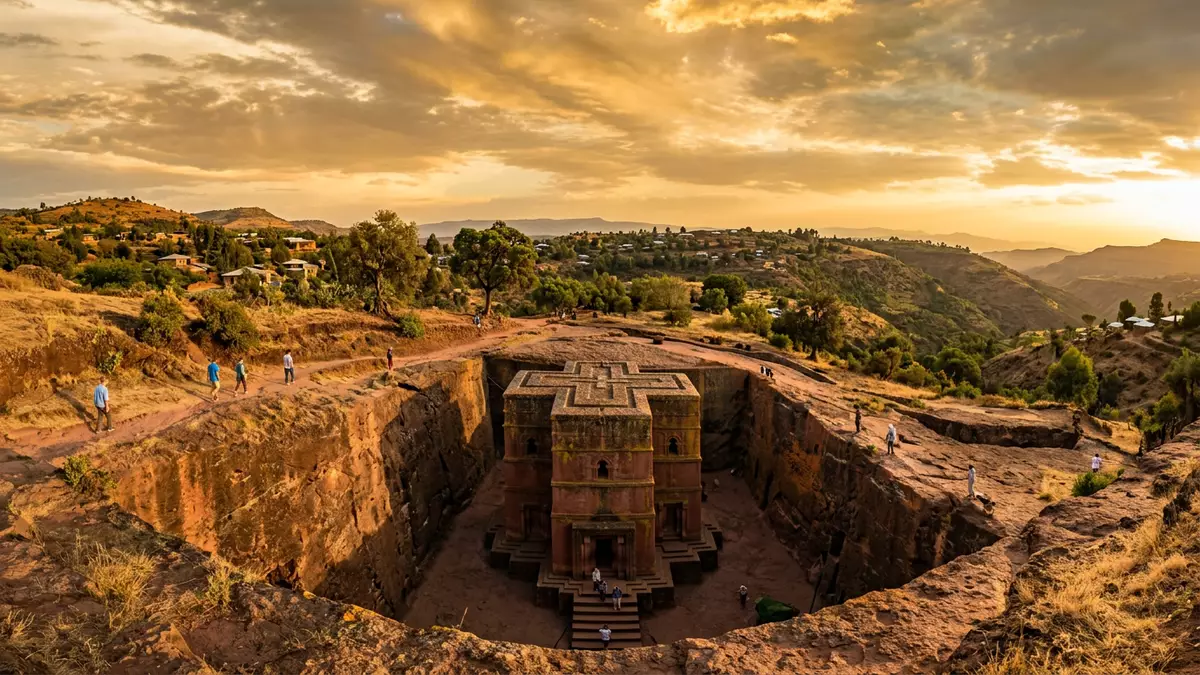
Lalibela in northern Ethiopia is renowned for its cluster of rock?hewn churches carved directly into the highland bedrock, forming a compact sacred landscape in and around the town that carries a striking sense of architecture emerging from living stone. The complex is traditionally associated with King Gebre Meskel Lalibela of the Zagwe dynasty in the late twelfth and early thirteenth centuries, and it is inscribed as the Rock?Hewn Churches of Lalibela on the UNESCO World Heritage List.
A New Jerusalem carved in volcanic rock
The rock?hewn churches of Lalibela stand in the Ethiopian Highlands at an elevation of around 2,500 m (8,200 ft), in a mountainous area that has long been a focus of Ethiopian Orthodox Christian pilgrimage.Lalibela is located at altitude in the Amhara Region The town lies in the historic Lasta district and North Wollo Zone, far from the Ethiopian capital and surrounded by rugged terrain.Lalibela is described as a rural town in the Lasta district Within this landscape, the churches are cut down into the reddish volcanic scoria and darker basalt, so that the visitor descends into courtyards where entire façades rise from trenches in the rock rather than from built foundations.
The ensemble consists of eleven medieval monolithic churches, carved out of living volcanic rock and connected by a network of passages, tunnels and trenches.UNESCO identifies eleven medieval monolithic churches at Lalibela Together they were conceived as a kind of New Jerusalem in Ethiopia, a concentrated sacred topography with symbolic references to the holy city woven into their naming and layout.The complex has been described as a new Jerusalem on African soil Scholars examining the fabric of the site link its construction phases broadly to the period between the seventh and thirteenth centuries, with the major carving traditionally dated to the late twelfth and early thirteenth century reign of King Gebre Meskel Lalibela.Research at the Met Museum outlines construction in several phases between the seventh and thirteenth centuries
Groups of churches around the Yordannos
The rock?hewn churches at Lalibela are arranged in distinct groups, separated by a small river known locally as the Yordannos, echoing the Jordan River, and linked by carved corridors and trenches that make the complex feel like a subterranean city of worship spaces.UNESCO describes two main groups of churches divided by a river referred to as Jordan On one side of this watercourse lies a northern cluster that includes Biete Medhani Alem, Biete Mariam, Biete Maskal, Biete Denagel and Biete Golgotha Mikael, each with its own plan, proportions and devotional focus.The northern group includes Medhani Alem, Mariam, Maskal, Denagel and Golgotha Mikael On the other side stand southern and eastern churches such as Biete Amanuel, Biete Qeddus Mercoreus, Biete Gabriel Rafael, Biete Abba Libanos and Biete Lehem, reached through passages that cut through the volcanic rock.
One of the most recognisable elements of the Lalibela complex is Biete Ghiorgis, the Church of St George, which stands slightly apart from the other groups and is carved as a free?standing monolithic structure in a deep pit of reddish rock.Biete Ghiorgis is documented as an isolated monolithic church west of the main groups In plan and elevation it displays the careful cutting and carving that characterise Lalibela’s churches more broadly, with decorative details sculpted directly from the rock rather than added as separate elements. Within the wider ensemble, other churches such as Biete Medhani Alem are notable for their size; with multiple aisles and tall pillars rising from the rock floor, Biete Medhani Alem has been described as the largest monolithic church known.Biete Medhani Alem is recorded with five aisles and cited as the largest monolithic church
Faith, history and continuing use
Lalibela’s rock?hewn churches form an important centre of Ethiopian Orthodox Christian devotion, and they continue to function as places of worship, with priests conducting services and liturgy within the carved interiors.The churches at Lalibela are described as a significant site of Ethiopian Christianity attended by priests The town itself took its name from King Gebre Meskel Lalibela, linking the royal patron’s memory directly to the sacred topography that bears his legacy.The complex and town are named after King Gebre Meskel Lalibela of the Zagwe dynasty Architectural and archaeological studies have suggested that the churches and associated structures developed over several stages, with some elements possibly linked to earlier Aksumite or highland traditions and later recut or expanded as part of the medieval project to establish a new sacred centre.Scholarly work notes multiple phases of carving from the late Aksumite era through the Zagwe period
The site’s inscription on the UNESCO World Heritage List in 1978 recognised both the architectural achievement of carving entire complexes into living rock and the continuing spiritual life of Lalibela as a pilgrimage destination.UNESCO highlights the churches as an exceptional achievement of medieval architecture and devotion Visitors moving through the narrow trenches and rock?cut passages encounter façades framed by the vertical walls of the pits, interior spaces illuminated by high clerestory openings in the rock, and carved details that range from simple crosses to more elaborate reliefs. The combination of geology, architecture and ritual use makes Lalibela distinct among historic Christian sites, with the monolithic churches expressing a way of building in which excavation and sculpture replace conventional construction.
Visiting Lalibela: what travellers from Western Europe should know
- Lalibela lies in Ethiopia’s Amhara Region, in the Lasta district and North Wollo Zone, and is reached by overland routes and domestic flights that connect it with larger Ethiopian cities.
- The churches occupy a rocky hillside at high altitude, with access through trenches, tunnels and stairways cut into the volcanic rock, so visiting involves walking on uneven surfaces and climbing steps between the different courtyards.
- The holy complex sits near the traditional settlement of Lalibela town, and the churches themselves are close to one another, with short approaches on foot between the various carved pits and passageways.
- The official language is Amharic and the currency is the Ethiopian birr.
- Entry requirements depend on your nationality; UK travellers can check the FCDO travel advice at gov.uk/foreign-travel-advice, Irish travellers the Department of Foreign Affairs at ireland.ie.
Searching for Lalibela on social platforms
These links open searches for Lalibela on each platform.Frequently asked questions about Lalibela
Where is Lalibela and what kind of place is it?
Lalibela is a highland town in Ethiopia’s Amhara Region, known above all for its medieval rock?hewn churches carved into volcanic rock near the centre of the settlement.
What should a visitor expect when exploring the churches?
A visit involves descending into rock?cut courtyards, walking through narrow passages between carved walls, and entering monolithic church interiors that remain active places of Ethiopian Orthodox Christian worship.
What makes Lalibela distinctive among historic Christian sites?
The eleven churches at Lalibela are hewn directly from living volcanic rock as complete structures, arranged in groups linked by trenches and tunnels, and conceived as a New Jerusalem in the Ethiopian Highlands.