

Lalibela’s rock?hewn churches as Ethiopia’s New Jerusalem
Published on 08/28/2026 at 22:17 | Editorial responsibility: Rafael Müller, Editor-in-Chief AD HOC NEWS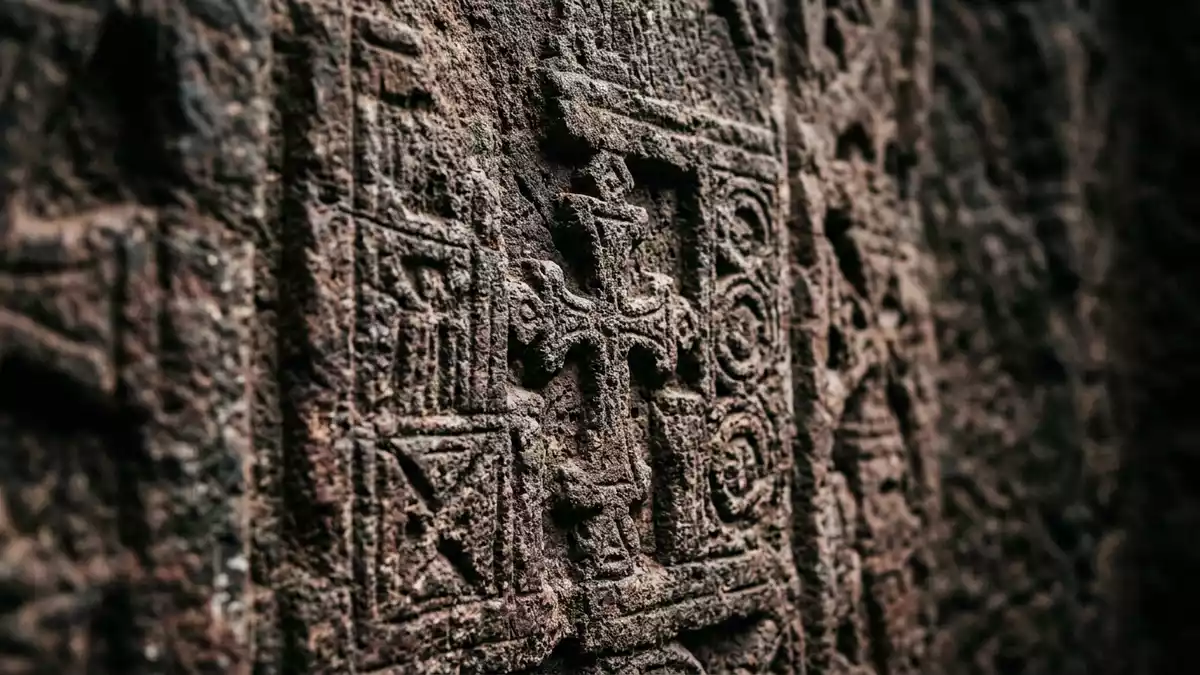
Lalibela in northern Ethiopia is best known for its constellation of rock?hewn churches carved directly into volcanic rock and conceived as a “New Jerusalem” in the highlands. These churches are closely associated with King Gebre Meskel Lalibela of the Zagwe dynasty and were created during the late twelfth and early thirteenth centuries as a monumental expression of Ethiopian Orthodox Christianity.
Rock carved faith in the Ethiopian highlands
The rock?hewn churches stand in the town of Lalibela in the Ethiopian Highlands, a mountainous region in the country’s Amhara Region where red volcanic rock forms the underlying landscape. At the centre of Lalibela lies a complex of eleven churches cut from living volcanic tuff and scoria, with darker basalt beneath, their walls, roofs and columns sculpted from the same continuous mass of stone rather than assembled from blocks.complex of 11 churches The churches sit at an elevation of around 2,500 m (8,200 ft), so the surrounding approach is a highland landscape of ridges and escarpments rather than low plains.altitude of 2,500 m
Unlike free?standing structures, each church is cut downwards from a level surface, with exterior walls detached from the rock by trenches, courtyards hollowed out around them and interiors excavated into the remaining mass. Passages, tunnels and trenches link the different sanctuaries, creating a three?dimensional network of routes that connect courtyards, hermit caves and burial spaces beneath the town.maze of tunnels and passages Many of the churches have multiple storeys and carved details such as arcades, pillars and relief crosses formed entirely in the same stone.
The New Jerusalem of King Gebre Meskel Lalibela
The story of Lalibela is inseparable from the Zagwe dynasty, which held power in the Ethiopian highlands in the twelfth and thirteenth centuries. The town’s name honours King Gebre Meskel Lalibela, whose reign in the late twelfth and early thirteenth centuries is linked to the commissioning of the rock?hewn complex, conceived as a counterpart to Jerusalem within his own kingdom.King Gebre Meskel Lalibela Earlier references call the settlement Roha, but it took the name Lalibela once the king’s association with the churches became central to its identity.settlement was named Roha
The eleven churches are grouped in clusters separated by a seasonal watercourse that is locally likened to the river Jordan. On one side of this channel stand churches such as Biete Medhane Alem, Biete Mariam, Biete Maskal, Biete Denagel and the complex of Golgotha?Mikael; on the other side lie Biete Amanuel and Biete Qeddus Mercoreus among others.two main groups of churches Each bears a name that combines “Biete”, meaning “house”, with a dedication, producing “House of Mary”, “House of the Cross” or “House of Emmanuel”. Within them, carved pillars, symbolic windows and recesses create a dense architectural language aligned with Ethiopian Orthodox liturgy.
UNESCO recognition and architectural detail
The rock?hewn churches of Lalibela were among the first Ethiopian sites inscribed on the UNESCO World Heritage List, gaining recognition in 1978 as a cultural property under criteria i, ii and iii.inscribed on the UNESCO World Heritage List in 1978 This inscription acknowledges both their architectural achievement and their role as an enduring centre of Ethiopian Christianity, with Lalibela long regarded as a major place of pilgrimage and devotion for followers of the Ethiopian Orthodox Tewahedo Church.major pilgrimage site
Architecturally, the complex combines monolithic churches detached from the surrounding rock with cave?like spaces cut into cliff faces and courtyards sunken below ground level. The material is predominantly volcanic tuff and scoria, which can be carved yet retains sufficient strength to bear roofs and galleries.red volcanic scoria underlaid by basalt From above, some churches emerge as sculpted forms rising from deep rectangular trenches, while from within they present chapels and aisles framed by pillars and arches that remain integral with the surrounding rock. Relief crosses, carved friezes and small niches contribute further detail, and many spaces show traces of centuries of liturgical use, including worn thresholds and polished pillars.
Visiting Lalibela: what travellers from Western Europe should know
- Lalibela lies in Ethiopia’s Amhara Region in the northern highlands; travellers generally reach the town via domestic flights from Addis Ababa and onward road journeys through the surrounding mountains.
- The churches are approached through sunken courtyards, rock?cut trenches and passages with uneven steps, so visiting involves walking on stone surfaces, navigating inclines and using narrow stairways.
- The terrain around Lalibela is at high altitude, and the church complex itself stands at about 2,500 m (8,200 ft), so visitors experience thinner air and strong sunlight on exposed sections.
- The official language in Lalibela and the wider region is Amharic and the national currency is the Ethiopian birr.
- Entry requirements depend on your nationality; UK travellers can check the FCDO travel advice at gov.uk/foreign-travel-advice, Irish travellers the Department of Foreign Affairs at ireland.ie.
Searching for Lalibela on social platforms
These links open searches for Lalibela on each platform.
Frequently asked questions about Lalibela
Where is Lalibela and what kind of place is it?
Lalibela is a highland town in the Amhara Region of northern Ethiopia, renowned for its complex of rock?hewn Ethiopian Orthodox churches carved from volcanic rock.
What should visitors expect when exploring the churches?
Visitors move through sunken courtyards, rock?cut passages and enclosed interiors, with uneven stone steps, high altitudes and a sequence of interconnected sanctuaries and tunnels.
What makes Lalibela distinctive among historic religious sites?
Lalibela is distinctive for its eleven monolithic churches cut from living rock in the late twelfth and early thirteenth centuries and recognised as a UNESCO World Heritage “New Jerusalem”.


