
Lake Tana Monasteries and their painted island churches
Published on 09/23/2026 at 20:53 | Editorial responsibility: Rafael Müller, Editor-in-Chief AD HOC NEWS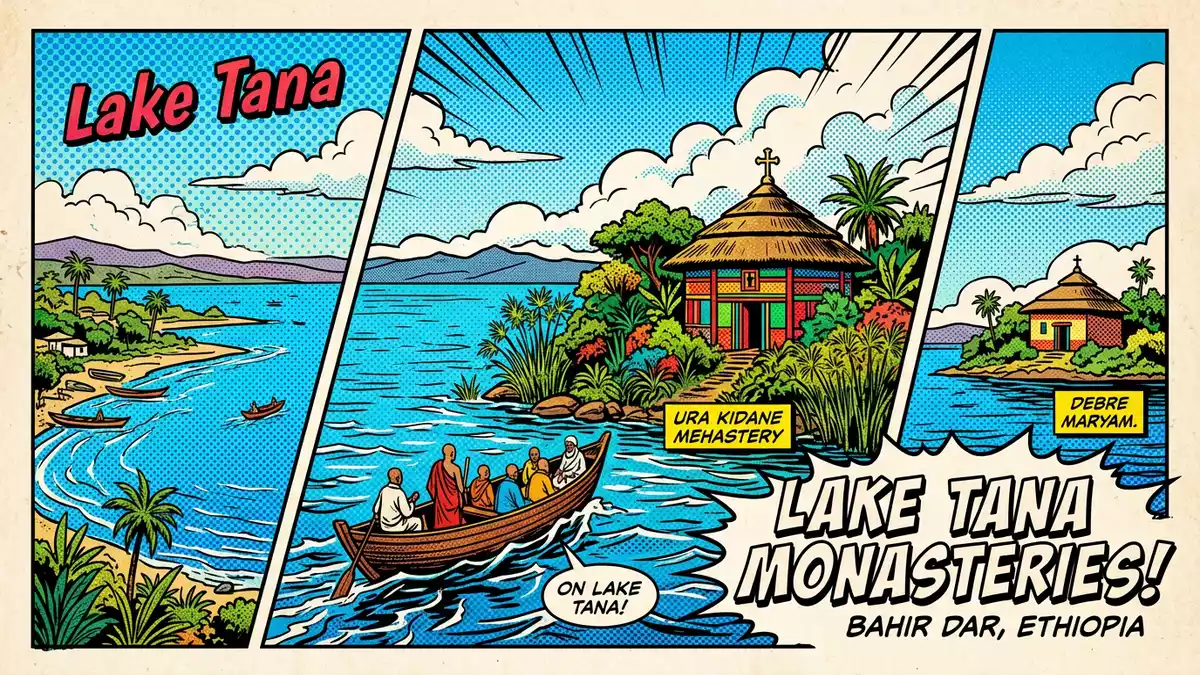
Lake Tana Monasteries form a chain of churches and monastic compounds on islands and peninsulas around Ethiopia’s largest lake. From Bahir Dar, boats cross the water towards painted sanctuaries, forested shores and religious sites whose histories reach into the fourteenth century.
The landscape combines open water with enclosed sacred spaces. Circular church buildings, murals, manuscripts and ceremonial objects give the monasteries a distinct architectural and artistic character.
Lake Tana Monasteries across an inland water landscape
Lake Tana lies in north-western Ethiopia, with Bahir Dar on its southern shore. The monastic sites are scattered across islands and the Zege Peninsula, so the lake itself forms part of the setting.
The lake contains 37 islands, with monasteries, churches and ruined palaces recorded on many of them. Lake Tana’s island heritage belongs to a wider cultural landscape connected with the Ethiopian Orthodox Tewahedo Church.
Water routes link Bahir Dar with sites that include Kebran Gabriel, Ura Kidane Mehret, Daga Estifanos, Narga Selassie, Debre Maryam, Kota Maryam and Mertola Maryam. Each name refers to a particular island or peninsula setting, rather than to one enclosed monastery complex.
Fourteenth-century foundations and later layers
The oldest churches in the Lake Tana area have origins in the fourteenth century. Their history is connected with the Solomonic dynasty and with the religious and political importance of the lake during the fourteenth, fifteenth and sixteenth centuries.
Many churches follow a circular Ethiopian building tradition. The plan includes a central sanctuary and surrounding ambulatory spaces, while the sanctuary walls carry paintings of biblical scenes and Ethiopian saints. The circular church tradition is visible across several important Lake Tana sites.
Kebran Gabriel is associated with a fourteenth-century foundation and rebuilding during the seventeenth century. Ura Kidane Mehret on the Zege Peninsula combines a medieval monastic association with a circular church linked to the sixteenth century.
Narga Selassie on Dek Island represents a later phase of construction. The monastery dates from the late eighteenth century and is associated with Empress Mentewab. Debre Maryam belongs to the nineteenth century and is connected with Emperor Tewodros II.
Murals, manuscripts and the interior life of the churches
The painted interiors are central to the character of Lake Tana Monasteries. Walls show biblical narratives, saints and religious symbols in strong colours, creating a visual language distinct to Ethiopian Orthodox church art.
Ura Kidane Mehret is known for its murals, crosses, vestments and parchment manuscripts. Its church stands within the forested Zege Peninsula, where coffee plants and other vegetation surround the monastic buildings.
Other island churches preserve manuscripts, ecclesiastical objects and royal treasures. The collections belong to a long tradition of safeguarding Christian material culture within religious compounds. manuscripts and ecclesiastical art form part of the heritage associated with the islands.
The architecture also records change. Foundations from the medieval period stand alongside buildings and paintings from the sixteenth, seventeenth, eighteenth and nineteenth centuries. A visit therefore brings together several historical layers within one lake region.
The monasteries remain religious places, not open-air ruins. Their churches retain liturgical identities, and their paintings, objects and manuscripts belong to living Ethiopian Orthodox traditions.
Visiting Lake Tana Monasteries: what travellers from Western Europe should know
- Bahir Dar is the main access point on the southern shore of Lake Tana. Motorboats cross the lake to the islands and the Zege Peninsula.
- Ura Kidane Mehret lies beyond the shore on the forested Zege Peninsula. The approach includes a walk from the landing place through cultivated vegetation.
- Island monasteries are reached across open water. Daga Estifanos, Narga Selassie and Kebran Gabriel each require a boat landing at a separate island site.
- The official working language of Ethiopia is Amharic, and the national currency is the Ethiopian birr.
- Entry requirements depend on your nationality; UK travellers can check the FCDO travel advice at gov.uk/foreign-travel-advice, Irish travellers the Department of Foreign Affairs at ireland.ie.
Searching for Lake Tana Monasteries on social platforms
These links open searches for Lake Tana Monasteries on each platform.
Frequently asked questions about Lake Tana Monasteries
Where are Lake Tana Monasteries?
They are located on islands and peninsulas in Lake Tana, with Bahir Dar on the southern shore serving as the main access point.
What can visitors expect on a visit?
Visitors encounter circular Ethiopian Orthodox churches, painted interiors, forested approaches, manuscripts and religious objects.
What makes the monasteries distinctive?
The sites combine medieval foundations with later churches and murals across a single lake landscape. Water travel connects the separate religious compounds.


