
Lahore Fort reopens three monuments on 27 September
Published on 10/04/2026 at 07:12 | Editorial responsibility: Rafael Müller, Editor-in-Chief AD HOC NEWS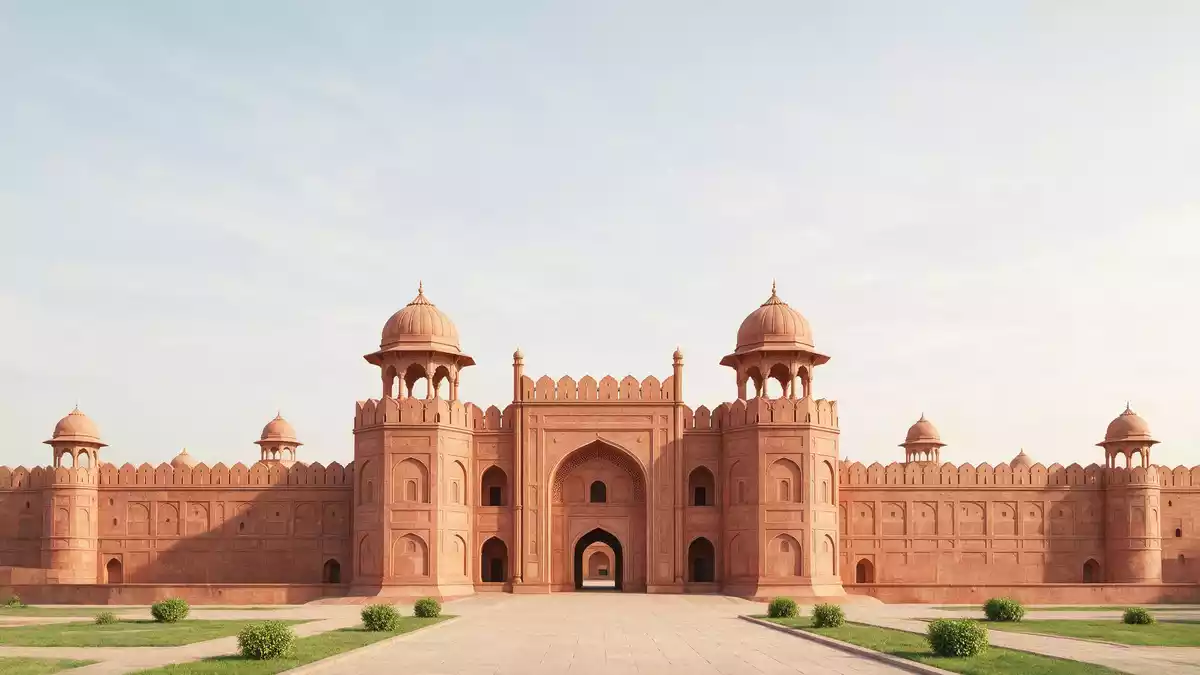
Lahore Fort reopened three conserved monuments in Lahore on 27 September 2026, bringing the Sikh-era Hammam, Athdara Pavilion and Loh Temple into a new phase of public heritage access. The reopening followed conservation work funded by the US Ambassador's Fund for Cultural Preservation and implemented by the Aga Khan Cultural Service-Pakistan with the Walled City of Lahore Authority.
Three monuments reopened at Lahore Fort on 27 September
The reopening ceremony took place at the Shah Burj Forecourt on 27 September 2026. It included ribbon-cutting ceremonies at the Loh Temple, the Sikh Hammam and the Athdara Pavilion, followed by guided site visits for participants.
The project forms part of a wider programme called Preservation and Promotion of Cross-Cultural Edifices of Lahore Fort. The programme now covers seven significant monuments, including the Sikh-era Temple and the Imperial Zenana Mosque, which were restored earlier. Details of the reopening programme identify the three newly inaugurated sites and the conservation partners.
The restored buildings represent different religious and political layers of Lahore's history. The Loh Temple stands near Alamgiri Gate, while the Athdara Pavilion occupies the north-west part of the Shah Jahan Forecourt Quadrangle and historically served as a public court. The Sikh Hammam lies at the north-east corner of the Sheesh Mahal Quadrangle.
The restored buildings connect Mughal, Sikh and Hindu history
The Sikh Hammam was originally built during the reign of Emperor Shah Jahan and later adapted as a hammam during Sikh rule. The Athdara Pavilion was constructed during the Sikh period, while the Loh Temple contains chambers with ritual features associated with Hindu religious practice and architectural elements linked to the Sikh era.
This combination gives the reopening a specific connection to the wider character of the site. The three buildings are not separate additions to a single-period monument but parts of a complex shaped by Mughal, Sikh, Hindu and British influences over centuries.
UNESCO describes the fort and Shalamar Gardens as a World Heritage property inscribed in 1981. The fort occupies the north-west corner of Lahore's Walled City and contains 21 surviving monuments representing Mughal architecture from the reigns of Akbar through Shah Jahan. UNESCO's description of the property places the restored buildings within this larger architectural and historical setting.
Conservation continues across Lahore Fort's historic precincts
The September reopening is part of continuing work rather than a conclusion to conservation at the site. UNESCO reported in 2026 that the northern section of the Picture Wall had also been restored, while the Walled City of Lahore Authority and the Aga Khan Cultural Service-Pakistan agreed to continue work across remaining quadrangles and the buffer zone.
For travellers, the immediate change is the presence of three additional restored monuments within the complex after the 27 September 2026 inauguration. The reopening also provides a clearer view of how the site preserves buildings associated with more than one era and faith tradition.
Visiting Lahore Fort: what travellers from Western Europe should know
- The three monuments reopened at Lahore Fort on 27 September 2026 after conservation work.
- The reopening programme included the Loh Temple, Sikh Hammam and Athdara Pavilion, with ribbon-cutting ceremonies and guided site visits.
- The fort is in the north-west corner of the Walled City of Lahore, Pakistan, and the complex is part of the UNESCO-listed Fort and Shalamar Gardens property.
- The site contains courtyards, quadrangles and historic buildings from different periods, so visits involve moving between multiple architectural spaces.
- Pakistan's official languages are Urdu and English, and the national currency is the Pakistani rupee.
- Entry requirements depend on your nationality; UK travellers can check the FCDO travel advice at gov.uk/foreign-travel-advice, Irish travellers the Department of Foreign Affairs at ireland.ie.
Searching for Lahore Fort on social platforms
These links open searches for Lahore Fort on each platform.
Frequently asked questions about Lahore Fort
When did the Lahore Fort reopening take place?
The reopening took place on 27 September 2026. It covered the Sikh-era Hammam, Athdara Pavilion and Loh Temple.
What is Lahore Fort?
Lahore Fort is a historic fortified complex in the north-west corner of Lahore's Walled City. Its 21 surviving monuments represent Mughal architecture from the reigns of Akbar through Shah Jahan.
Where is Lahore Fort and how do you get there?
The fort is in Lahore, Pakistan, within the Walled City. It forms part of the UNESCO World Heritage property shared with Shalamar Gardens.


