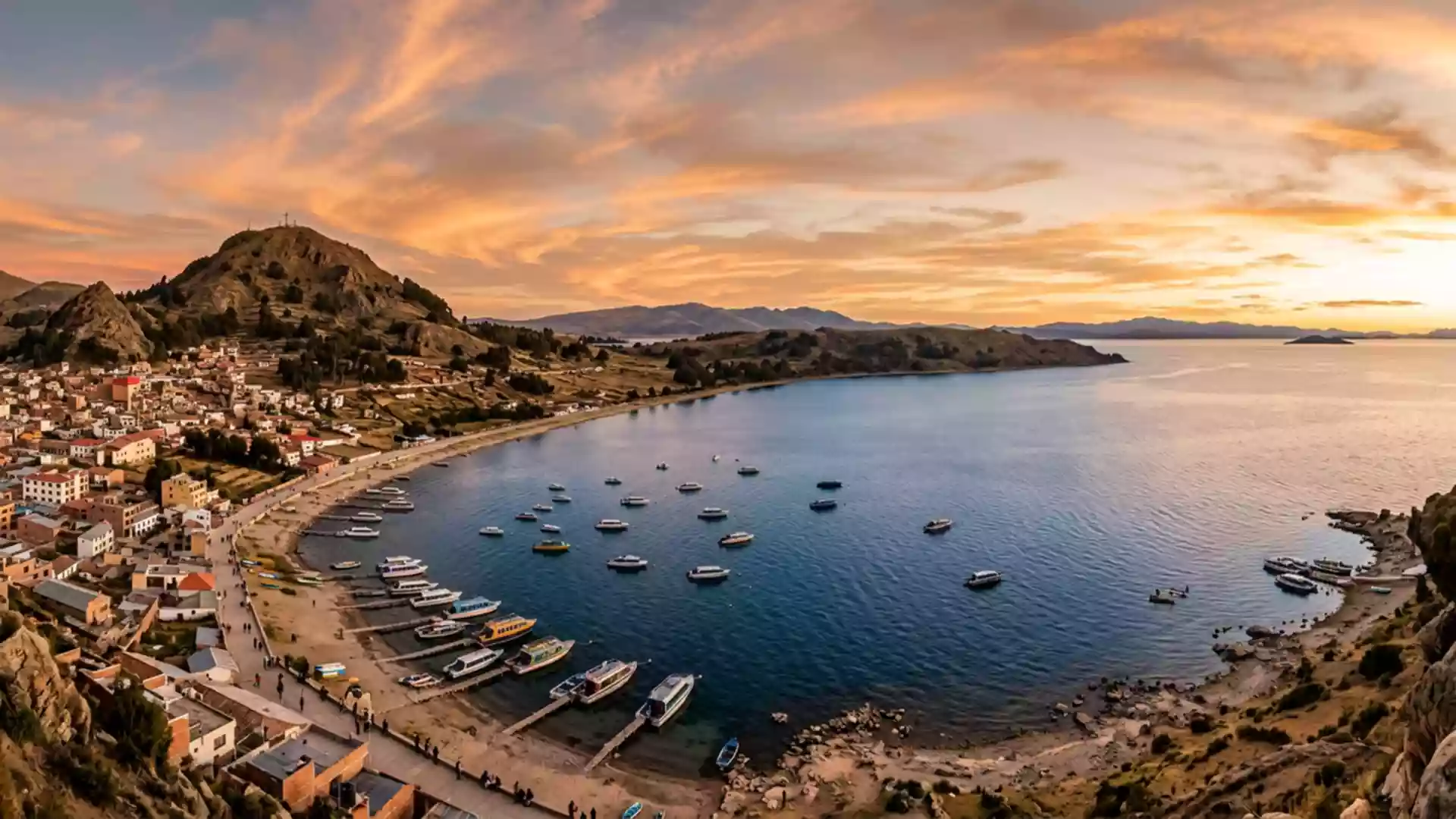
Lago Titicaca at Copacabana, Bolivia’s high?altitude shore
Published on 09/07/2026 at 12:18 | Editorial responsibility: Rafael Müller, Editor-in-Chief AD HOC NEWS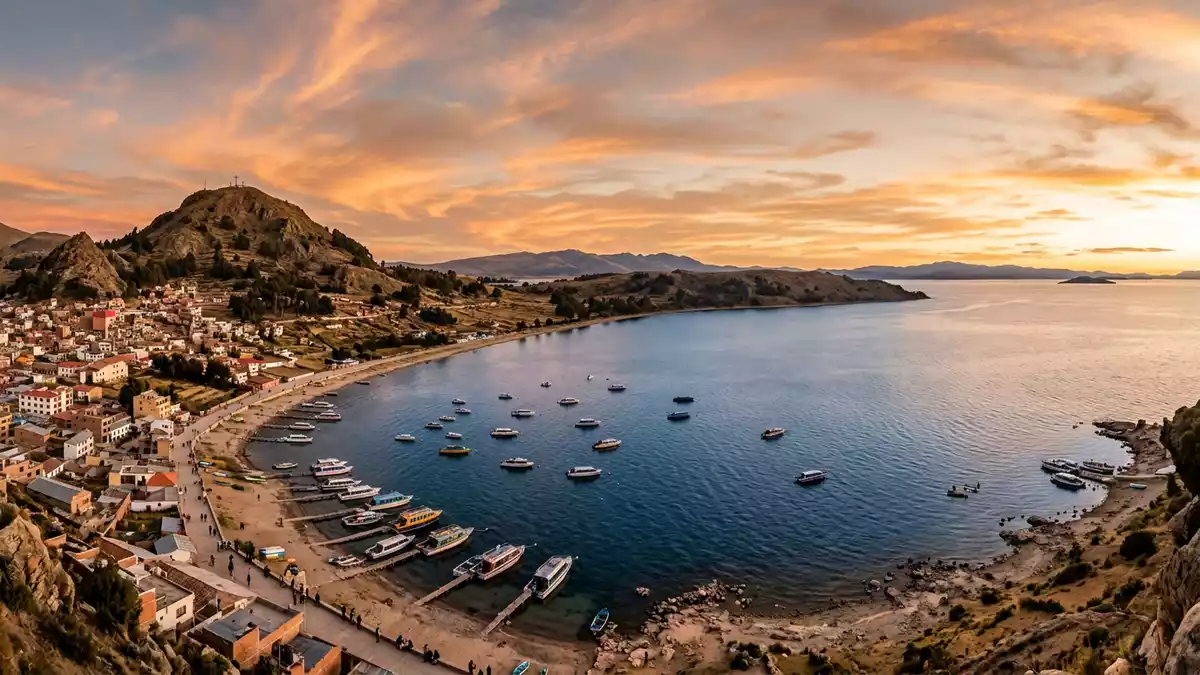
Lago Titicaca stretches across the central Andes on the border between Bolivia and Peru, and at Copacabana it meets a high Bolivian peninsula where deep blue water, steep streets and religious pilgrimage share the same shore. Copacabana is a town and municipality on the southern edge of the lake in Bolivia’s La Paz Department, with the settlement spreading between rocky hills and the bay that opens onto Titicaca’s broad surface.
High Andean water and a shared border lake
Lago Titicaca is South America’s largest lake by surface area, a high Andean body of water that covers more than 8,000 square kilometres and reaches a considerable depth in places.South America’s largest lake The lake lies at an elevation of around 3,800 m (about 12,500 ft), making it the highest lake regularly used for commercial navigation and a distinct presence in the thin highland air.highest navigable lake
The waters of Lago Titicaca form a long basin shared between Bolivia and Peru, with Copacabana standing on the Bolivian southern shore and Puno as a major town on the Peruvian side.gateway towns on each side Copacabana occupies a peninsula that pushes into the lake, giving the town views across the open water and towards the islands that rise from Titicaca’s surface. From the town’s waterfront, boats fan out towards Isla del Sol and Isla de la Luna, and the opposite shore marks the national border across the water.
Copacabana as lakeside pilgrimage town
Copacabana is the main Bolivian town on the shore of Lake Titicaca and serves as the capital of Manco Kapac Province in the La Paz Department.main Bolivian town on the shore The settlement sits at roughly 3,840 m (around 12,600 ft) above sea level, wedged between two hills with streets that descend towards the bay.altitude and setting between hills Houses climb the slopes above the harbour, and viewpoints on the surrounding heights look out over the lake and the peninsula.
The town is known within Bolivia as an important centre of Catholic devotion, focused on the image of the Virgen de Copacabana housed in the white basilica that dominates the central square.centre of religious pilgrimage Pilgrims travel to Copacabana to attend services, to seek blessings for vehicles outside the basilica and to take part in processions that connect the town’s streets with the lakeshore. The religious role of Copacabana has roots in the colonial period and overlays earlier Andean traditions linked to the surrounding hills and nearby islands.
Islands, peninsulas and travelling on the lake
From Copacabana’s small harbour on the bay, passenger boats run across Lago Titicaca towards Isla del Sol and Isla de la Luna, islands that play a central role in Aymara and Inca origin stories.gateway to Isla del Sol Isla del Sol lies to the north-west of the peninsula and carries archaeological remains and terraced slopes above the water, while Isla de la Luna sits further east with its own small settlement and historical sites. Boats from Copacabana reach both islands, making the town a practical base for exploring the Bolivian side of the lake.
The peninsula itself is part of the La Paz Department and curves between bays on the southern shore of Titicaca, giving Copacabana a mixture of sheltered waterfront and exposed viewpoints.peninsula on the southeastern part Away from the harbour, tracks climb towards hilltop crosses such as Cerro Calvario, from which Lago Titicaca spreads out towards Peru and the distant snow on higher Andean peaks. On clear days the light on the water ranges from deep navy near the shore to lighter shades further out, and the scale of the lake can be read in the line of the horizon where water meets sky.
Visiting Lago Titicaca: what travellers from Western Europe should know
- Copacabana lies in Bolivia’s La Paz Department on a peninsula along the southern shore of Lago Titicaca, reached by road from La Paz and cross-border routes from Puno in Peru.
- The town stands at around 3,840 m (about 12,600 ft) above sea level, so streets between the lakeshore and hilltop viewpoints involve sustained climbs at high altitude.
- The waterfront in Copacabana includes a small harbour area where boats depart towards Isla del Sol and Isla de la Luna across Lago Titicaca’s southern waters.
- Spanish is the official language and the currency is the Bolivian boliviano.
- Entry requirements depend on your nationality; UK travellers can check the FCDO travel advice at gov.uk/foreign-travel-advice, Irish travellers the Department of Foreign Affairs at ireland.ie.
Searching for Lago Titicaca on social platforms
These links open searches for Lago Titicaca on each platform.
Frequently asked questions about Lago Titicaca
Where are Lago Titicaca and Copacabana?
Lago Titicaca lies in the central Andes on the border between Bolivia and Peru, with Copacabana on a peninsula on the Bolivian southern shore in the La Paz Department.
What should travellers expect on a visit to Copacabana?
Travellers encounter a small town at high altitude with steep streets, a lakeside harbour, a prominent basilica and ready boat access to nearby islands on Lago Titicaca.
What makes Lago Titicaca at Copacabana distinctive?
The combination of a high navigable lake, a peninsula town built between hills, and a longstanding pilgrimage focus around the Virgen de Copacabana gives this shore a particular character.