
La Seu Vella rises above Lleida in stone and light
Published on 09/24/2026 at 03:18 | Editorial responsibility: Rafael Müller, Editor-in-Chief AD HOC NEWS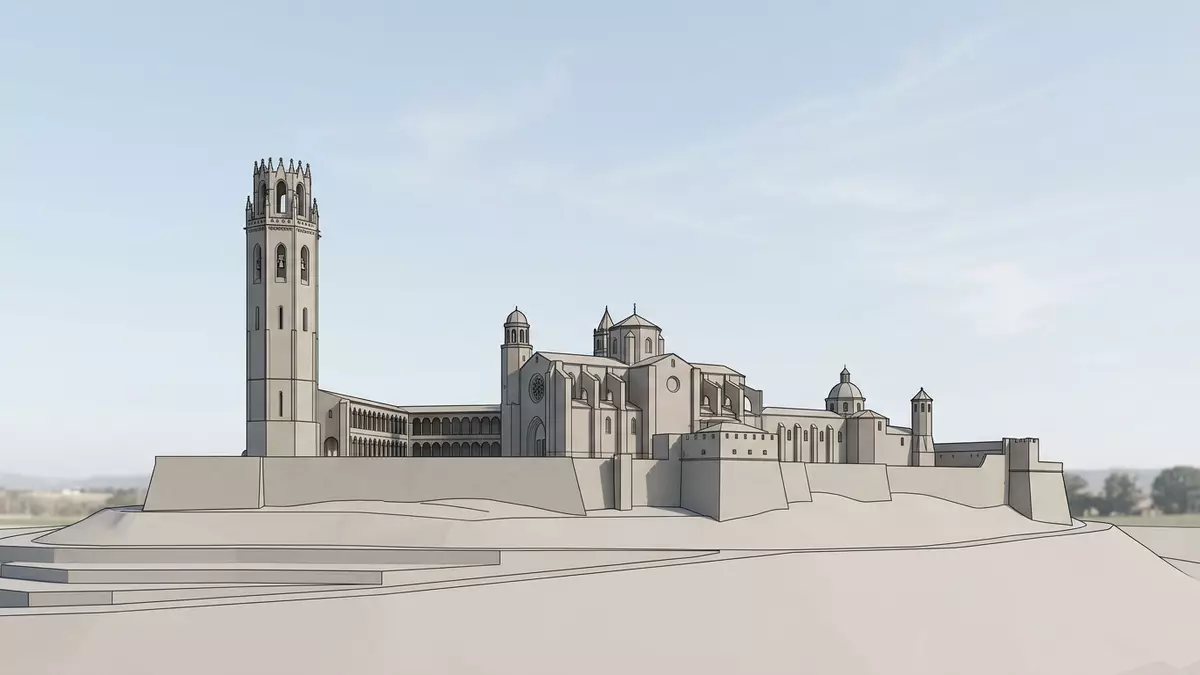
La Seu Vella crowns the hill above Lleida with a cathedral whose Romanesque beginnings became a layered Gothic landmark. Its church, cloister and bell tower form a stone complex visible across the city, with each part carrying a different stage of medieval construction.
La Seu Vella: a cathedral built across centuries
The first Christian cathedral associated with the present complex began in 1193. Construction of the building seen today began in 1203 under Pere de Coma, whose name belongs to the earliest phase of the project. The church was consecrated in 1278, while work on the wider cathedral complex continued into the fourteenth and fifteenth centuries.
Romanesque forms remain in the portals and substantial masonry. Gothic elements appear in the chapels, vaulting, cloister and bell tower. This combination gives La Seu Vella its particular character: not a single, uniform design, but a medieval building assembled across changing architectural periods. Catalonia’s heritage record identifies the cathedral’s Romanesque portals and later Gothic additions.
The cloister and bell tower above Lleida
The cloister is among La Seu Vella’s defining spaces. Its arcades open towards the hill and city, while sculpted capitals and stone details connect the surrounding walks with the cathedral’s religious setting. The cloister belongs to the complex’s later medieval development and stands beside the church as a broad architectural counterpoint.
The bell tower rises from the same hilltop ensemble. Construction continued until 1431, giving the tower a date distinct from the church’s consecration in 1278. Together, the cloister and tower show how La Seu Vella expanded beyond its original church. The bell tower’s completion date helps place the final medieval phases within the fifteenth century.
From cathedral to historic hilltop complex
La Seu Vella served as Lleida’s cathedral church until 1707. Its religious role belongs to the city’s medieval history, while the hill also contains the Castle of the King, known as La Suda. The cathedral and castle together form the monument complex on the Turó de la Seu Vella.
The site is part of Lleida’s cultural identity and appears on Spain’s UNESCO Tentative List through the monumental hill complex. The cathedral remains the central element, combining a Romanesque foundation, Gothic development, sculptural work and an expansive cloister. The UNESCO tentative listing places La Seu Vella within the wider heritage of the hilltop ensemble.
Visiting La Seu Vella: what travellers from Western Europe should know
- La Seu Vella stands on the Turó de la Seu Vella above Lleida, in Catalonia, Spain. Lleida’s railway station and city streets connect the lower city with the hill.
- The visit combines open hilltop areas, cathedral interiors, cloister walks and a bell tower. Stone stairs and uneven historic surfaces form part of the setting.
- The official languages are Catalan and Spanish, and the currency is the euro.
Searching for La Seu Vella on social platforms
These links open searches for La Seu Vella on each platform.
Frequently asked questions about La Seu Vella
Where is La Seu Vella?
La Seu Vella is on the Turó de la Seu Vella, the hill above Lleida in Catalonia, Spain. The cathedral forms part of a wider historic complex with La Suda.
What can visitors see there?
The complex includes the former cathedral church, chapels, sculpted portals, a large cloister and a bell tower. The hilltop setting also includes the Castle of the King.
What makes La Seu Vella distinctive?
Its architecture combines Romanesque beginnings with Gothic work added across later medieval centuries. The cloister, sculptural details and hilltop position give the cathedral its recognisable form.


