
La Rambla, from dry riverbed to Barcelona’s central promenade
Published on 08/30/2026 at 12:34 | Editorial responsibility: Rafael Müller, Editor-in-Chief AD HOC NEWS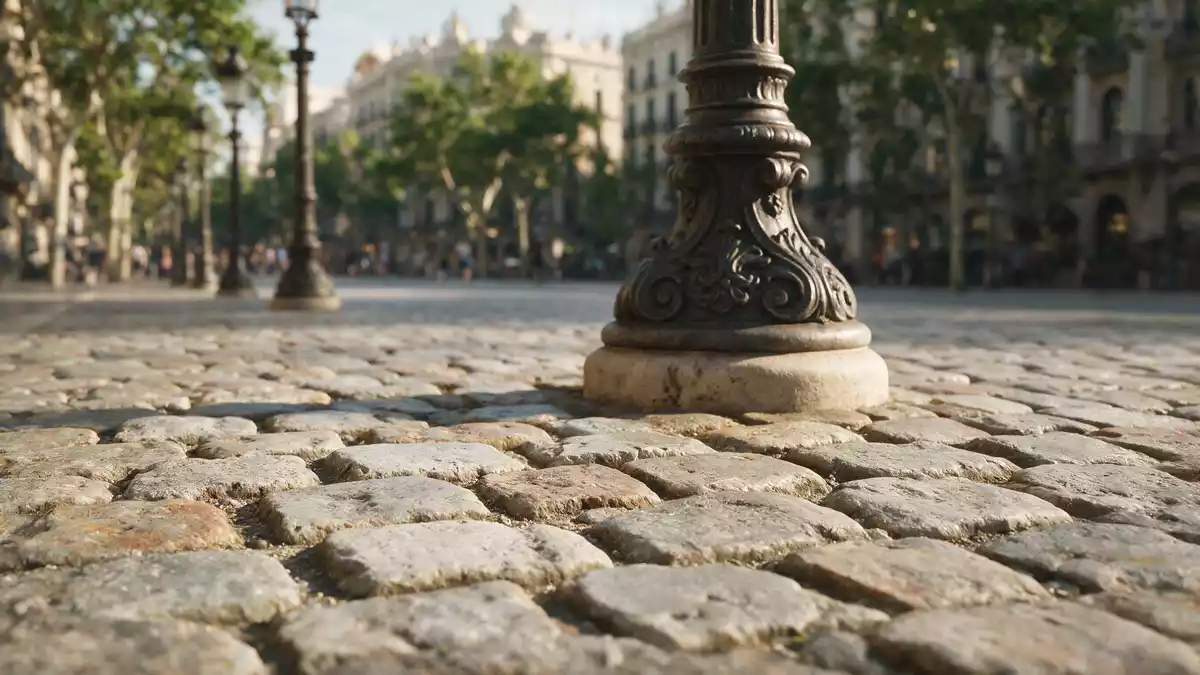
La Rambla is the long, tree-lined promenade that runs through Barcelona’s old city, following the course of a former stream that once marked the edge of the medieval town. The boulevard, laid out in the eighteenth century along the line of earlier fortifications, has become a civic walkway where markets, theatres and squares sit side by side.La Rambla was laid out in 1766
From seasonal stream to city boulevard
The story of La Rambla begins with a seasonal watercourse known as the Riera d’en Malla, a channel that once carried rainwater from the Collserola hills down to the Mediterranean along the western flank of Barcelona’s historic centre.Riera d’en Malla as seasonal drainage channel The word “rambla” itself derives from an Arabic term for a sandy or muddy riverbed, reflecting this origin as a dry torrent rather than a planned street.name comes from Arabic ramla
In the thirteenth and fourteenth centuries, new city walls were built to enclose areas such as El Raval, and the course of the stream was diverted beyond these defences.construction of walls in 1377 and diversion in 1440 The emptied channel gradually turned into a public thoroughfare, used for walking, games and markets, and religious orders established monasteries and convents along the route as Barcelona expanded.large convent buildings and schools along the watercourse
Nineteenth-century promenade of markets and theatres
The transformation of La Rambla into the recognisable boulevard took shape between the later seventeenth century and the nineteenth century, when sections of the medieval wall were demolished and a raised central walkway lined with trees was constructed.central walkway built and trees planted in the eighteenth and nineteenth centuries Elegant town houses rose along the promenade, and former religious plots became sites for public squares, markets and entertainment buildings serving a growing bourgeois city.convents replaced by square, market and theatre
Several of the landmarks associated with La Rambla date from the nineteenth century, including Plaça Reial, the Liceu theatre and the food market known as Mercat de la Boqueria, which occupies the former site of the Monastery of Sant Josep.Plaça Reial, Mercat de la Boqueria and Teatre Liceu built in the nineteenth century Along the length of the street, flower stalls, kiosks, public seating and ornate drinking fountains became characteristic fixtures of the promenade, embedding everyday amenities into the tree-lined urban space.flower stalls, bird market, fountains and lamps as characteristic elements
A continuous walk through distinct segments
La Rambla extends between Plaça de Catalunya at its inland end and the seafront area near the Columbus monument, forming a continuous pedestrian route through Barcelona’s old town.route from Plaça Catalunya towards the sea Although experienced as a single walkway, the street is traditionally divided into several named sections, including Rambla de Canaletes, Rambla de Sant Josep, Rambla dels Caputxins and Rambla de Santa Mònica, each associated with particular landmarks or former institutions.street divided into named segments
The promenade separates the Gothic Quarter on one side from El Raval on the other, making it a convenient axis for crossing between neighbourhoods and accessing nearby sites such as the cathedral precincts, the Boqueria market hall and the smaller streets of the old city.Rambla as boundary between old city and Raval Tree cover, paved surfaces and a central pedestrian band characterise the boulevard, with side carriageways and connecting streets leading into the surrounding districts.
Visiting La Rambla: what travellers from Western Europe should know
- La Rambla runs between Plaça de Catalunya and the waterfront in Barcelona’s Ciutat Vella district and is reached on foot or by metro services serving nearby stations.
- The central promenade consists of level paving with kerbs and occasional steps, and side streets can involve narrow pavements and older stone surfaces.
- The promenade lies close to the Gothic Quarter to the east and El Raval to the west, so short walks lead to historic churches, market halls and smaller squares.
- The official language is Catalan alongside Spanish, and the currency is the euro.
Searching for La Rambla on social platforms
These links open searches for La Rambla on each platform.
Frequently asked questions about La Rambla
Where is La Rambla in Barcelona?
La Rambla runs through the Ciutat Vella district between Plaça de Catalunya and the waterfront area near the Columbus monument, separating the Gothic Quarter from El Raval.
What can visitors expect when walking La Rambla?
Visitors encounter a central pedestrian promenade lined with trees, kiosks, flower stalls and access points to markets, theatres and public squares along its length.
What makes La Rambla distinctive compared with other streets in Barcelona?
La Rambla follows the line of a former stream and medieval wall, combining this historic alignment with a continuous, tree-lined walkway and closely spaced civic landmarks.


