
L'Oceanografic, Valencia’s sweeping concrete seascape
Published on 09/15/2026 at 15:07 | Editorial responsibility: Rafael Müller, Editor-in-Chief AD HOC NEWS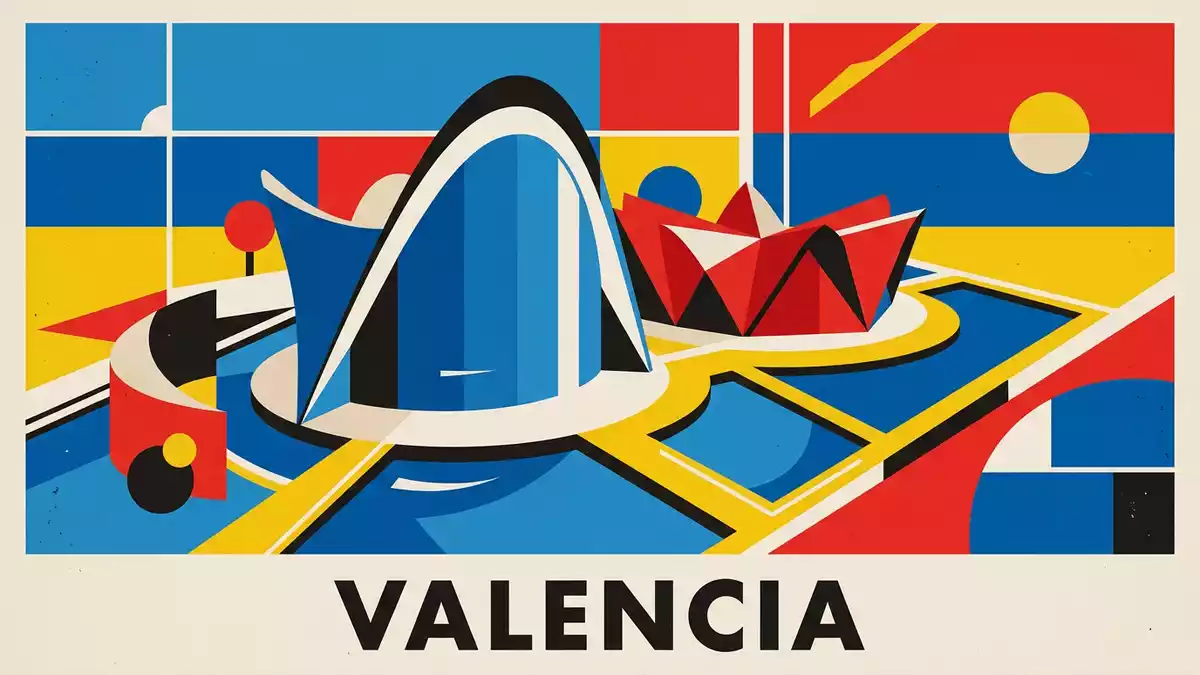
L'Oceanografic in Valencia is an expansive oceanarium within the City of Arts and Sciences, where sweeping concrete forms rise around a broad lake and house marine habitats from across the globe. Opened on 14 February 2003 and designed by architect Félix Candela with structural engineers Alberto Domingo and Carlos Lázaro, it has become a major contemporary landmark on the former Turia riverbed in eastern Spain.
A water lily of concrete and light
The most striking feature of L'Oceanografic is the way its thin reinforced concrete roofs curve and dip around a central body of water, giving the complex a plan widely compared to a water lily floating on the surface. Candela’s hallmark thin-shell construction shapes several pavilion roofs into expressive forms that appear delicate but rest on an engineered network of supports, demonstrating the possibilities of reinforced concrete in large-scale public architecture.thin-shell reinforced concrete Each pavilion encloses a different family of marine environments, arranged around the lake so that visitors move from one ecosystem to another while the curving roofs remain visible above.
The complex occupies about 110,000 square metres of land, making it one of the largest oceanarium layouts built as a single project in Europe.around 110,000 m² Below and beside the central lake sit large saltwater tanks, freshwater basins and service spaces that together hold around 42,000,000 litres of water drawn from marine sources off the Valencian coast and treated for the aquariums.42,000,000 litres of water The lake itself is a separate body of freshwater, reflecting the surrounding buildings and providing space for walks and views across the ensemble.
Marine habitats gathered in one place
L'Oceanografic was conceived as an oceanarium representing major marine ecosystems of the planet, and its interior spaces are organised accordingly. Visitors encounter Mediterranean habitats, Arctic and Antarctic zones, temperate and tropical seas, wetlands and open ocean exhibits in sequence, each housed in pavilions or underwater towers with aquariums scaled to the species they contain.marine habitats represented Species displayed include sharks, rays, penguins, dolphins, sea lions, beluga whales, turtles, jellyfish, reef fish, and birds associated with wetlands, alongside invertebrates and reptiles from coastal and estuarine environments.
The complex is home to tens of thousands of individual animals and several hundred species, concentrated in tanks and enclosures that range from compact educational displays to large-scale pools and deep ocean tanks.about 45,000 animals and 500 species One of the largest tanks is an ocean aquarium holding about 7,000,000 litres of water, where sharks, rays and large schooling fish swim in a shared environment.7,000,000-litre ocean tank Another major component is the dolphinarium, a stadium-like pool complex with deep water arranged for marine mammal presentations and research, which itself contains tens of millions of litres of seawater and forms a prominent element of the site’s profile.stadium-form dolphinarium
Part of Valencia’s City of Arts and Sciences
L'Oceanografic stands within the wider City of Arts and Sciences complex, known locally as Ciutat de les Arts i les Ciències, in the south-eastern part of Valencia where the Turia river was diverted and its former bed turned into a long urban garden. The oceanarium occupies a section of this garden, the Jardín del Turia, near other major works such as Santiago Calatrava’s Palau de les Arts Reina Sofia and the Hemisfèric, creating a concentration of late twentieth- and early twenty-first-century architecture.
Construction of L'Oceanografic began in the late 1990s, and the oceanarium opened to the public in 2003, adding a large-scale marine institution to the cultural and scientific programme of the complex.opened in February 2003 The project was one of the final major works by Félix Candela, whose career was closely associated with the development of thin-shell concrete structures, and it anchors the southern end of the City of Arts and Sciences with its combination of engineering, marine biology and public exhibition.designed by Félix Candela
Visiting L'Oceanografic: what travellers from Western Europe should know
- L'Oceanografic lies within the City of Arts and Sciences in Valencia, at the southern end of the Turia riverbed, and is reached on foot, by bicycle, by bus or by road from the central districts.
- The complex is spread across a wide area with outdoor paths around the central lake and indoor routes through multi-level pavilions, so a visit involves sustained walking on mostly level surfaces with occasional stairs and ramps.
- The oceanarium sits close to other parts of the City of Arts and Sciences, including the science museum and the Hemisfèric, and the Turia garden continues westward as a linear park.
- Spain’s official language nationwide is Spanish, and in Valencia the regional language Valencian is also widely used; the national currency is the euro.
Searching for L'Oceanografic on social platforms
These links open searches for L'Oceanografic on each platform.
Frequently asked questions about L'Oceanografic
Where is L'Oceanografic located within Valencia?
L'Oceanografic stands in the City of Arts and Sciences complex at the southern end of the Turia riverbed, south-east of Valencia’s historic centre.
What can visitors expect during a visit to L'Oceanografic?
A visit involves walking through indoor and outdoor areas linking large marine exhibits, including ocean tanks, a dolphinarium, polar habitats and wetlands displays set around a central lake.
What makes L'Oceanografic distinctive among aquariums?
Its combination of thin-shell concrete architecture by Félix Candela, extensive water volumes and concentration of diverse marine ecosystems in one integrated complex makes it distinctive.


