
L'Oceanografic in Valencia, a concrete water lily of marine life
Published on 09/09/2026 at 22:13 | Editorial responsibility: Rafael Müller, Editor-in-Chief AD HOC NEWS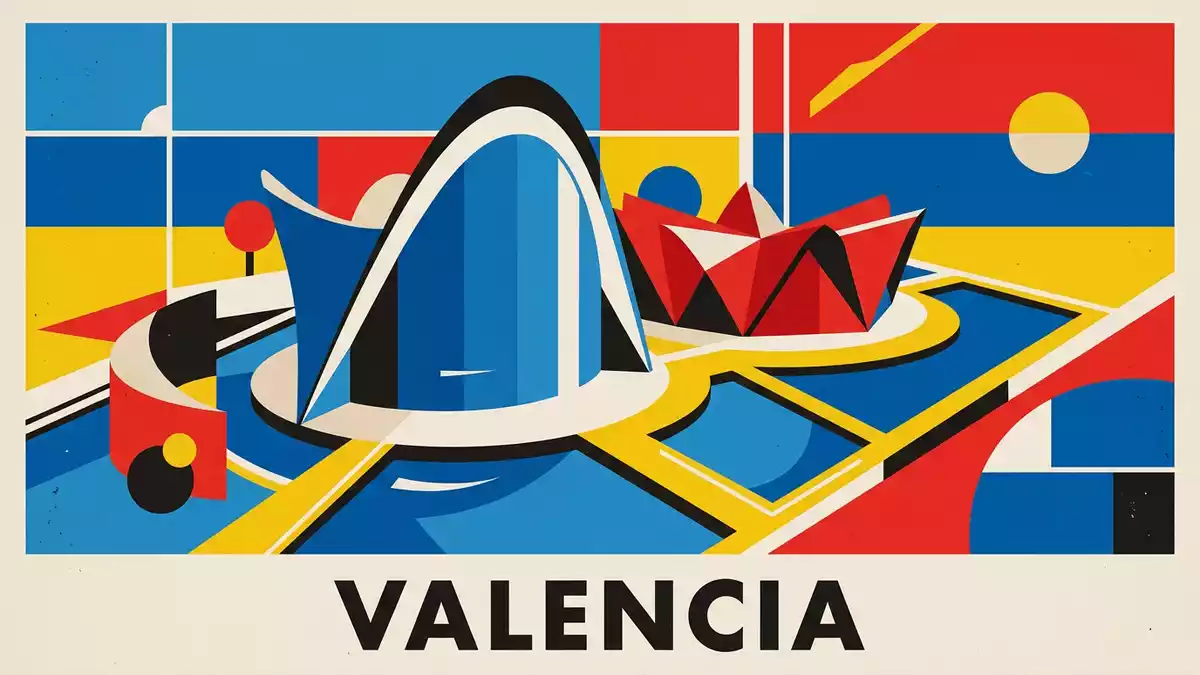
L'Oceanografic in Valencia is an oceanarium shaped around a striking concrete form that recalls a water lily rising from the former Turia riverbed. It opened on 14 February 2003 within the City of Arts and Sciences and was designed by the Mexican-Spanish architect Félix Candela together with José María Tomás Llavador and structural engineers Alberto Domingo and Carlos Lázaro, giving eastern Spain an expansive marine park built as much for its structure as for its sea life.opened on 14 February 2003
Concrete water lily in the City of Arts and Sciences
L'Oceanografic occupies a large footprint within the wider City of Arts and Sciences complex, an ensemble of contemporary architecture and cultural venues on the drained bed of the Turia that also includes work by Santiago Calatrava.City of Arts and Sciences The oceanarium itself takes the form of an open-air park, with its central buildings arranged in an organic plan commonly described as a water lily, their thin concrete shells rising from pools and walkways and giving the technical infrastructure for marine habitats a sculptural casing.water lily form
Candela’s hallmark thin-shell concrete engineering appears in these roofs and canopies, which curve above the basins and circulation spaces in sweeping arcs. The volumes sit among water surfaces that reflect the white structures, and bridges and ramps loop between the various buildings to form a continuous circuit. Around the complex, the wider Garden of the Turia stretches along the old river course as landscaped parkland, so the approach to L'Oceanografic passes lawns, trees and other bold contemporary forms before the oceanarium’s concrete petals come into view.Garden of the Turia
Europe’s vast marine world under concrete shells
L'Oceanografic is recognised as the largest aquarium complex in Europe, with a total area of around 110,000 m² and a combined water capacity in the tens of millions of litres.largest aquarium complex in Europe Tanks and ponds across the site hold an estimated 42,000,000 litres of water, from the main ocean tank to the dolphinarium and smaller exhibit pools.42,000,000 litres of water The scale allows the representation of major marine ecosystems, including temperate seas, tropical waters, the Arctic and Antarctic regions and the Mediterranean.
The oceanarium houses tens of thousands of animals from hundreds of species, including sharks, rays, dolphins, sea lions, penguins, beluga whales, birds, reptiles and invertebrates.around 45,000 animals from 500 species Many habitats are arranged in two-tiered underwater towers and around large aquariums, with underwater tunnels passing through the main ocean tank so visitors walk beneath shoals of fish and past cruising sharks. Other sections focus on wetlands, estuaries and coastal zones, and outdoor lagoons provide space for marine mammals. Together the exhibits turn the concrete water lily plan into a sequence of environments, shifting from enclosed underwater views to open terraces above the basins.
Turia location and architectural context
L'Oceanografic stands in the south-eastern part of Valencia, in the Garden of the Turia that follows the line of the former river as it curves around the city centre.situated in the City of Arts and Sciences The City of Arts and Sciences complex occupies a stretch of this parkland, with the oceanarium sharing the site with Calatrava’s cultural buildings and bridges. From many points inside L'Oceanografic, views open towards these neighbouring structures, setting Candela’s thin-shell roofs against Calatrava’s more linear white forms.
The address used for L'Oceanografic is Carrer d'Eduardo Primo Yúfera, in the 46013 district of Valencia, placing it south of the historical centre and close to other contemporary developments.Carrer d’Eduardo Primo Yúfera, 1B Within the complex, circulation paths link the different buildings, and elevated walkways offer outlooks across the basins and towards the broader park. The setting within a landscaped former riverbed means that hard architectural surfaces and planted areas sit side by side, with the oceanarium’s water surfaces echoing the absent river while the concrete shells mark Valencia’s turn towards large-scale expressive engineering in the late twentieth and early twenty-first centuries.
Visiting L'Oceanografic: what travellers from Western Europe should know
- L'Oceanografic lies in the south-eastern part of Valencia within the City of Arts and Sciences, reached along the Garden of the Turia from the city centre by tram, bus or urban roads.
- Movement inside the complex involves outdoor paths and bridges, and several buildings are accessed by flights of steps or ramps, so walking between habitats covers a substantial area on foot.
- Nearby, other elements of the City of Arts and Sciences such as the science museum and opera house stand within sight, making it straightforward to combine a visit to L'Oceanografic with time among additional contemporary buildings.
- The official language is Spanish and the currency is the euro.
- Entry requirements depend on your nationality; UK travellers can check the FCDO travel advice at gov.uk/foreign-travel-advice, Irish travellers the Department of Foreign Affairs at ireland.ie.
Searching for L'Oceanografic on social platforms
These links open searches for L'Oceanografic on each platform.
Frequently asked questions about L'Oceanografic
Where is L'Oceanografic located within Valencia?
L'Oceanografic stands in the City of Arts and Sciences complex on Carrer d'Eduardo Primo Yúfera in the south-eastern part of Valencia, within the Garden of the Turia.
What can visitors expect to see inside L'Oceanografic?
Visitors encounter large aquariums and outdoor basins representing major marine ecosystems, with sharks, rays, dolphins, beluga whales, penguins and many other species housed across its extensive grounds.
What makes L'Oceanografic distinctive among European aquariums?
L'Oceanografic combines its status as the largest aquarium complex in Europe with Candela’s expressive thin-shell concrete architecture, arranged in a water lily-like plan within a broader landscape of contemporary buildings.


