
L'Oceanografic and the underwater worlds of Valencia
Published on 09/14/2026 at 13:17 | Editorial responsibility: Rafael Müller, Editor-in-Chief AD HOC NEWS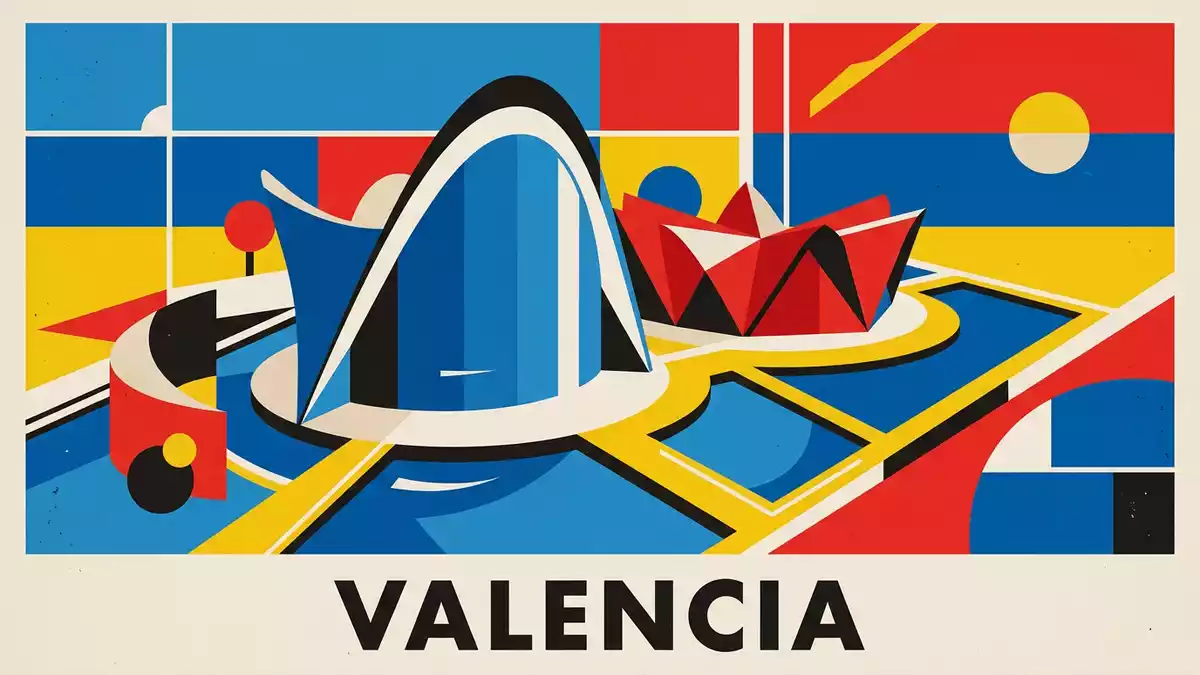
L'Oceanografic in Valencia is a vast marine park where entire ocean habitats are laid out as individual pavilions within the striking City of Arts and Sciences complex. Opened in 2003, it forms part of the architectural ensemble created in the dried Turia riverbed and has become a major landmark for contemporary Valencia’s relationship with the sea.
An oceanarium built as a miniature planet of water
L'Oceanografic is an oceanarium set inside the Ciudad de las Artes y las Ciencias, a cultural and scientific complex in the south-east of Valencia’s former Turia riverbed.oceanarium in the City of Arts and Sciences The site spreads across roughly 100,000 m² (around 24.7 acres) of constructed space, with water volumes measured in tens of millions of litres.around 100,000 m² of grounds Rather than a single hall, visitors find a sequence of buildings and outdoor areas, each dedicated to a distinct marine environment.
The layout takes the form of separate zones for temperate and tropical seas, the Mediterranean, polar oceans and wetlands, connected by walkways and indoor corridors.different marine ecosystems represented Above ground, low-slung structures sit beside pools and landscaped water channels. Below ground, tunnels cut through large tanks so that sharks and schooling fish pass overhead, turning the visitor route into a continuous cross-section through open water.
Concrete shells and glass volumes in the Turia riverbed
L'Oceanografic stands at the southern end of the City of Arts and Sciences, in the former course of the Turia river that once ran through Valencia before being diverted after a major flood in the twentieth century.site in the Turia riverbed The surrounding complex is known for its white concrete and glass buildings, including work by architect Santiago Calatrava, whose expressive forms define much of the ensemble. Within this setting, L'Oceanografic occupies its own cluster of buildings and outdoor basins arranged around central water areas.
One of the most recognisable structures is a restaurant pavilion enclosed by dramatic thin-shell concrete roofs attributed to Mexican-Spanish engineer Félix Candela, whose expertise in hyperbolic paraboloid shells is visible in the sweeping roof geometry.thin-shell concrete roofs by Félix Candela Elsewhere on the site, glass façades frame views into tanks and over exterior pools, while bridges and decks cross water surfaces to link the different sections. At night, lighting reflects off the water and concrete, accentuating the relationship between architecture and the artificial lagoons that structure the park.
Habitats, species and the scale of the aquarium
L'Oceanografic is described as the largest aquarium complex in Europe when measured by combined water volume and surface area, with figures around 42–45 million litres of water in total and extensive outdoor basins supplementing indoor tanks.biggest aquarium in Europe The majority of this water is seawater, supporting collections of fish, invertebrates, marine mammals and reptiles from different climatic zones. Displays are organised so that each building corresponds to a broad ecosystem, giving the complex the feel of a miniature planet of oceans and coastal environments.
In the collections, visitors encounter tropical reef fish, large pelagic species such as sharks and rays, and animals adapted to polar regions, including penguins. L'Oceanografic also keeps beluga whales, which are rare in European facilities and have become one of the site’s recognisable species.aquarium with beluga whales Outdoors, sea lion and dolphin pools ring the central lagoons, and wetland sections recreate marsh and mangrove environments where birds share space with aquatic species. Together, the combination of scale, variety of habitats and the surrounding architecture makes L'Oceanografic a distinctive part of Valencia’s waterfront identity.
Visiting L'Oceanografic: what travellers from Western Europe should know
- L'Oceanografic lies in the Ciudad de las Artes y las Ciencias in Valencia’s south-eastern Turia riverbed, reached over level paths from surrounding city streets and bridges.
- The complex covers a broad area with multiple buildings and outdoor basins, so a visit involves substantial walking on paved surfaces and stairways, with some routes passing through underwater tunnels.
- The official language is Spanish and the currency is the euro.
Searching for L'Oceanografic on social platforms
These links open searches for L'Oceanografic on each platform.
Frequently asked questions about L'Oceanografic
Where is L'Oceanografic located in Valencia?
L'Oceanografic is situated within the Ciudad de las Artes y las Ciencias at the south-eastern end of Valencia’s former Turia riverbed, in the Autopista del Saler area.
What can visitors expect during a visit to L'Oceanografic?
Visitors move between multiple themed buildings and outdoor basins representing different marine ecosystems, with large tanks, underwater tunnels and landscaped pools forming a continuous route.
What makes L'Oceanografic distinctive among aquariums?
Its combination of extensive water volume, diverse habitats, beluga whales and location inside a major contemporary architectural complex gives L'Oceanografic a scale and setting unusual among European aquariums.


