
Kruger National Park and Skukuza’s riverine wildlife hub
Published on 09/14/2026 at 22:38 | Editorial responsibility: Rafael Müller, Editor-in-Chief AD HOC NEWS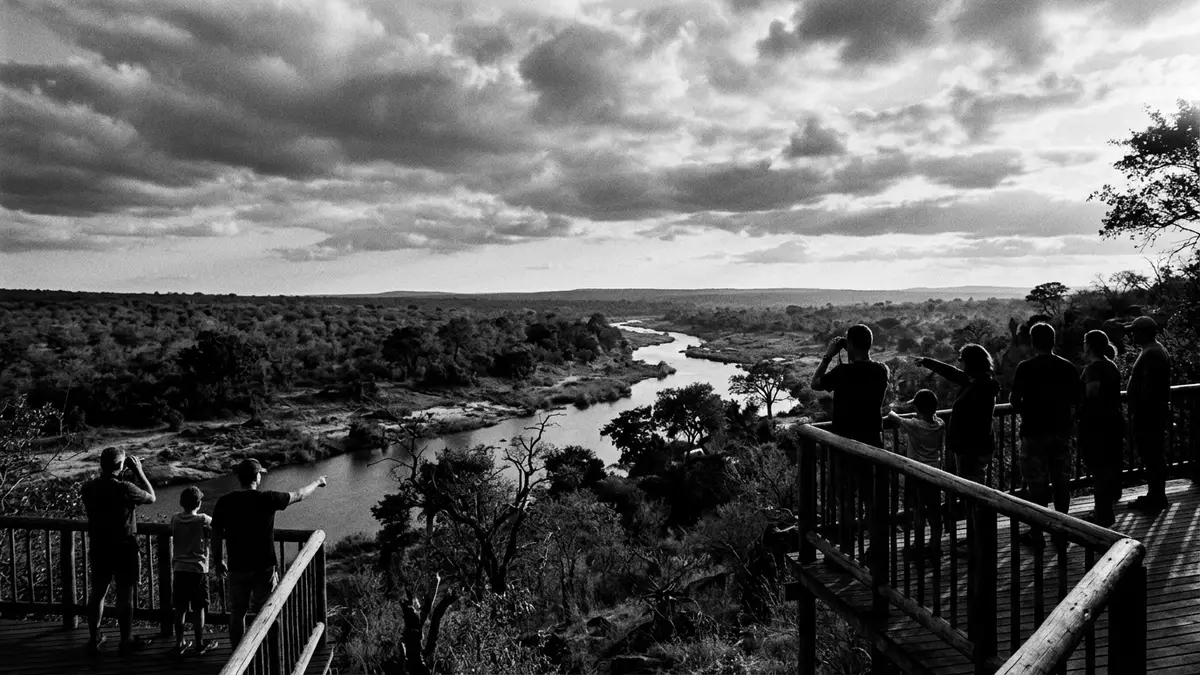
Kruger National Park in northeastern South Africa is a vast wildlife reserve, with its administrative headquarters at Skukuza on the banks of the Sabie River. Established in part in 1898 and named in 1926 for Paul Kruger, former president of the South African Republic, it has grown into South Africa’s largest national park and a core part of the region’s conservation landscape.largest national park in South Africa
A giant reserve shaped by rivers and savanna
Kruger National Park stretches across Limpopo and Mpumalanga provinces in the country’s northeast, west of the Lebombo Mountains along the Mozambique border.Limpopo and Mpumalanga provinces The protected area covers around 19,500 to 19,600 square kilometres of largely flat terrain, traversed by low ranges of hills and a dense network of paved and gravel roads.area and road network
Two major rivers frame this scale: the Crocodile River forms part of its southern edge, while the Limpopo River lies to the north, and within the park numerous rivers such as the Sabie flow eastward towards Mozambique.stretches from Crocodile River to Limpopo River Vegetation ranges from open veld and thorny savanna to dense bush, including species such as mopane, acacia, marula and baobab that give different parts of the park distinct characters across its north–south length.mopane, acacia, marula and baobab trees
Skukuza: the park’s riverside “capital”
Skukuza serves as the administrative centre of Kruger National Park and is also its largest rest camp, functioning as a town-like hub within the reserve.administrative headquarters and largest rest camp The settlement stands at the confluence of the Sabie and N’waswitshaka rivers in Mpumalanga, on well-wooded riverbanks where dense trees and flowing water shape the immediate landscape.confluence of the Sabie and N’waswitshaka rivers
The name Skukuza comes from the Tsonga language and was the nickname of James Stevenson-Hamilton, the reserve’s first warden appointed in 1902, reflecting his strong role in reshaping the area as a protected game reserve.first warden James Stevenson-Hamilton Skukuza camp has grown over the decades into a complex with accommodation, services and interpretive spaces such as a museum and library, making it a natural base in the southern part of the park for travellers and researchers alike.Skukuza camp and museum
Wildlife densities and the Great Limpopo landscape
Kruger National Park is formally recognised as part of the Great Limpopo Transfrontier Park, a cross-border conservation area that links it with Limpopo National Park in Mozambique and Gonarezhou National Park in Zimbabwe.Great Limpopo Transfrontier Park Within its boundaries live large populations of African mammals, including elephants, lions, leopards, cheetahs, buffalo, rhinoceroses, zebras, wildebeest and impala, alongside hundreds of bird and reptile species.range of wildlife species
The southern parts of the park around Skukuza have long been noted for dense game viewing, with predators such as lion, wild dog and spotted hyena frequently recorded along routes that follow the Sabie and neighbouring rivers.predators near Skukuza As a result, Skukuza functions not only as an administrative centre but also as a focal point for guided drives, self-drive safaris and conservation activities within the broader mosaic of savanna, woodland and riverine habitat that defines Kruger National Park.Skukuza as administrative headquarters and camp
Visiting Kruger National Park: what travellers from Western Europe should know
- Kruger National Park lies in northeastern South Africa, in Limpopo and Mpumalanga provinces, with Skukuza camp and headquarters situated on the Sabie River in the southern sector.
- Within the park, roads range from paved routes to gravel tracks and many game drives around Skukuza follow river corridors, where stretches of bushveld and occasional viewpoints require walking short distances on uneven ground.
- Skukuza is reached through gates such as Paul Kruger Gate, with the nearest towns outside the park including places like Hazyview, which serve as additional bases for travellers approaching the southern part of the reserve.
- The official language of South Africa is English alongside other national languages, and the currency is the South African rand.
- Entry requirements depend on your nationality; UK travellers can check the FCDO travel advice at gov.uk/foreign-travel-advice, Irish travellers the Department of Foreign Affairs at ireland.ie.
Searching for Kruger National Park on social platforms
These links open searches for Kruger National Park on each platform.Frequently asked questions about Kruger National Park
Where is Kruger National Park and Skukuza located?
Kruger National Park lies in northeastern South Africa across Limpopo and Mpumalanga provinces, with its headquarters and largest camp at Skukuza on the Sabie River.
What can travellers expect on a visit to Kruger National Park?
Travellers encounter extensive savanna and bushveld, a network of roads and rest camps, and a wide range of wildlife, including large mammals and many bird species visible on game drives.
What makes Kruger National Park and Skukuza distinctive among African reserves?
The combination of a very large, long-established protected area, its role in the Great Limpopo Transfrontier Park and the presence of a major camp and headquarters at Skukuza gives Kruger National Park a distinctive character.


